Automated archive / Crimson Desert
Crimson Desert Sector Intelligence: From Stock Shock to Steam Surge and Systems Stabilization
Crimson Desert’s launch week fused stock-market shock, AI-art controversy, and a massive Steam surge into one volatile signal. Underneath the noise, Pearl Abyss is quietly stabilizing a spectacular but overloaded sandbox that might yet justify the chaos.
AI-generated summary. This archive article does not have a current recorded source check. Check linked sources before relying on details. Editorial policy
Sector Overview: A Volatile Week in Pywel
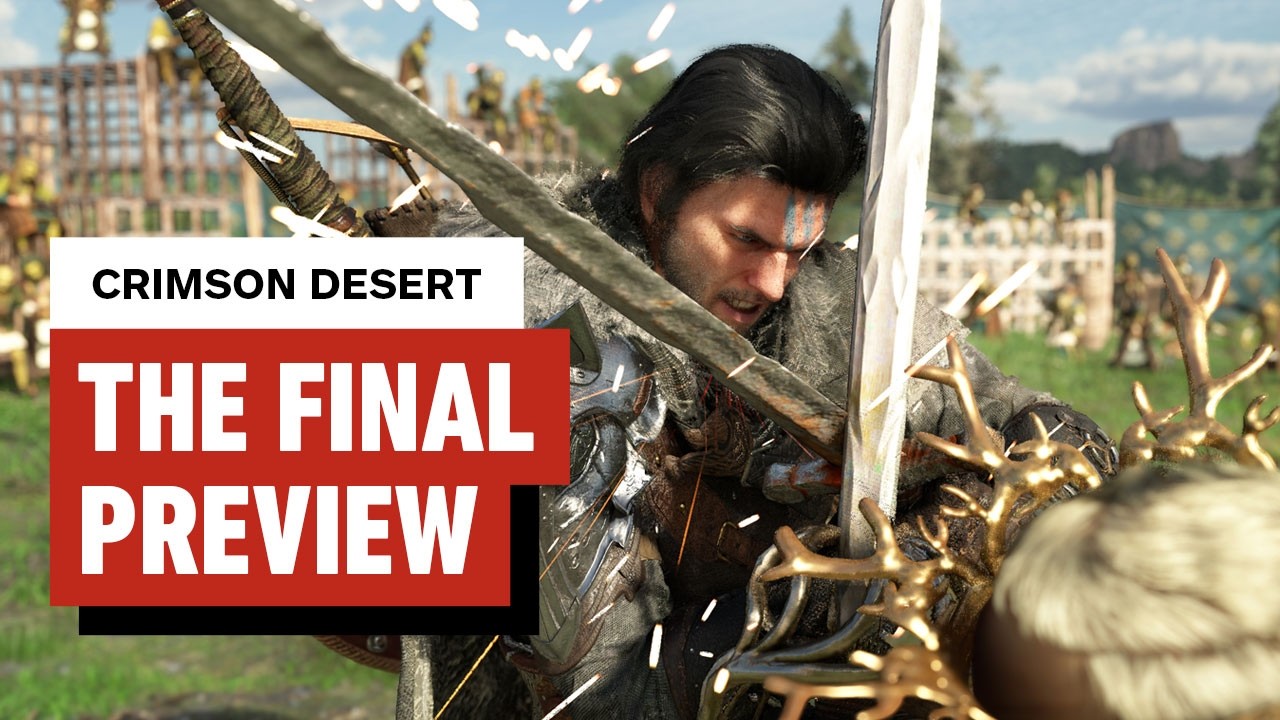
Crimson Desert just lived through the kind of launch week most studios model in risk spreadsheets, not reality. Pearl Abyss’ open-world epic detonated with spectacular visuals and equally spectacular turbulence: early reviews dragged the publisher’s stock down nearly 30%, while Steam concurrency spiked past 239,000 players and the game briefly topped the platform’s revenue charts. In parallel, the team pushed a rapid-fire 1.00.03 patch, confronted an AI-art asset breach, and began clawing back public sentiment toward a "Mostly Positive" equilibrium.
This Sector Intelligence Report dissects how Crimson Desert’s systems, perception, and market position are evolving in real time — and what that means for players, critics, and #gamedev observers tracking one of the year’s most contentious releases.
Market Telemetry: Stock Plunge vs. Player Pull
Revenue and Concurrency
On the business grid, Crimson Desert is sending mixed but powerful signals:
- Steam revenue leadership: Latest data shows Crimson Desert sitting at the top of the Steam revenue stack, ahead of Slay the Spire 2 and Death Stranding 2. Whatever the critical discourse, the buy-in is real.
- Concurrency spike: A peak of 239,045 concurrent players confirms strong initial traction. That’s not background noise; that’s a live-service sized population testing the sandbox under full load.
Investor Whiplash
The other side of the graph is brutal:
- Early review rounds and impressions framed Crimson Desert as spectacular but unstable: a "volatile fusion" of cinematic action-RPG, MMO-lite scaffolding, and sandbox chaos.
- That narrative translated almost 1:1 into market reaction, with Pearl Abyss’ share price dropping nearly 30% as expectations collided with reports of erratic pacing, grind-heavy loops, and technical issues.
For #gamedev watchers, Crimson Desert is a textbook example of how launch-week critical consensus can hammer valuation even when player engagement is high.
Systems Status: High-Impact Combat, Wobbly Coherence
Combat & Boss Design: Spectacle as Stress Test
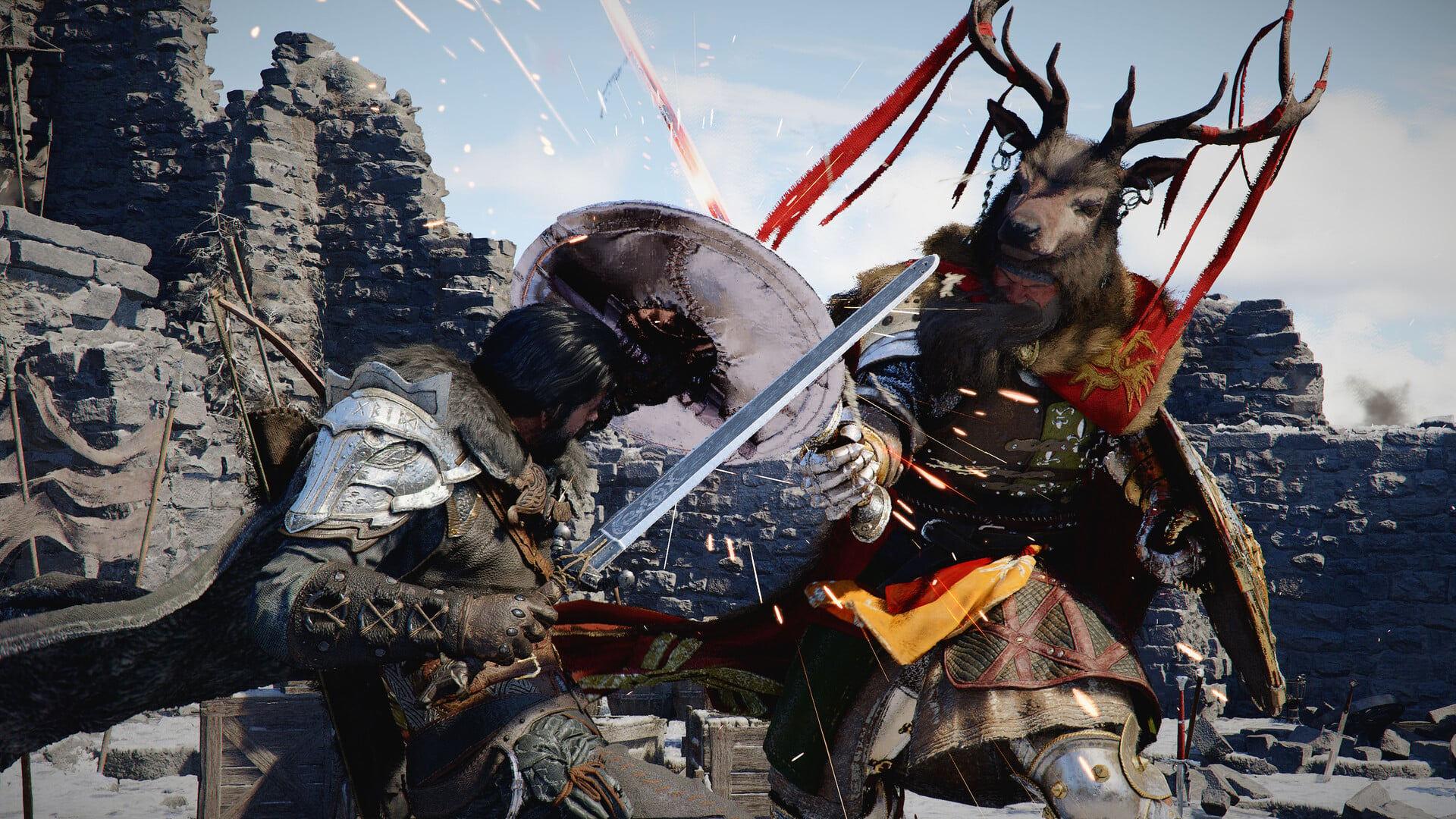
Field reports from encounters like Crimson Nightmare, Excavatron, and the Reed Devil paint a consistent picture: boss fights are multi-phase attrition tests built on pattern recognition, stamina discipline, and tight punish windows. These aren’t casual skirmishes; they are deliberate systems stress tests of your build and your reflexes.
- Crimson Nightmare demands precise dodge timing around wide AoE chains.
- Excavatron layers charge paths, weak point exposure, and circular drill barrages.
- Reed Devil and other anomalies push spatial control and resource cycling.
This is where Crimson Desert shines: kinetic, readable combat that rewards players willing to learn enemy cadences rather than face-tank through.
Watch: Transmitting Gameplay footage from the field: Cross-platform combat and traversal showcase
Overloaded Feature Stack
Long-duration impressions (110+ hours) converge on a core diagnosis: Crimson Desert is less a focused RPG and more a controlled experiment in maximum interaction density. You get:
- Cinematic melee, grapples, and physics gags
- Mount-based traversal, stealth, and verticality (including slope-sliding exploits)
- Dense side economies: fishing, arm wrestling, fast-travel logistics, bounty contracts like Blix, and even passive income through investments
The upside is constant novelty; the downside is structural fatigue. Pacing can desync from narrative intent, and grind loops sometimes feel like systems competing for attention rather than collaborating.
Technical Front: From PC Poster Child to Patch Triage
The tech story is split across platforms and timeframes:
- PC performance: Early PC benchmarks flagged Crimson Desert as one of the most well-optimized PC games in years — handling ultra presets, heavy crowds, and complex physics with minimal stutter on a wide range of rigs. A full 4K/60 day-night cycle test held frame times impressively stable.
- Instability & crashes: Despite that, enough players hit crashes and bugs (particularly on certain configs and consoles) to drag Steam sentiment down and fuel the backlash loop.
Patch 1.00.03 is Pearl Abyss’ first major stabilization sortie:
- Tuned damage values and combat flow
- Improved control responsiveness
- New item storage options to ease inventory friction
- Reduced crash frequency across known hotspots
Post-patch telemetry is promising: Steam reviews have climbed to "Mostly Positive", suggesting that early triage is landing where it needs to.
Design Logistics: Travel, Economy, and Early-Game Optimization
Movement as a Resource
Fast travel in Crimson Desert is more than a simple teleport grid. Nodes, mounts, and context-sensitive jumps are all part of a layered logistics network that treats movement as a strategic resource. Players can:
- Unlock traversal anchors and shrine links to cut downtime
- Use house recall as a tactical resupply node
- Exploit slope-sliding for high-speed downhill traversal if they understand the physics
Early-Game Power and Economy
Guides flooding the network focus on minimizing friction in the first 10–20 hours:
- Five standout early weapons significantly accelerate your power curve.
- Optimized gold routes, smart loot liquidation, and early mounts reduce grind.
- Fishing, arm wrestling, and other minigames double as economic sub-systems, not just distractions.
- Investment mechanics allow players to funnel coin into properties and trade for passive income, letting their portfolio grind while they’re offline.
This is a sandbox that rewards players who treat Pywel like a hostile economy to be solved, not just a backdrop for story beats — a design angle that will resonate with systems-driven #indiegame designers watching from the sidelines.
Culture & Trust: The AI Art Breach
One of the week’s most significant non-gameplay events was the discovery of AI-generated art in Crimson Desert’s visual pipeline. Pearl Abyss:
- Acknowledged that generative AI assets slipped into a showcase build
- Issued a formal apology
- Initiated a comprehensive audit of every in-game element to verify authorship and purge AI-generated content
In a climate where AI art is a flashpoint across #gamedev and #indiegame communities, this is more than a PR hiccup. It’s a trust test. How transparently Pearl Abyss reports on the audit’s outcome — and whether future assets are clearly human-authored — will shape long-term sentiment as much as any balance patch.
Sentiment Trajectory: From Backlash to Cautious Optimism
The most interesting metric this week isn’t raw player count; it’s directional sentiment:
- Initial backlash framed Crimson Desert as a cautionary tale: too big, too messy, and potentially broken.
- After the corrective patch and clearer communication, field telemetry now shows a notable inversion in player mood. Skepticism hasn’t vanished, but it’s softened into cautious optimism.
The emerging consensus: Crimson Desert is a high-fidelity chaos engine whose biggest problem isn’t that it’s bad, but that it’s too much — too many systems, too little editorial discipline. If Pearl Abyss can continue to stabilize performance, trim grind friction, and sharpen mission cohesion, the same density that once felt overwhelming could become its long-term differentiator.
Strategic Outlook: What to Watch Next
For players, critics, and developers tracking Crimson Desert as a live case study, three vectors matter over the next few weeks:
- Patch cadence and scope – Do updates stay in triage mode, or evolve into deeper structural tuning of pacing, rewards, and quest logic?
- AI audit transparency – Does Pearl Abyss publish clear guidelines and outcomes around AI usage, setting a precedent other studios will be pressured to follow?
- Retention curves – Now that the initial concurrency spike is logged, does Pywel hold its population once the honeymoon (and outrage) phases pass?
Crimson Desert is no longer just a game launch; it’s an ongoing systems experiment in how a visually extravagant, combat-forward open world can be pulled back from the brink of overload. This sector stays on watch.
Sources and corrections
This archive entry does not have a verified article-source list. Images and video embeds alone are not evidence for every claim.
Found an error? Request a correction. Include the passage and a supporting source.