Automated archive / Crimson Desert
Crimson Desert Sector Intelligence: Physics, Fast Travel, and a Market Shockwave
Crimson Desert’s first full week post-launch is a collision of maximalist systems design, rock-solid PC optimization, and a market backlash that shaved nearly 30% off Pearl Abyss’ value. Underneath the volatility lies a dense combat sandbox where traversal, economy, and physics-driven tricks matter as much as your...
AI-generated summary. This archive article does not have a current recorded source check. Check linked sources before relying on details. Editorial policy
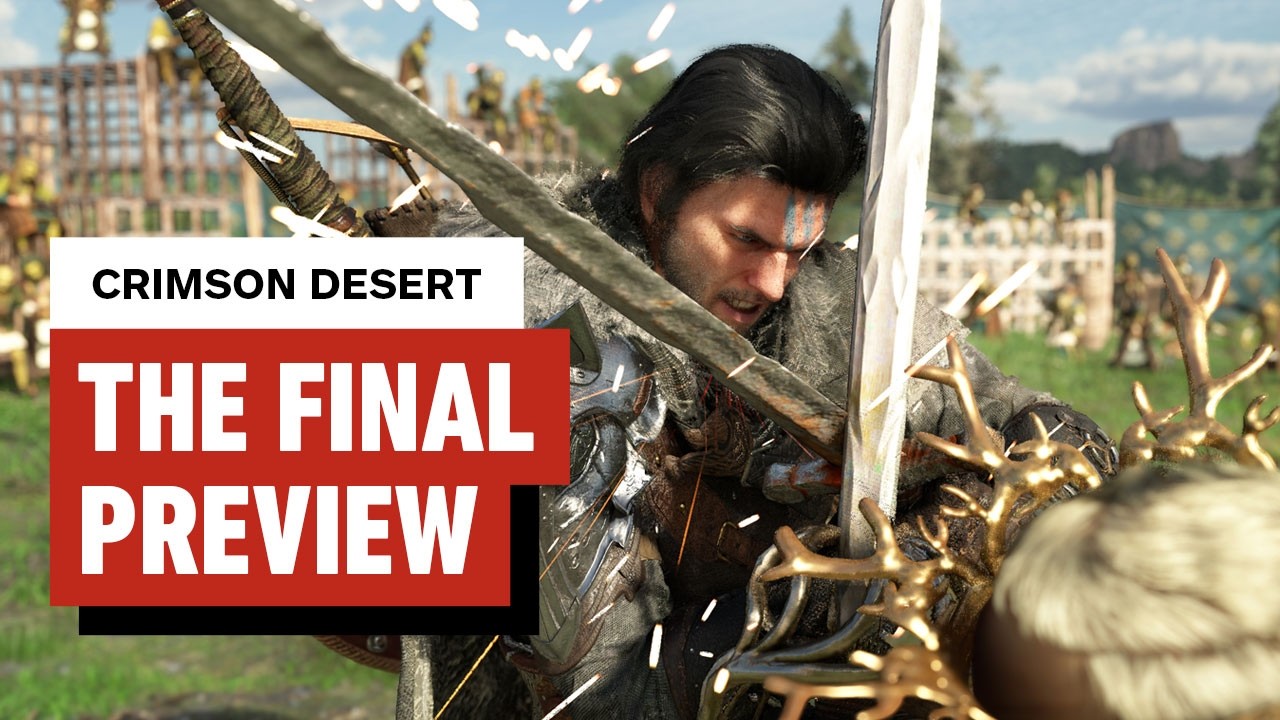
Sector Snapshot: A Volatile Week in Pywel
Crimson Desert’s first full week in the wild has been a study in extremes: a visually absurd, technically sharp open-world combat sandbox that’s simultaneously thrilling players, confusing new recruits, and rattling investors. Concurrency on Steam spiked past 239,000 players, while first-wave reviews and impressions triggered a near 30% stock drop for Pearl Abyss. The result is a live case study in how spectacle-heavy AAA #gamedev collides with expectation management.
Breach.gg’s field data shows the conversation coalescing around three fronts: systemic depth (and overload), surprisingly strong technical performance, and a meta-layer of economic and traversal optimization that the game itself barely explains. For a project that often feels like a controlled explosion of mechanics, this week’s intelligence reads like a survival manual.
Systems Density: When “Crimson Desert” Is the Feature
A Sandbox of Maximum Interaction
Multiple reports describe crimson desert as less a focused RPG and more a “controlled experiment in maximum interaction density.” Combat, traversal, stealth, grapples, mounts, physics gags, and cinematic set-pieces all compete for player attention. The standout feature, as one analysis bluntly puts it, is simply that Crimson Desert is Crimson Desert—a game defined by excess.
Long-duration testing (110+ hours) reinforces that impression. The core combat loop is high-impact and responsive, but mission logic and narrative cohesion sometimes desync from the mechanical fireworks. New players are advised to unlearn standard open-world complacency: stamina matters, terrain matters, and resource scarcity can punish autopilot behavior.
Hidden Mechanics and Onboarding Gaps
One of the strongest through-lines in the intel is that the game withholds critical information. A “14 things it doesn’t tell you” breakdown highlights obscure systems around resource friction, traversal exploits, and survival edge cases. Another primer, “12 things to do first,” effectively functions as the onboarding the game doesn’t deliver.
For #gamedev teams, this is a cautionary datapoint: dense systemic design without equally dense tutorialization pushes players toward external guides as a default, not a bonus.
Traversal & Logistics: Movement as a Strategic Resource
Fast Travel as Logistics Network, Not Teleport Button
Crimson Desert’s fast travel isn’t a simple menu hop. Multiple field logs frame it as a layered logistics network: shrine links, settlement anchors, mount-based routing, and context-sensitive jumps that respect terrain, story state, and risk zones. Separate intel packets break down:
- How fast travel works at a systemic level.
- How to fast travel broadly across Pywel.
- How to fast travel directly back to your house, turning it into a tactical resupply hub.
This reframing of traversal as a strategic resource—rather than a pure loading screen—is one of the more forward-leaning design decisions, even if the game doesn’t surface it clearly.
Kinetic Systems: Slope-Sliding as Physics Exploit
A standout mobility brief covers precision slope-sliding: skilled operators can chain momentum, angle control, and terrain awareness to travel ~50 meters downhill. This isn’t a canned animation; it’s a physics exploitation exercise involving speed stacking, low-friction routing, and impact mitigation.
For players, it’s a power tool. For designers, it’s a glimpse at how emergent physics can become a core mobility verb when tuned just loose enough.
Micro-Systems: Fishing, Arm Wrestling, and Control Schemas
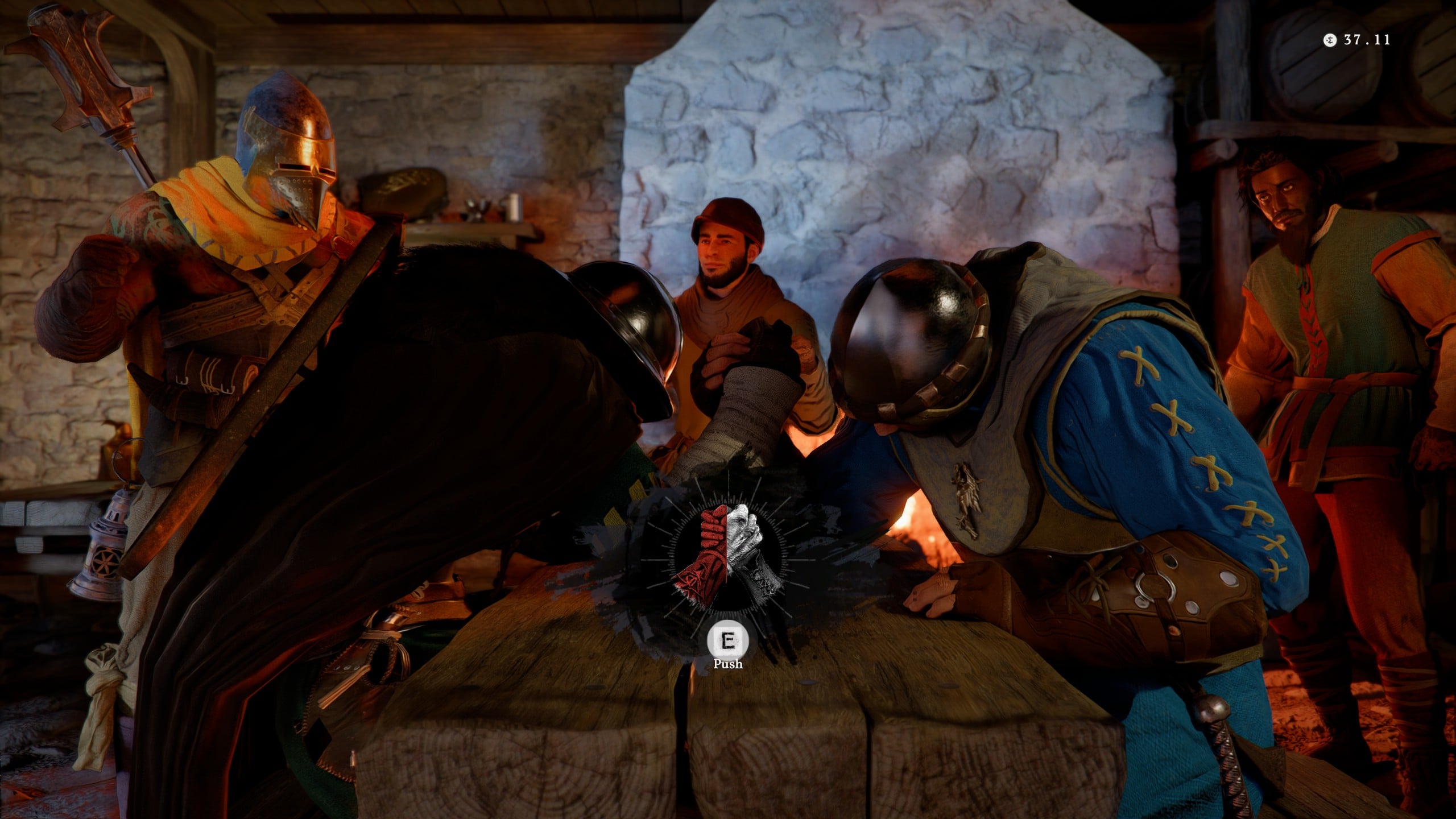
Arm Wrestling: Stability, Not Spam
An unexpected highlight: arm wrestling. Field intel reframes it from button-mashing filler into a mini stability and resource management test. Success hinges on keeping the cursor in a safe zone, reading opponent pressure, and modulating inputs rather than spamming. It’s effectively a bite-sized DPS check where burning stamina too fast loses you leverage.
Fishing: A Quiet but Profitable Economy Loop
Fishing, meanwhile, emerges as a quiet economic backbone. Guides detail how to acquire rods, calibrate bait, and exploit rivers, lakes, and coasts. Time-of-day, positioning, and bite patterns all factor into turning downtime into consistent silver. A follow-up “5 tips” brief treats each cast as a controlled experiment, underlining that this is a designed economy loop, not just flavor.
Controls: Rebinding for Chaos
One of the most practical intel drops is a control-optimization breakdown for players struggling with default inputs. With so many overlapping systems—grapples, mounts, melee combos, traversal tricks—the stock layout can bottleneck responsiveness. The recommended approach: treat controls as a custom rig you tune for your own reflexes, not a fixed schema.
Economy & Meta-Progression: From Early Grind to Passive Income
Early-Game Money Routing
Crimson Desert’s early economy is described as resource routing, not casual grinding. The most effective strategies prioritize:
- High-yield quests over low-impact errands.
- Aggressive liquidation of non-critical loot.
- Chaining efficient side activities (like fishing) to stabilize gold.
This early liquidity is key for acquiring mounts, gear, and upgrades before the wider player ecosystem scales.
Investing for Passive Income
More intriguingly, the game hides a deeper investment layer: trade routes, livestock, properties, and regional businesses can all generate passive silver while you’re questing—or offline. The optimal play is a diversified portfolio across multiple regions, letting your money work while you’re busy wrestling bosses or the terrain.
For #indiegame and mid-sized studios watching from the sidelines, this is a strong signal that hybrid RPG x management layers are increasingly viable, provided the UI and explanation keep up. Crimson Desert’s risk is that it buries these systems under noise.
Combat Telemetry: Boss Encounters as Systems Stress Tests
Watch: Transmitting Gameplay footage from the field: Boss encounters and sandbox combat
Hornsplitter & Excavatron: Verticality and Chaos
The Hornsplitter and Excavatron encounters are repeatedly flagged as systems stress tests. Hornsplitter functions like a mobile siege-beast with brutal melee, while Excavatron is a drilling war-engine that erases cover and composure. Expect:
- Multi-phase targeting and armor cycles.
- Vertical maneuvering and shifting arenas.
- Crowd-control chaos that punishes tunnel vision.
A dedicated Excavatron guide leans heavily on pattern recognition, stamina discipline, and weak point exploitation to convert the fight from chaos into a predictable machine.
Reed Devil & Trial After Trial: Pattern Mastery
The Reed Devil and the Trial After Trial gauntlet are framed as live-fire exams in timing and spatial control. Both demand:
- Tight dodge discipline.
- Recognition of multi-phase attack loops.
- Prioritization of high-threat targets in constrained arenas.
These encounters underscore Crimson Desert’s identity as an action-first RPG where mechanical literacy matters more than raw stats.
Technical Performance: A Rare PC Success Story
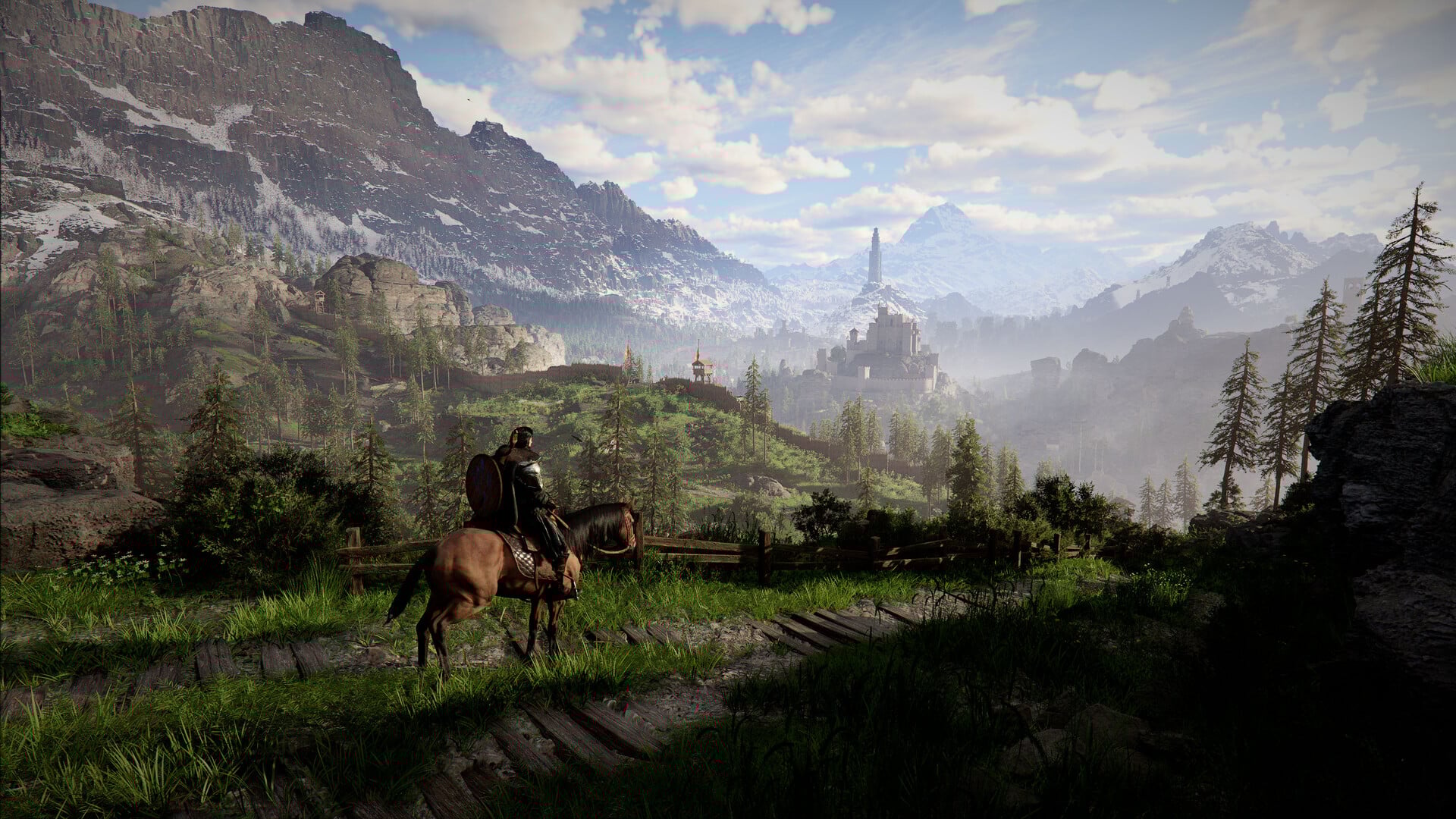
If the design conversation is volatile, the technical one is surprisingly calm. A full PC performance review calls Crimson Desert “one of the most well-optimized PC games in years.” Key findings:
- Ultra presets, dense crowds, and complex physics maintain stable frame times on a wide range of rigs.
- CPU/GPU utilization is intelligently balanced with minimal stutter, even during large-scale combat.
- A full 4K/60 day-night cycle stress test reports stable terrain LOD, volumetric atmospherics, and dynamic lighting.
Console-side, a 21-minute PS5 Performance Mode capture shows similarly stable frame cadence under heavy combat and particle loads. In an era of broken PC ports, this is a rare launch where tech isn’t the problem.
Market Shock: Reviews vs. Expectations
The most disruptive datapoint this week isn’t in-game—it’s on the market. First reviews and 110+ hour impressions landed with mixed sentiment, citing:
- Spectacular visuals and responsive combat.
- Overloaded systems and uneven mission structure.
- A lack of clarity around key mechanics.
Investors reacted fast: Pearl Abyss’ share price dropped nearly 30% on the back of those early verdicts. Steam user sentiment sits around a mixed 61%, even as concurrency climbs, suggesting a polarized but engaged player base.
For the wider #gamedev ecosystem, Crimson Desert is fast becoming a case study in expectation misalignment: a game that over-delivers on spectacle and systemic ambition while under-delivering on clarity and coherence.
Sector Outlook: High-Risk, High-Ceiling Sandbox
Crimson Desert launches into the sector as a high-risk, high-ceiling platform. The foundational tech is strong, the combat and traversal loops are explosive, and the economic and logistics layers hint at long-term depth. But without rapid iteration on onboarding, UX, and systemic focus, the game risks becoming a legend for volatility rather than longevity.
In the coming weeks, watch for:
- Patch cadence targeting onboarding, balance, and mission logic.
- Retention curves on Steam after the initial concurrency spike.
- Whether the community standardizes around external guides as a de facto tutorial layer.
Right now, Crimson Desert is less a stable product and more a live experiment in maximalist design. If Pearl Abyss can tame the chaos without dulling the edge, Pywel could become one of the most instructive sandboxes in modern development.
Sources and corrections
This archive entry does not have a verified article-source list. Images and video embeds alone are not evidence for every claim.
Found an error? Request a correction. Include the passage and a supporting source.