Automated archive / Crimson Desert
Crimson Desert’s Chaotic Launch, Killer Tech, and Systems Overload
crimson desert has launched as one of the most technically impressive open-world games in years—and one of the most structurally unstable. Spectacle, concurrency, and optimization are up, but investor confidence and player onboarding are under heavy fire.
AI-generated summary. This archive article does not have a current recorded source check. Check linked sources before relying on details. Editorial policy
Sector Overview: Spectacle Online, Stability Questioned
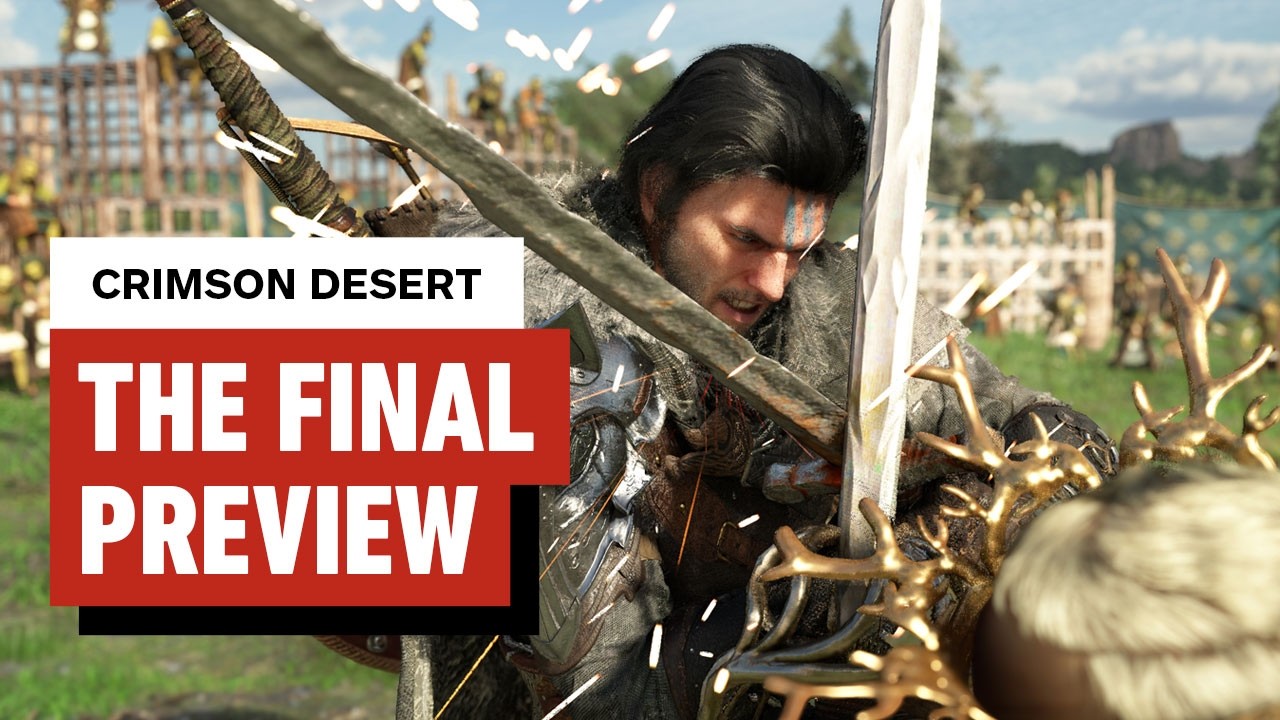
crimson desert has finally breached live servers, and the first full week of telemetry paints a conflicted picture. On one axis, we have a visually absurd open-world combat sandbox running shockingly well on both high-end PC and base PS5. On the other, a design stack so dense it’s destabilizing player sentiment and investor confidence in real time.
The headline shockwave: early reviews triggered a near 30% drop in Pearl Abyss’ stock price, with Steam user reviews sitting at a mixed ~61%. That disconnect between technical excellence and structural friction is now the core narrative the studio will have to manage.
Market Signals: Concurrency Up, Confidence Down
Steam concurrency spiked to 239,045 players, confirming that curiosity and spectacle are doing their job. But that peak arrives alongside two critical market datapoints:
- Critic sentiment: Long-session impressions (110+ hours) describe a powerful, cinematic action-RPG hybrid that routinely loses systemic coherence. The consensus: incredible moments, unstable macro-design.
- Investor reaction: Pearl Abyss’ share price plummeted almost 30% after reviews hit. That’s not just about Metacritic—it’s a vote of no confidence in long-tail retention and live-ops upside.
For #gamedev watchers, crimson desert is now a live case study in how over-scoped feature stacks can undermine even the best-engineered launch.
Tech & Performance: A Rare PC Port Win
In a year of broken PC launches, crimson desert is a technical outlier. Field reports describe ultra presets, dense crowds, intense physics, and still minimal frame-time instability. CPU/GPU utilization appears well balanced, with stutter largely contained even during large-scale combat.
On console, a 21-minute base PS5 Performance Mode sweep shows consistent frame cadence under heavy melee, traversal, and cinematic loads. The engine is doing the work many AAA ports simply haven’t this generation.
From a #gamedev perspective, this is the clearest win: the tech stack shipped ready, and optimization is a selling point instead of a damage-control patch note.
Systems Density: When “More” Starts to Hurt
The activity feed this week reads like a design autopsy on feature bloat:
- Traversal & Fast Travel: Multiple guides dissect fast travel, routing to your house, shrine networks, and skybridges. Movement isn’t a simple QoL layer; it’s a logistics puzzle. Great for depth, but the fact players need detailed routing intel in week one suggests onboarding gaps.
- Combat & Boss Design: Hornsplitter, the Excavatron, and the Reed Devil are effectively systems stress tests—multi-phase, pattern-heavy, and punishing on stamina and positioning. When boss guides immediately emphasize pattern recognition and resource cycling, it’s a sign the default difficulty curve is tuned for veterans, not tourists.
- Side Systems Everywhere: Arm wrestling as a stability mini-game, fishing as a full-blown economy loop, disguises for fortress infiltration, and a surprisingly granular character dye/customization layer. None of this is throwaway, but the aggregate effect is cognitive overload.
One of the sharper analyses this week framed crimson desert’s standout feature as simply that it is Crimson Desert: a maximalist experiment in interaction density rather than a focused RPG. That’s both its brand and its Achilles’ heel.
Economy & Meta-Progression: MMO DNA Exposed
Under the action-RPG skin, crimson desert’s economy is quietly running MMO-lite logic:
- Early-game gold routing: Players are already optimizing high-yield quests, loot liquidation, and efficient side-activity chains to stabilize their finances as fast as possible.
- Passive income systems: Investments in trade routes, livestock, properties, and regional businesses create AFK-friendly silver flows. It’s a full economic layer that will matter more if/when live-ops or seasonal content kick in.
This is where the #indiegame and #gamedev communities should pay attention: Pearl Abyss is trying to graft long-tail MMO-style progression onto a cinematic single-player framework. The friction we’re seeing—grind perception, information overload, mixed reviews—is what happens when those DNA strands don’t fully fuse.
UX & Onboarding: The Missing Manual Problem
One of the most telling intel packets this week is a rundown of “14 things crimson desert doesn’t tell you” plus a separate “12 things to do first” primer. That’s a red flag for onboarding:
- Critical systems (resource friction, traversal tricks, survival nuances) are under-explained.
- New players must “relearn” basic open-world habits—stamina discipline, cautious scouting, and respect for terrain.
This isn’t inherently bad; demanding games can build passionate communities. But at scale, poor tutorialization amplifies churn, especially when combined with a punishing combat curve.
Cross-Platform & Ecosystem: Smart Moves Amid the Chaos
Strategically, Pearl Abyss has made a few strong ecosystem plays:
- Xbox Play Anywhere support means a single purchase syncs progress across console and PC, lowering friction for multi-device players.
- Synchronized global release windows kept launch conversation unified, helping drive that 239k Steam concurrency spike.
Watch: Transmitting Gameplay footage from the field: Crimson Desert Xbox Play Anywhere trailer
These are the kinds of infrastructure decisions that don’t fix design problems, but they do increase the ceiling for long-term engagement if the core experience can be stabilized.
Micro-Systems Snapshot: Fishing, Fashion, and Friction
Zooming into this week’s most-read guides gives a sense of what players are actually doing between set-pieces:
- Fishing is emerging as a quiet, profitable loop—time-of-day, positioning, and bite-pattern reading turn it into a low-intensity but high-yield side economy.
- Character customization & dyes are being treated as battlefield signaling rather than pure vanity—players are aligning visual identity with build archetypes.
- Hernand Castle infiltration via disguise highlights a stealth/social design seam that the game doesn’t foreground enough in its marketing.
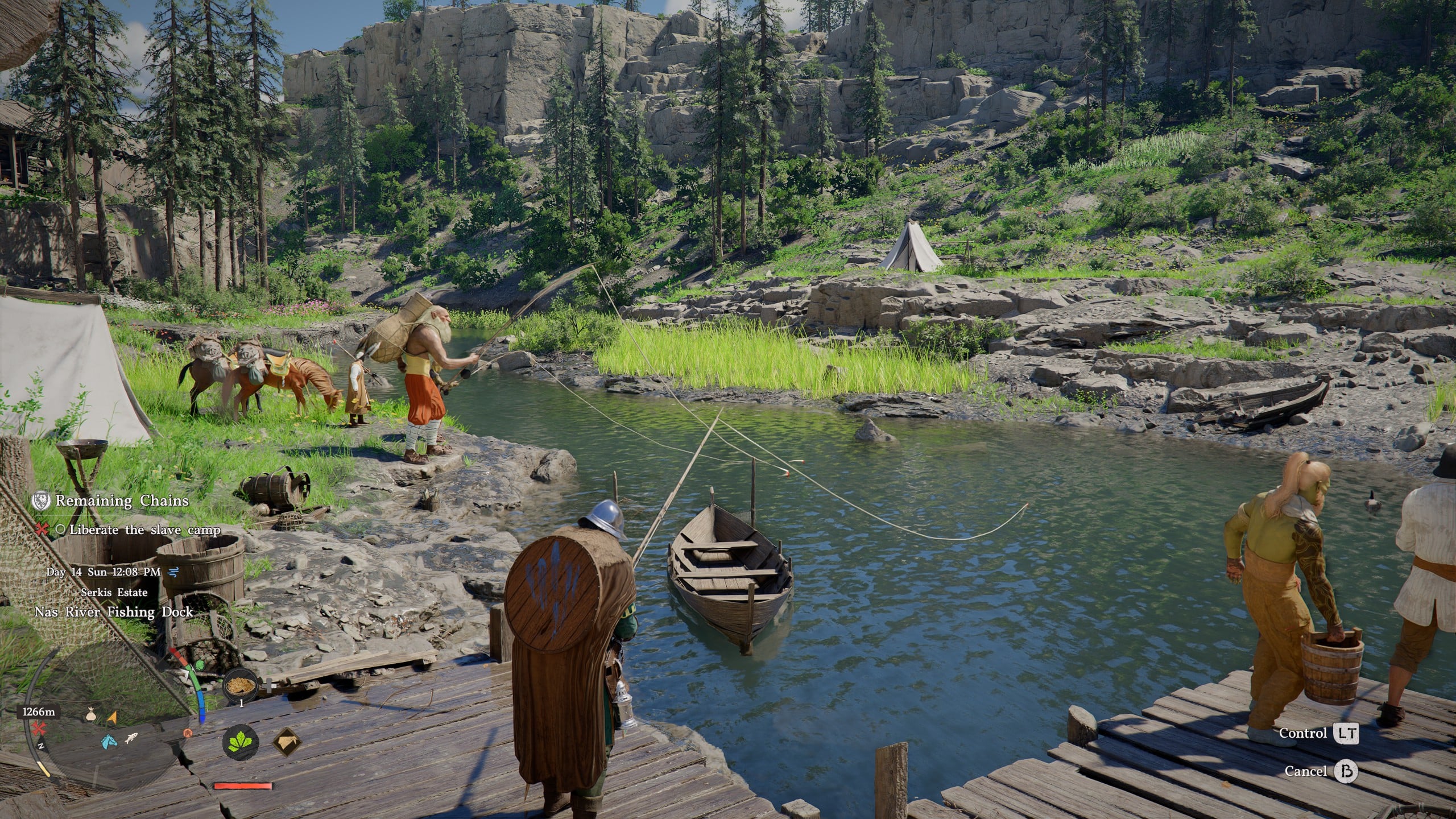
These subsystems are where crimson desert feels most alive: emergent stories, personal expression, and low-stakes experimentation.
Strategic Outlook: What Needs to Happen Next
From a sector-intel standpoint, crimson desert is not a write-off; it’s an unstable asset. The tech is there, the art is there, and the concurrency ceiling proves the audience is willing to show up. But three things need to happen fast:
- Onboarding & UX Patches: Better in-game explanation of traversal, economy, and survival systems to reduce reliance on external guides.
- Difficulty & Pacing Tuning: Smoothing early-game spikes and clarifying boss telegraphs to make high-end encounters feel fair, not opaque.
- Transparent Roadmap: Pearl Abyss must communicate a concrete post-launch plan—balance passes, QoL updates, and potential content drops—to reassure both players and investors.
For now, crimson desert stands as a cautionary tale and an inspiration in equal measure: proof that even in 2026, you can still surprise the market with raw technical execution—and still stumble if your systems design can’t keep pace with your ambition.
Sources and corrections
This archive entry does not have a verified article-source list. Images and video embeds alone are not evidence for every claim.
Found an error? Request a correction. Include the passage and a supporting source.