Automated archive / Crazy Taxi: World Tour
Crazy Taxi: World Tour Reboots the Fare War With Brands, Chaos, and Kenji Kanno
Crazy Taxi: World Tour is evolving from a single-city arcade relic into a global, systemic fare-war—complete with denser traffic, louder brands, and the return of original creator Kenji Kanno. The result could be a definitive case study in how to modernize a cult classic without losing its chaotic soul.
AI-generated summary. This archive article does not have a current recorded source check. Check linked sources before relying on details. Editorial policy
Sector Intelligence: Crazy Taxi’s Global Meter Starts Running
Crazy Taxi: World Tour has re-entered the public grid with a full-throttle reveal at the Xbox Games Showcase 2026, and the signal is loud: SEGA isn’t just remastering a cult classic, it’s re-architecting a global, systemic arcade racer for modern hardware. The new trailer reframes the series as a worldwide fare-hunting circuit, spanning neon megacities, dense traffic fields, and high-velocity economic routing.
For #gamedev teams and systems-minded designers, the last week’s data packets sketch a clear direction: World Tour is less about nostalgic laps around the Dreamcast block and more about scaling Crazy Taxi’s chaos into a live, city-sized operations sim.
Design Direction: From Local Loop to Global Grid
The core pitch emerging from the activity feed is a shift from single-city arcade sprints to a global fare-war. World Tour positions each metropolis as a high-density revenue route, where:
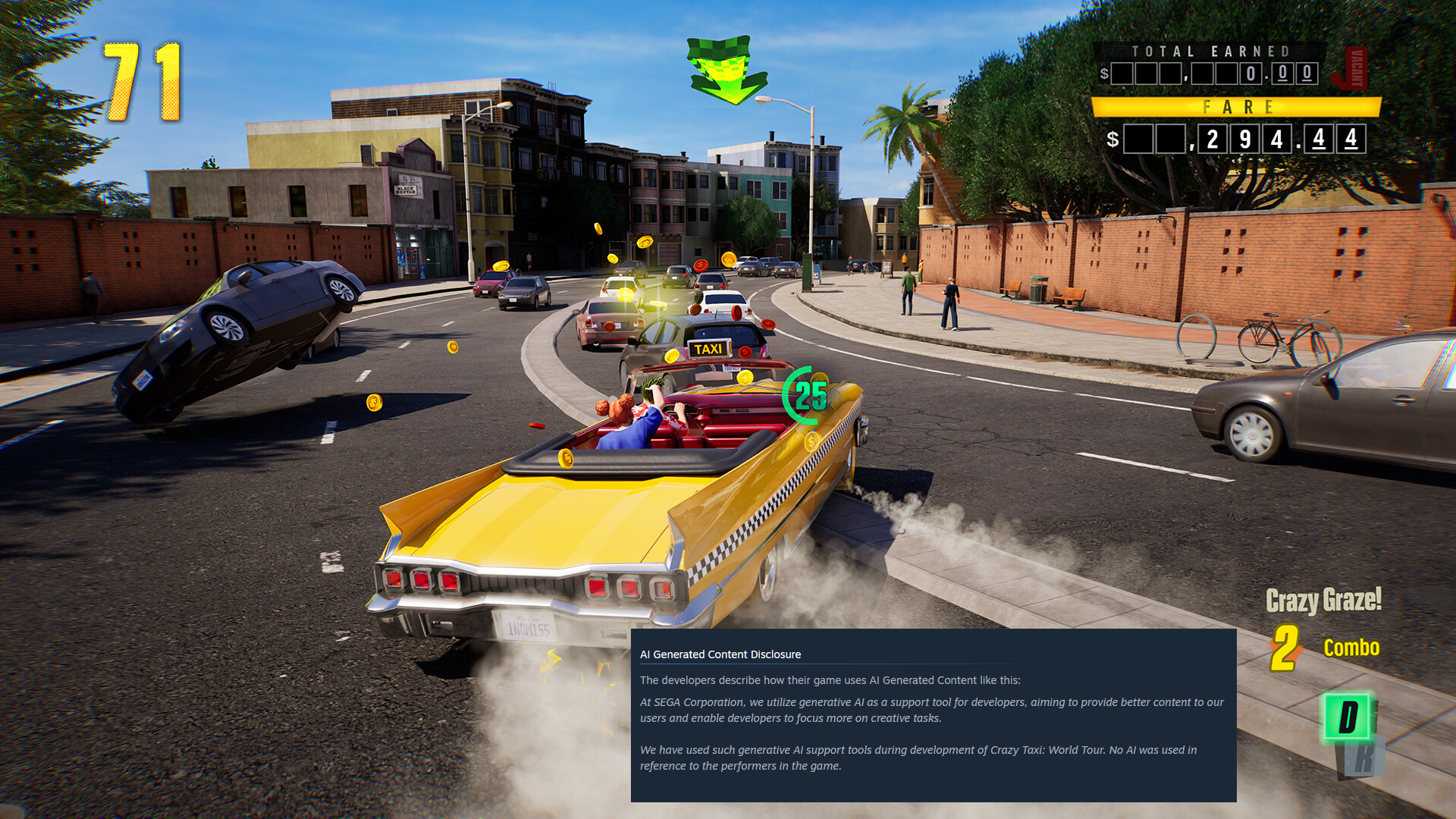
- Dynamic traffic becomes both obstacle and scoring tool, encouraging precision drifts and near-miss threading.
- Trick-score multipliers tie airtime, stunts, and risky routing directly into fare optimization.
- Open-city structure reframes “levels” as interconnected districts, closer to a live operations grid than discrete stages.
This aligns Crazy Taxi: World Tour with modern systemic racers, but the language around “urban throughput optimization at 120 mph” suggests SEGA wants to preserve the arcade immediacy while layering in more simulation-grade routing decisions. For designers, that’s a tightrope: keep the pick-up-and-play chaos while adding just enough systemic depth to sustain long-term engagement.
Kenji Kanno’s Return: Legacy DNA in a New Engine
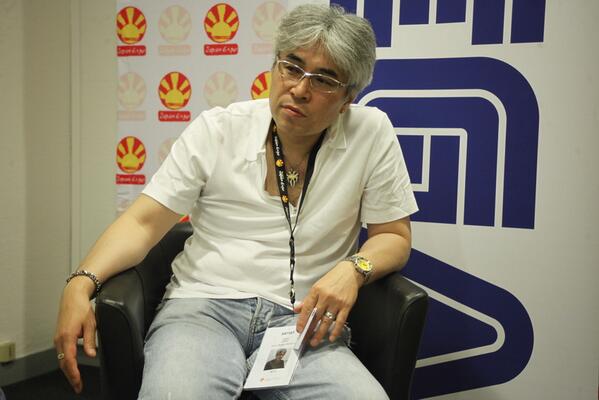
One of the most important signals for both players and developers is SEGA’s decision to reactivate original series architect Kenji Kanno to helm Crazy Taxi: World Tour. That move reads like an internal safeguard against the reboot drifting too far from its arcade roots.
Kanno’s presence implies:
- A strong bias toward tight, readable game feel over bloated progression systems.
- Faithfulness to the original’s time-pressure loop: short runs, high stakes, constant tension.
- A likely emphasis on expressive driving physics—where drifting, weaving, and jumping feel exaggerated but consistently legible.
For #gamedev teams studying long-tail reboots, this is a textbook case of pairing legacy leadership with modern production: use the original architect to lock in tone and pacing, then layer contemporary systems (online hooks, global structure, live events) on top.
Commercial Circuit 2.0: From Pizza Hut to Five Guys
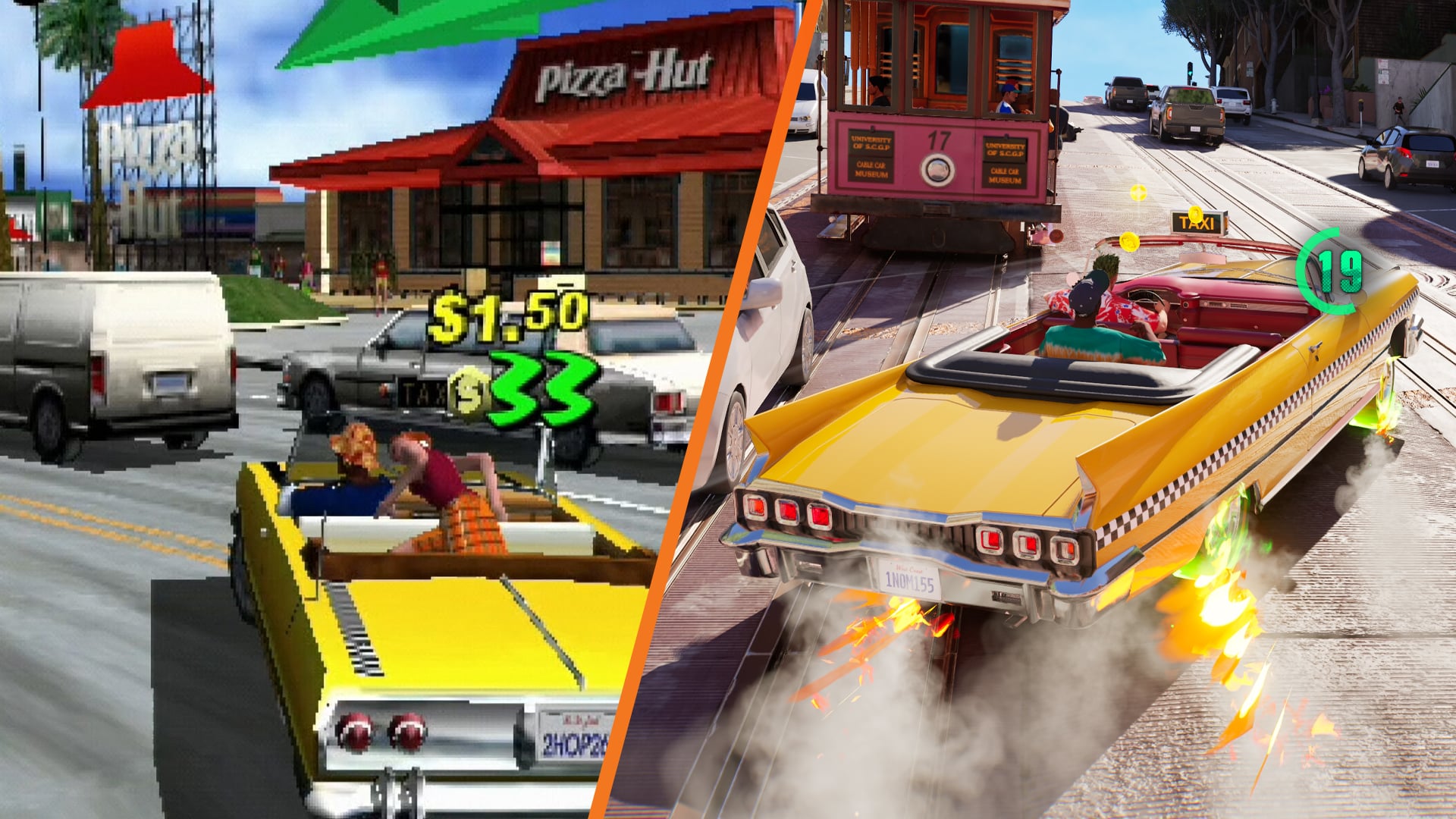
One of the most striking shifts flagged in the activity feed is the new commercial grid. The reboot is trading late-90s staples like Pizza Hut for contemporary storefronts such as Five Guys, with a clear intent to turn the city into a living, branded playground.
Key implications:
- Every corner as billboard: Signed storefronts and IRL logos are no longer background dressing—they’re part of the navigational and visual language of each run.
- Increased visual density: Louder signage, more brand variety, and heavier traffic risk tipping into visual noise. The UI, color grading, and environment readability will be under heavy scrutiny from both players and UX-focused devs.
- Monetization & partnerships: While no explicit monetization model is confirmed, the emphasis on licensed brands suggests SEGA is building a flexible sponsorship layer that could evolve post-launch.
For designers, the challenge is to keep brand integration subordinate to legibility. If a Five Guys marquee helps anchor a landmark or route decision, it’s doing design work. If it’s just another glowing rectangle in a skyline of glowing rectangles, it becomes friction.
Platform Rollout and Technical Expectations
Crazy Taxi: World Tour is scheduled for a 2027 deployment across PS5, Xbox Series, Nintendo Switch 2, and PC. That cross-platform spread indicates SEGA is aiming for:
- Scalable city simulations that can flex between high-end PCs/PS5/Series X and the more constrained Switch 2 profile.
- Potential online connectivity hooks—leaderboards, asynchronous challenges, or seasonal city variants—without fully committing (yet) to a live-service label.
From a production standpoint, synchronizing physics, traffic systems, and dense urban art across that hardware range is non-trivial. Expect aggressive use of:
- Streaming and LOD systems to keep fast traversal smooth.
- Deterministic traffic and AI patterns tuned for both fairness and highlight-generation (near misses, choreographed chaos).
Community Tension: How Far Can a Reboot Drift?
The activity feed notes “fresh controversy over direction and tone.” That’s predictable for a property as tightly associated with a specific era and vibe as Crazy Taxi. The friction points are already visible:
- Tone drift: Can World Tour maintain the anarchic, almost punk energy of the original while operating on a slick, globalized stage?
- Systemic complexity vs. arcade purity: The more SEGA leans into open-city operations and economic meta-systems, the more it risks alienating players who just want 3-minute blasts of chaos.
- Brand saturation: For some, the move from Pizza Hut to Five Guys is a fun modernization; for others, it signals an over-commercialized city that feels less like a playground and more like an ad network.
For #indiegame and #gamedev observers, this is a live case study in reboot risk management: how to modernize a classic without sanding off the edges that made it culturally sticky.
Watch Points for Developers and Designers
As Crazy Taxi: World Tour races through pre-launch, these are the critical systems worth monitoring:
1. Traffic & Physics as Content Generators
The promise of “systemic traffic mayhem” only pays off if the AI, collision rules, and physics reliably generate highlight moments without feeling random or unfair. Expect heavy iteration on:
- Lane behavior and aggression curves.
- Collision forgiveness windows.
- Boost, drift, and jump affordances.
2. Session Structure & Progression
Will World Tour stick to short, high-intensity runs, or adopt a more open-ended, session-based structure? The answer will define:
- How progression, unlocks, and cosmetics are paced.
- Whether the game leans closer to a score-chasing arcade title or a longer-form driving RPG.
3. Visual Readability in Branded Chaos
With denser signage and IRL brands, the art team must ensure:
- Clear hierarchy between critical information (routes, traffic, passengers) and ambient detail (ads, skyline noise).
- Consistent color and contrast rules so players can parse intersections at 120 mph.
Strategic Outlook
Crazy Taxi: World Tour is positioning itself as a global, systemic reboot that keeps the original’s kinetic heart while upgrading its commercial and structural layers for 2027. The return of Kenji Kanno is a strong counterweight to fears of a tone-deaf modernization, but the true test will be how well SEGA reconciles arcade chaos with open-city ambitions.
For now, the meter is running, the brands are brighter, and the design questions are big. Crazy Taxi: World Tour is no longer just a nostalgia play—it’s a live laboratory for how to reboot a fiercely specific arcade classic for a new hardware cycle.
Sources and corrections
This archive entry does not have a verified article-source list. Images and video embeds alone are not evidence for every claim.
Found an error? Request a correction. Include the passage and a supporting source.
Your games, in one place
Keep up with Crazy Taxi: World Tour
Follow this game to collect its posts in your personal feed. Come back to see what you missed.