Automated archive / Crazy Taxi: World Tour
Crazy Taxi: World Tour Reboots the Fare War With Brands, Backstory, and Global Asphalt
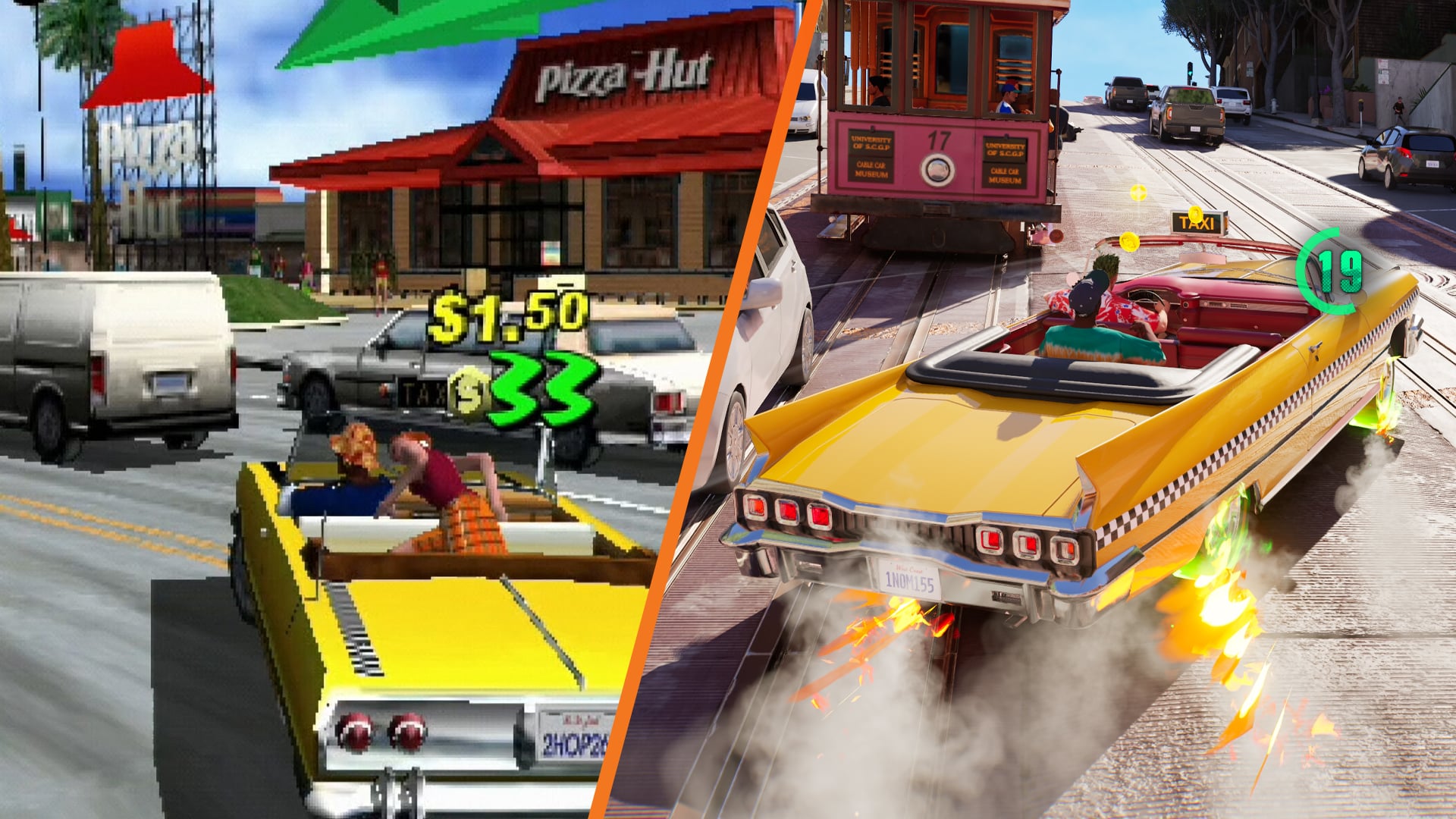
Crazy Taxi: World Tour is no longer a vague tease—it’s a full-scale global reboot with original creator Kenji Kanno back at the wheel and a brand-new commercial grid replacing the classic Pizza Hut-era adscape. The question now is whether Sega can keep the arcade chaos intact while turning neon megacities into...
AI-generated summary. This archive article does not have a current recorded source check. Check linked sources before relying on details. Editorial policy
Watch: Transmitting Gameplay footage from the field: Official Crazy Taxi: World Tour reveal
Sector Snapshot: Crazy Taxi Signal Reacquired
Crazy Taxi: World Tour has re-entered the global radar as Sega’s most aggressive attempt yet to modernize its arcade royalty. After a quiet tease in 2023, the project has resurfaced via the Xbox Games Showcase with fresh footage, a 2027 launch window, and a very different commercial profile. The result: a sharp split in community sentiment and a lot of design questions that matter for #gamedev and #indiegame teams watching how legacy IP gets rebuilt for a live, connected era.
World Tour is positioned as a global fare-hunting circuit: neon megacities, high-speed passenger extraction, trick-score multipliers, and systemic traffic chaos all wired into a larger open-city operation. The pitch isn’t “commuting,” it’s throughput optimization at 120 mph — a modern spin on the original’s 60-second micro-economy.
Command: Kenji Kanno Is Back in the Driver’s Seat

The most important development update isn’t a feature; it’s a name. Sega has reactivated Kenji Kanno, the original series architect, to helm Crazy Taxi: World Tour. That move is a direct response to long-running community anxiety that any reboot would dilute the arcade DNA in favor of generic open-world cruising.
From a design-history perspective, Kanno’s return signals a few likely priorities:
1. Arcade-First Systems in a Larger Shell
The original Crazy Taxi was built on tight loops: short timers, aggressive rubber-banding, and scoring systems that rewarded risk over efficiency. With Kanno steering, expect those legacy instincts to surface as:
- Short, high-pressure fare windows even inside larger city maps.
- Combo-driven trick systems that turn drifts, near-misses, and jumps into revenue streams.
- Traffic as a scoring tool, not just an obstacle — weaving, threading, and exploiting density.
For #gamedev teams, this is a classic case study in grafting arcade loops onto open-world scaffolding without losing pacing.
2. Systemic Traffic Mayhem
The activity feed repeatedly calls out “dynamic traffic” and “systemic traffic mayhem.” That suggests simulation layers under the spectacle: traffic density waves, time-of-day congestion, and possibly adaptive routing that nudges players into high-risk/high-reward lanes. If executed well, it could restore that “barely-in-control” energy that defined the originals.
Global Grid: From Single City to World Tour
Crazy Taxi: World Tour is scaling from one iconic city to a “worldwide fare-hunting circuit.” That’s not just a map-size bullet point; it’s a structural shift.
1. Multiple Megacities as Live Circuits
Instead of one dense coastal sandbox, Sega is talking “neon megacities” — plural. Each urban cell can be tuned as a discrete ruleset:
- One city might prioritize verticality and stunt lines (rooftop jumps, multi-level freeways).
- Another might emphasize gridlock and micro-routing, forcing players to carve lines through impossible congestion.
- A third might lean into waterfront shortcuts and ferries, echoing the original’s pier chaos.
This modular approach opens doors for seasonal content, live events, and city-rotation strategies that keep the economy fresh without rewriting core systems.
2. Platform Spread and Technical Implications
Launching in 2027 across PS5, Xbox Series, Nintendo Switch 2, and PC, World Tour is clearly targeting a long tail. For developers, the technical read is:
- Cross-platform scalability for dense traffic AI and physics-heavy stunts.
- Networked features (leaderboards, ghost runs, asynchronous challenges) that can survive across wildly different hardware envelopes.
Brandscape Rewired: From Pizza Hut to Five Guys
The most controversial shift isn’t mechanical; it’s commercial. Crazy Taxi’s identity has always been intertwined with real-world brands — Pizza Hut, KFC, Tower Records. World Tour is doubling down on that heritage, but with a new roster: Pizza Hut out, Five Guys and other modern storefronts in.
1. The New Commercial Grid
Sega is effectively turning cities into “living billboard streams,” where every intersection is both a stunt playground and an ad unit. Expect:
- High-density signage and storefronts as navigational landmarks.
- Branded drop-off zones that may carry unique rewards or modifiers.
- Contextual missions (“rush this VIP to a specific chain in 60 seconds”) that tie gameplay directly to partners.
From a #gamedev perspective, this is a blueprint for diegetic monetization: brands as worldbuilding, not just loading-screen banners. For #indiegame teams, it’s a case study in how far you can push commercial integration before it fractures tone.
2. Community Risk: Adscape vs. Arcade Soul
The risk is clear: if the commercial layer overwhelms the arcade core, World Tour tilts from cult-classic chaos to branded driving billboard. The design challenge for Kanno’s team will be:
- Keeping readability high despite visual noise.
- Ensuring routes and stunts remain the primary engagement driver, not brand checklists.
- Using brands to anchor memory ("the insane jump near that Five Guys") rather than dictate pacing.
Tone and Direction: How Far From the Original?
The Xbox Showcase trailer and subsequent transmissions have already kicked off a debate over direction and tone. The questions players and devs are asking:
- Is this still arcade chaos first, or has it drifted into open-world tourism?
- Are we looking at a live-service backbone under the hood, with rotating events and seasonal city drops?
- How much narrative framing will wrap the “global ride-share battlefield” pitch?
The feed’s language — “fare-war,” “urban throughput optimization,” “economic mayhem” — hints at a more systemic, possibly competitive layer on top of the core driving. Think asynchronous leaderboards, time-limited contracts, or faction-style cab companies battling for territory.
Design Takeaways for Developers Watching Crazy Taxi: World Tour
For studios tracking this reboot as a design reference, a few key lessons are already emerging:
1. Legacy IP Needs a Clear Design Spine
Bringing back Kenji Kanno is Sega’s admission that nostalgia alone isn’t enough. The spine here is high-pressure, score-chasing arcade driving — everything else (brands, global cities, live ops) has to orbit that.
2. Open Cities Don’t Have to Mean Open-World Pacing
World Tour’s promise of “every corner as a profit spike” is a reminder that open environments can still be tuned for short-session intensity. Timer pressure, aggressive scoring curves, and dense risk opportunities keep the arcade feel alive.
3. Commercial Integration Works Best When It’s Playable
Brands as navigational anchors, trick targets, and unique mission nodes are more sustainable than static billboards. If Sega sticks to that, World Tour could become a reference model for integrating sponsorship into kinetic systems instead of UI clutter.
Outlook: Meter Running to 2027
Crazy Taxi: World Tour is still early in its public roadshow, but the last week of signals has reframed the project: original creator in the cockpit, a global grid of megacities, and an aggressive new commercial layer that wants to turn every run into a branded highlight reel.
For now, the key tension is clear: can Sega and Kanno preserve the ruthless, seconds-to-spare arcade heart of Crazy Taxi while scaling it into a worldwide, brand-soaked operation? The next wave of footage and hands-on reports will tell us whether this is a triumphant fare surge or just another stalled reboot idling at the curb.
Sources and corrections
This archive entry does not have a verified article-source list. Images and video embeds alone are not evidence for every claim.
Found an error? Request a correction. Include the passage and a supporting source.