Automated archive / Counter-Strike 2
Counter-Strike 2’s Ammo Economy Just Went Full MilSim
Counter-Strike 2 just killed the magic ammo pool and turned every reload into a resource decision. Combined with new tactical map guides and X-Ray inventory changes, CS2 is quietly evolving into a more deliberate, information-rich competitive shooter.
AI-generated summary. This archive article does not have a current recorded source check. Check linked sources before relying on details. Editorial policy
Sector Intelligence Report – Counter-Strike 2
Counter-Strike 2 just received one of its most fundamental combat overhauls since launch, and it hits at the heart of the game’s identity: ammo, economy, and tactical information. This isn’t a cosmetic patch—it’s a systemic rewrite that will reshape how players, teams, and even #gamedev designers think about tempo, risk, and round conversion.
In this week’s Sector Intelligence Report for Counter-Strike 2, we break down the new ammunition protocol, the tactical map guide rollout, and the X-Ray inventory scanner expansion—and what each means for competitive play, design philosophy, and future updates.
1. Ammunition Protocol Overhaul – The End of the Magic Ammo Pool
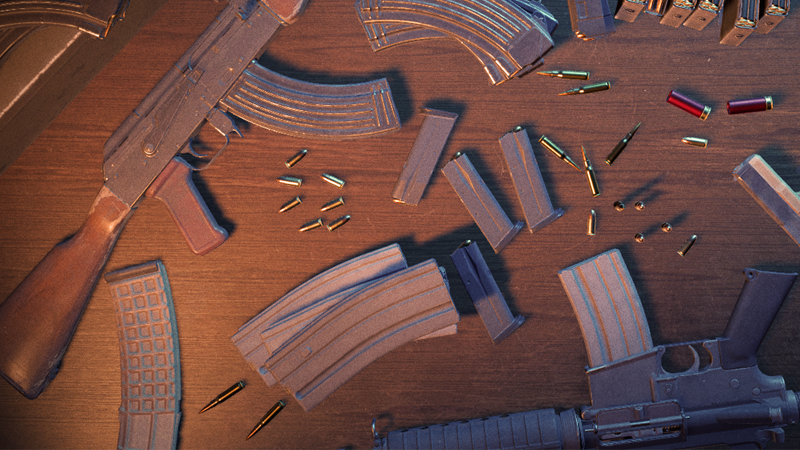
Valve has flipped the table on decades of Counter-Strike muscle memory. The old, invisible “shared ammo pool” is gone. In its place: a magazine-accurate ammo economy where reloading dumps your remaining rounds.
1.1 Reloads Are Now Commitments, Not Habits
Every time you hit reload, you lose the bullets left in that magazine. That means:
- No more free topping-off between duels.
- Every reload is a trade-off between safety in the next peek and long-term sustain across the round.
- Spray discipline and fight selection become even more critical.
Most weapons now ship with three reserve magazines, with tuning by role:
- Precision rifles and pistols: fewer total mags, emphasizing accuracy and deliberate shots.
- Spam-friendly rifles and LMGs: more mags, but still finite—wallbangs and suppression fire have a real economic cost.
This is a quiet but radical shift in how counter-strike 2 defines skill. It rewards:
- Players who track their mag count like they track utility.
- IGLs who factor ammo longevity into site hits, retakes, and saves.
- Map control styles that avoid unnecessary chip fights that bleed bullets.
From a #gamedev perspective, this is Valve leaning harder into simulation-informed design without abandoning CS’s clarity. It’s still readable, still fast—but with a deeper decision layer under every reload key press.
2. New HUD Readability: Mags, Shells, and Combat Readiness
CS2 now displays reserves as magazines, shells, or bullets, with a new fill-level bar sitting under the ammo readout. This is subtle UI work with big systemic implications:
- The fill bar lets players assess at a glance whether they’re entering a duel with a half-empty mag.
- The per-weapon reserve tuning makes each gun feel more distinct in its logistics profile, not just damage and recoil.
For competitive players, this tightens the feedback loop between information and decision. For #indiegame and #gamedev designers watching from the outside, it’s a strong case study in:
- Exposing complexity visually without clutter.
- Using UI to teach new systems instead of burying them in patch notes.
3. Tactical Map Guides – Onboarding Meets Esports
Alongside the ammo rework, Valve deployed limited tactical map guides into Competitive and Retakes for the opening five rounds, capped at 30 nodes.
3.1 Live-Fire Learning Instead of Offline Homework
These guides function as in-client, in-match playbooks:
- Showcasing core smokes, flashes, and positions.
- Giving newer players a baseline tactical framework without YouTube alt-tabbing.
- Letting teams stabilize early halves instead of losing the first five rounds to confusion.
Server cvars offer granular control:
- Disable annotations entirely.
- Limit or allow full + editable guides.
- Configure how many rounds guides stay active (with -1 for unlimited intel).
For leagues, tournament servers, and serious scrim environments, this flexibility is crucial. Organizers can choose between:
- Pure, no-assist environments for top-tier play.
- Training-friendly servers where teams can iterate, annotate, and evolve strats in real time.
3.2 Minimal Guides Across the Entire Active Duty Pool
Valve confirms that every Active Duty map now has minimal starter guides. This is a strong signal: the team isn’t just balancing weapons, they’re investing in onboarding the tactical layer.
From a design lens, this is a move toward “esports accessibility”—lowering the barrier of entry to competitive play while preserving the high ceiling of mastery. It’s the kind of systemic onboarding many #indiegame developers struggle to bolt on late; CS2 is building it into the core experience.
4. Workshop & Practice – Seamless Training Lobbies
Players can now join friends running Practice or Workshop maps directly from the friends list, as long as the party is open.
This small-looking change has outsized impact:
- Makes tactical drills and utility practice frictionless.
- Encourages community-made training tools to feel like part of the live ecosystem, not a side alley.
- Bridges the gap between “customs” and “serious prep”, turning Workshop into a live-fire training ground rather than a solo lab.
For #gamedev observers, this is another example of Valve removing social friction to increase engagement with systemic tools.
5. X-Ray Inventory Protocol – Germany & Netherlands Get a New Funnel

On the monetization and compliance front, CS2 has rolled out an X-Ray Scanner protocol for players in Germany and the Netherlands.
Key beats:
- A new Scanner tab appears in inventory.
- All keyed containers must be opened through the scanner—no bypass.
- Players receive a one-time, exclusive, non-tradable “Genuine P250 | X-Ray” that must be claimed before scanning other containers.
- Keyless containers (e.g., Souvenir Packages) remain free to open directly.
This is a continuation of Valve’s region-specific approach to loot box regulation and transparency, while still preserving the broader CS2 economy.
For designers and economists, it’s a live case study in:
- Regulatory adaptation without fracturing the global item ecosystem.
- Using UI funnels (the scanner tab) to enforce compliance while maintaining user flow.
6. Strategic Outlook – A More Deliberate Counter-Strike 2

Taken together, this week’s changes push Counter-Strike 2 toward a more deliberate, information-dense shooter:
- Ammo system forces players to respect resource management beyond money and utility.
- Tactical guides compress the learning curve, making ranked more structurally coherent.
- Workshop join improvements and X-Ray logistics tighten the loop between practice, play, and progression.
In competitive terms, expect an adjustment period:
- Early rounds may see more saves and fewer blind re-peeks as players adapt to finite mags.
- Support roles and IGLs will likely rethink utility timings to avoid unnecessary bullet drain.
- Content creators and analysts will have fresh ground to cover in ammo discipline, mag tracking, and map-guide optimization.
For the wider #gamedev and #indiegame scene, CS2’s latest update is a clear signal: long-running live games can still take bold systemic risks—as long as the UI, onboarding, and server controls are strong enough to support them.
Sector verdict: Counter-Strike 2 just became less forgiving, more readable, and strategically richer. Adapt your doctrine—or get left behind on the wrong side of the reload.
Sources and corrections
This archive entry does not have a verified article-source list. Images and video embeds alone are not evidence for every claim.
Found an error? Request a correction. Include the passage and a supporting source.