Automated archive / Counter-Strike 2
Dead Hand Protocol: Counter-Strike 2’s New Glove Economy and a Legal Flashbang from New York
Counter-Strike 2’s latest week fuses a high-impact cosmetic push—the Dead Hand glove collection—with quiet but meaningful map tuning and a major legal clash over lootbox design. For developers, it’s a live case study in economy design, community pipelines, and regulatory risk.
AI-generated summary. This archive article does not have a current recorded source check. Check linked sources before relying on details. Editorial policy
Sector Intelligence Report: Counter-Strike 2 – Week of March 13, 2026
Counter-Strike 2’s live-ops machine just pushed two very different buttons in the same week: a high-gloss cosmetic drop that rewires the glove economy, and a legal counter-push that could reshape how lootbox-driven systems are designed and regulated. For developers watching CS2 as a bellwether for #gamedev and live-service monetization, this is a week worth dissecting frame-by-frame.
Dead Hand Collection: Gloves Become a Strategic Economy Layer
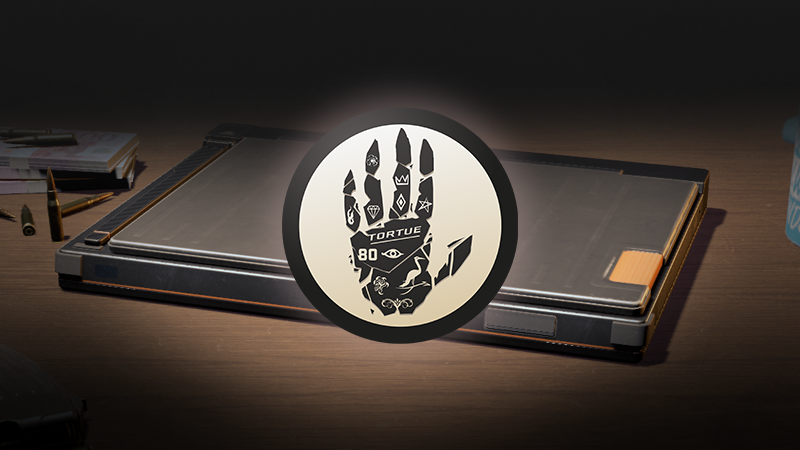
Valve has deployed the Dead Hand Collection, a focused, glove-heavy content drop that leans hard into visual identity as a progression and status signal.
Key payload:
- 17 community-forged finishes – continuing Valve’s long-running strategy of outsourcing aesthetic innovation to the Workshop while centralizing curation and monetization.
- 22 all-new gloves as rare special items – gloves are no longer side-show cosmetics; this volume and rarity tiering elevates them to primary economy drivers.
- Distribution via Dead Hand Terminals as weekly drops – the language is clear: this is a protocol, not just a case. Players are pushed into a recurring loop of queuing, playing, and chasing a high-rarity outcome.
From a #gamedev perspective, the Dead Hand rollout showcases three important design levers:
1. Community-Driven Content as a Core Pipeline
Valve is doubling down on community-forged finishes as a semi-outsourced art department. For #indiegame teams, this is a reminder that:
- UGC pipelines can extend cosmetic lifespans without ballooning internal art costs.
- Curation and rarity assignment remain the true design power—Valve decides which finishes graduate from Workshop to economy pillar.
2. Rarity, Identity, and Spectator Value
Gloves are uniquely visible in first-person and in spectator cams, which makes them ideal for highlight-reel branding. The report language—“weaponize STYLE on every highlight reel”—isn’t accidental. Valve is:
- Treating cosmetics as broadcast UX, not just player vanity.
- Ensuring that rare items are highly legible on stream, reinforcing demand through visibility.
For developers, this is a live example of spectator-first cosmetic design: prioritize items that read clearly in motion and in compressed video.
3. Weekly Drop Cadence as Retention Infrastructure
The Dead Hand Terminals being tied to weekly drops is a classic live-service retention loop:
- Time-gated access to rare cosmetics encourages recurring engagement.
- Thematically framed drops (“Terminals,” “protocols”) add narrative texture to what is, mechanically, a probabilistic reward schedule.
This is where the legal story of the week collides with the design story.
Map Intel: Dust II and Alpine Receive Surgical Tweaks
Beyond cosmetics, the latest Counter-Strike 2 development update quietly ships meaningful competitive changes:
Dust II – Pixel Gap Outside Long Doors Sealed
The pixel gap outside Long door—a long-standing exploit for ultra-precise vision—has been sealed. Design implications:
- Reduces information asymmetry that favored players with deep map knowledge and perfect line-up discipline.
- Narrows the gap between veteran mastery and readability for newer players, which is crucial for onboarding in a legacy competitive map.
For level designers, this is a textbook example of:
- Identifying unintended sightlines that distort risk/reward.
- Choosing to protect tactical clarity over niche tech that only a fraction of the playerbase can exploit.
Alpine – Synced with Latest Workshop Iteration
Alpine’s update being synchronized with the latest Community Workshop deployment highlights Valve’s evolving map pipeline:
- Community maps are effectively in a public prototyping loop, with Workshop feedback informing official integration.
- The goal is “tighter combat flow” – code for adjusting choke points, timings, and rotation paths based on real player data.
For #indiegame and competitive shooter teams, this is a scalable blueprint:
- Use your equivalent of the Workshop as a live testbed.
- Promote maps into official rotation only after data-backed iteration on pacing and readability.
Legal Front: Valve Pushes Back on NY Attorney General Lootbox Lawsuit

In parallel with Dead Hand’s launch, Valve has formally challenged the New York Attorney General’s lawsuit that targets lootbox mechanics in Counter-Strike 2, Dota 2, and Team Fortress 2, particularly around access for minors.
Core points emerging from the response:
- Valve contests the framing of lootboxes as unlawful gambling loops for minors.
- They emphasize ongoing outreach to regulators since early 2023, positioning themselves as a stakeholder actively explaining virtual item economies, not a studio operating in the shadows.
For the broader #gamedev ecosystem, this case is bigger than one publisher:
1. Precedent for Virtual Item Economies
If courts accept a strong link between randomized rewards and gambling law, it could:
- Force design changes to case/key systems, drop tables, and presentation.
- Push studios toward battle passes, direct-purchase cosmetics, or hybrid models that minimize pure-random monetization.
2. Design Transparency as Risk Mitigation
Valve’s mention of “serious concerns with the alterations the NYAG claims are necessary” signals a tension point:
- Regulators may push for odds disclosures, spending caps, or age-gating.
- Studios will try to preserve economic depth without crossing legal red lines.
For developers, the pragmatic takeaway is clear:
- Treat regulatory literacy as a design constraint, not an afterthought.
- Document how your monetization loops work, for both internal ethics reviews and external scrutiny.
Strategic Takeaways for Developers Watching CS2
- Cosmetics as Competitive UX – Dead Hand shows how to align cosmetic design with spectator clarity and identity, not just store pages.
- UGC as a Scalable Content Engine – Both finishes and maps demonstrate that curated community content can sustain a long-lived shooter.
- Map Updates as Live Balancing, Not Content Dumps – Dust II and Alpine tweaks are surgical, data-driven, and framed as part of a continuous tuning philosophy.
- Monetization Under the Microscope – The NYAG lawsuit and Valve’s response underline that lootbox systems are now a regulatory design problem, not just a revenue feature.
For teams building the next competitive #indiegame or evolving a live-service FPS, Counter-Strike 2 remains a critical case study: it’s where economy design, regulatory pressure, and high-stakes competitive balance collide in real time.
Sources and corrections
This archive entry does not have a verified article-source list. Images and video embeds alone are not evidence for every claim.
Found an error? Request a correction. Include the passage and a supporting source.
Your games, in one place
Keep up with Counter-Strike 2
Follow this game to collect its posts in your personal feed. Come back to see what you missed.
More to read about Counter-Strike 2
- Source-checked briefCounter-Strike 2 update improves demo replay tools
A Counter-Strike 2 update adds demo download progress tracking and paused-demo camera options, while also changing a server backup setting and improving Vulkan renderer stability. Demo and replay...
- Source-checked briefCounter-Strike 2 update adjusts AUG reload and audio
A Counter-Strike 2 update adds a dropped defuse-kit ping indicator, shortens AUG reload time, and fixes several audio and map issues. Dropped defuse kits have a ping icon. The AUG reload is half a...
- Source-checked briefCounter-Strike 2 update fixes grenade crosshair display
A Counter-Strike 2 update fixes grenade crosshair rendering for a specific thickness setting and makes equipped gloves visible in more interface scenes. It also includes map lighting and...