Automated archive / Control Resonant
How Control Resonant Turns Melee Into a Paranatural Weapon System
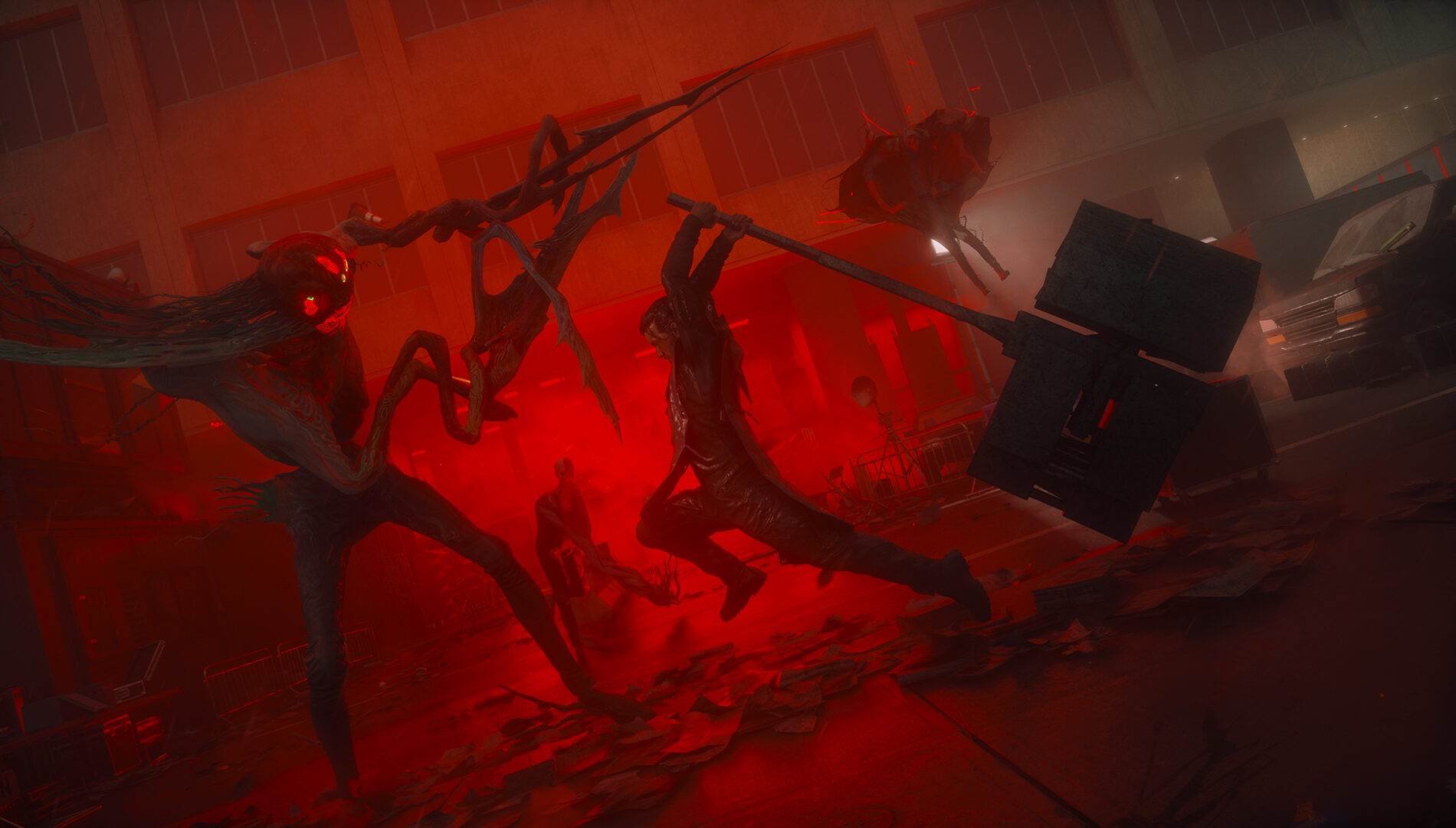
Control Resonant is shifting from hybrid shooter to paranatural melee powerhouse, turning the environment itself into an active combatant. Over the last week, new trailers and hands-on intel have revealed a high-cognition action design that scales from the Oldest House to a folding Manhattan.
AI-generated summary. This archive article does not have a current recorded source check. Check linked sources before relying on details. Editorial policy
Sector Intelligence Report // Control Resonant
Control Resonant is quietly rewriting Remedy’s combat doctrine. Over the last seven days, three key transmissions—the Takeover Briefing, the Paranatural Manhattan trailer, and a hands-on melee systems preview—have converged into a clear thesis: this isn’t just more Control. It’s a full-spectrum redesign of how players move, think, and exert force inside unstable architecture.
From a #gamedev perspective, the signal is obvious: Control Resonant is pivoting from hybrid shooter to tactile, timing-driven action, while scaling its reality-warping level design from the Oldest House into a living, folding city.
Tactical Shift: No Firearms, All Force
The recent hands-on preview frames Control Resonant as a “no-firearms combat environment,” and that’s a radical constraint for a series born around the Service Weapon. Instead of ballistics, the combat loop leans on:
- High-velocity melee chains that demand forward momentum rather than cover shooting.
- Precision parries that convert defense into offense, rewarding perfect timing with crowd control spikes.
- Supernatural CC tools—telekinetic shockwaves, suspensions, and displacements—layered over close-quarters brawling.
This design choice kills the “fallback rifle” mentality. With zero reliance on guns as a crutch, players are locked into constant positional recalculation. Every engagement becomes a moving puzzle of spacing, invulnerability windows, and environmental exploitation.
From a systems-design standpoint, this suggests:
- Animation-driven combat with tight cancel windows and readable telegraphs.
- Stamina or cooldown gating tuned to keep players aggressive but not reckless.
- AI behaviors that pressure flanks, forcing lateral movement and verticality use.
The preview’s note about “dense enemy waves” and “arena-style encounters” signals encounter design closer to character-action titles than traditional third-person shooters—an important shift for both #gamedev and #indiegame teams studying how AAA studios iterate on genre hybrids.
The Oldest House as a Hostile Co‑Designer
Watch: Transmitting Gameplay footage from the field: Take Control systems briefing
The “Take Control” trailer doubles down on a core Control pillar: the environment is not set dressing—it’s an active combatant.
Key intel from the trailer and briefing:
- Reality breaches are no longer rare setpieces; they appear woven into regular encounters.
- Weaponized telekinesis looks like a baseline tool, not a late-game power spike.
- Shifting architecture within the Oldest House can both obstruct and empower the player.
For designers, this reads as an expansion of reactive level design: rooms that reconfigure mid-fight, line-of-sight that collapses or opens, and geometry that creates temporary advantages. Instead of static arenas, Control Resonant appears to use the Oldest House as a dynamic difficulty modulator, altering:
- Pathing (new routes, sudden dead-ends).
- Cover density (spawned or erased in real time).
- Vertical layers (elevators, platforms, or gravity anomalies).
This is a potent reference point for #gamedev teams exploring how to embed systemic level transformations into moment-to-moment combat, rather than reserving them for setpiece transitions.
Manhattan Under Resonance: Scaling the Sandbox
Watch: Transmitting Gameplay footage from the field: Paranatural Manhattan operations feed
The Paranatural Manhattan trailer broadens the theatre of operations beyond the Oldest House into a city grid under active distortion. The footage teases:
- Streets folding and refolding, echoing the Oldest House but on an urban scale.
- Layered realities ghosting over each other, implying overlapping navigable states.
- Bureau squads moving through open spaces under “psychic suppression fire.”
Design implications:
- Macro-scale encounter design: Manhattan’s blocks can operate as modular arenas, each with its own distortion profile.
- Stateful city geometry: buildings, streets, and interiors potentially existing in multiple concurrent configurations.
- Sightline volatility: open streets that can close into corridors or fracture into multi-level arenas mid-fight.
For #indiegame developers eyeing systemic cities, this is a case study in using controlled instability as a core mechanic rather than a sporadic spectacle.
Cognitive Load as a Feature, Not a Bug
The preview explicitly calls out “high cognitive load” and “timing-critical blocks.” That’s not just marketing language—it’s a design manifesto.
Control Resonant appears to be betting on:
- Layered decision-making: target priority, spacing, cooldowns, and environmental threats all competing for attention.
- Rhythm-based mastery: success hinging on learning encounter patterns and internalizing parry/evade tempos.
- Player skill expression: advanced players converting chaos into resource-positive plays via perfect parries, multi-kills, and environmental exploitation.
This is a notable stance for a narrative-forward studio: instead of streamlining complexity, they’re weaponizing it. For the broader #gamedev community, it underscores that high cognitive load can be a deliberate, rewarding design pillar when paired with clean readability and generous onboarding.
Strategic Takeaways for Developers Tracking Control Resonant
For teams watching Control Resonant as a moving design document, the last week’s intel surfaces several actionable patterns:
- Constraint-driven innovation: removing firearms forced Remedy to deepen melee, telekinesis, and mobility systems.
- Environment as AI: the Oldest House and Manhattan distortions effectively act as a meta-enemy, shaping combat parameters in real time.
- Genre fusion: Control Resonant is drifting toward character-action territory while retaining systemic shooter DNA.
- Scalable weirdness: the same paranatural logic that worked in tight corridors is being stress-tested on open urban grids.
Control Resonant isn’t just a sequel; it’s a live case study in how to evolve a combat identity without abandoning the core fantasy. For developers, it’s worth dissecting every new trailer and preview not just as fans, but as field manuals on how to orchestrate high-intensity, high-cognition action inside unstable worlds.
Sources and corrections
This archive entry does not have a verified article-source list. Images and video embeds alone are not evidence for every claim.
Found an error? Request a correction. Include the passage and a supporting source.
Your games, in one place
Keep up with Control Resonant
Follow this game to collect its posts in your personal feed. Come back to see what you missed.
More to read about Control Resonant
- Source-checked briefControl Resonant is available on PS5 with DualSense features
Control Resonant is available on PS5. The game uses the DualSense speaker for radio calls and adaptive-trigger feedback for specific abilities, according to the announcement. PS5 players can...
- Source-checked briefControl Resonant launches on PS5 September 24
Control Resonant is scheduled to launch on PlayStation 5 on September 24. Players control Dylan across focused Manhattan areas, with main missions, side stories, and optional timed arcade...
- Source-checked briefControl Resonant is scheduled for Xbox on September 24
Xbox Wire lists Control Resonant for September 24, optimized for Xbox Series X|S and supporting Xbox Play Anywhere. The announcement describes Dylan Faden emerging into a warped Manhattan during a...