Automated archive / Control Resonant
Control Resonant Pushes the Paranatural War Into Manhattan
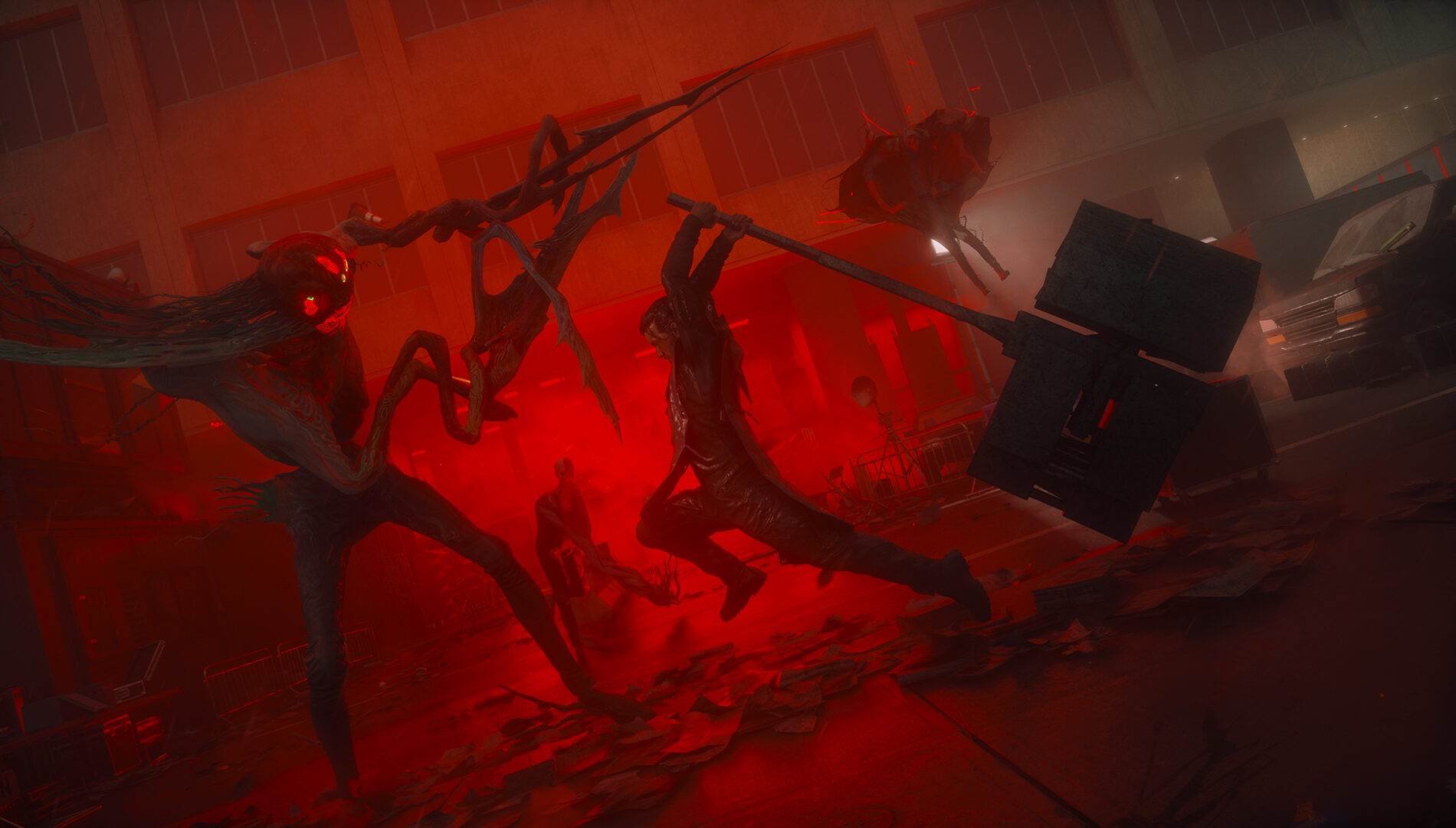
Control Resonant is escalating the paranatural war from the Oldest House into a warped Manhattan, turning architecture itself into an active combatant. This week’s intel decodes how Remedy is binding story, space, and systems under a single, weaponized idea: resonance.
AI-generated summary. This archive article does not have a current recorded source check. Check linked sources before relying on details. Editorial policy
Sector Intelligence Report // Control Resonant
Control Resonant has shifted from quiet signal to full-spectrum broadcast. Over the last seven days, Remedy’s paranatural follow-up has moved through a tightly sequenced rollout: platform confirmation, a sharpened story trailer, and two distinct combat-intel drops focused on the Oldest House and a warped Manhattan. For #gamedev watchers and #indiegame teams studying AAA narrative design, this is a live case study in how to escalate a known IP without losing its weird, weaponized identity.
PS5 Deployment Locked: September 24
The most concrete development update in this cycle is operational: Control Resonant deploys globally on PS5 on September 24.
The activity feed frames this not as a routine launch, but as a new theater of operations. The Oldest House “playbook” is explicitly referenced, but the rules are now being applied to a Manhattan-scale sandbox. The language is consistent across transmissions: impossible architecture, reality drift, high-risk paranatural anomalies as standard environmental hazards. That phrasing signals a design philosophy where environment is no longer backdrop—it’s a primary combatant.
From a production standpoint, this implies a heavy investment in:
- Dynamic level systems that can fold, rotate, and reconfigure in real time.
- Encounter scripting that treats architecture as both cover and threat.
- Streaming tech tuned for rapid spatial reconfiguration on PS5 hardware.
For developers, this is a clear reminder: if your world is “alive,” it must be wired directly into the combat loop, not just the art pipeline.
Story Trailer: Resonance as Core Mechanic
Watch: Transmitting Gameplay footage from the field: Control Resonant Story & Atmosphere Briefing
The story trailer (flagged in the feed as a “new signal sequence”) emphasizes three pillars: altered states, weaponized resonance, and looping narrative echoes. Instead of leaning on traditional exposition, the footage leans into audiovisual overload: strobing corridors, voice fragments, and visual motifs that appear, collapse, and reappear.
Key takeaways for #gamedev teams:
- Resonance as design glue: The term “resonant” isn’t just branding. It suggests that sound, physics, and narrative are being linked under a single systemic idea—resonance as force, memory, and threat.
- Loop-based storytelling: “Narrative echoes that loop back on themselves” hints at recursive structure—possibly repeated encounters, revisited spaces, or perspective shifts that recontextualize prior events.
- Psychic pressure as UX: The feed calls out “psychic pressure” and “audiovisual overload,” pointing to deliberate sensory stress as a mechanic. Expect UI, sound design, and camera behavior to be used as tools to induce tension, not just communicate information.
For #indiegame creators, this is instructive: you don’t need AAA scale to adopt the principle. Even small scenes can be re-used and re-lit to create narrative echoes, and simple audio filters can communicate “resonant states” without bespoke VFX.
Oldest House: From Haunted Office to Active Predator
The “Take Control” briefing repositions the Oldest House as a fully hostile participant. The environment is “no longer passive architecture but a shifting combatant,” with weaponized telekinesis called out as a standard part of the player’s kit.
Design implications:
- Physics as first-class citizen: If telekinesis is standard, then virtually every prop must be authored with mass, shatter states, and combat utility in mind.
- Spatial legibility under flux: Shifting corridors and folding rooms are visually striking, but they can easily disorient players. The level design challenge is to keep objectives and sightlines readable even as geometry mutates.
- AI + environment co-design: Hostile entities must be tuned to fight with the space, not just inside it—pushing players into kill-zones created by collapsing floors or shifting cover.
For developers, the Oldest House remains a benchmark in how to turn a single building into an entire design language. Control Resonant appears to be doubling down on that philosophy while testing how far it can stretch beyond the Bureau’s walls.
Manhattan Breach: Urban Sandbox, Paranatural Ruleset
Watch: Transmitting Gameplay footage from the field: Paranatural Manhattan Operations Trailer
The Paranatural Manhattan trailer is the clearest signal of Control Resonant’s new ambitions. The feed specifies streets folding, realities ghosting over each other, and Bureau forces moving through a city “humming with unstable resonance.” This is not a simple map expansion; it’s a ruleset export.
Key structural shifts:
- Horizontal + vertical play: Manhattan’s grid invites layered combat—street-level firefights, elevated encounters on warped high-rises, and interior pockets of Oldest House-style distortion.
- Shifting geometry as pacing tool: Folding streets can gate or unlock routes dynamically, allowing designers to modulate tempo without traditional cutscenes.
- Civilian absence as narrative question: The trailers are conspicuously focused on Bureau operatives and anomalies. The lack of visible civilian life turns the city into a liminal space—familiar yet depopulated, increasing unease.
From a #gamedev lens, this is a bold attempt to merge tight, authored weirdness (Oldest House) with open, recognizable geography (Manhattan). The risk is dilution; the opportunity is contrast. If Remedy can make a single crosswalk feel as uncanny as a shifting corridor, it sets a new bar for urban paranormal design.
Combat Loop: Telekinesis, Suppression Fire, and Systemic Chaos
Across all transmissions, the combat language is consistent: weaponized telekinesis, psychic suppression fire, hostile anomalies, and high-intensity encounters. The enemy taxonomy isn’t fully visible yet, but the feed suggests a mix of:
- Humanoid forces delivering suppression fire and tactical pressure.
- Abstract anomalies that distort space, perception, or player control.
- Environmental hazards that blur the line between level and enemy.
This triangulation—gunplay, powers, and environment—was the core of Control’s original combat loop. Control Resonant appears to be refining it rather than replacing it, likely with:
- More granular destructibility for expressive telekinesis.
- Tighter enemy behaviors designed around player mobility and verticality.
- Encounter setups that hinge on reading the room’s current “resonant state.”
Strategic Read for Developers and Players
From this week’s intel, Control Resonant is positioning itself as:
- A focused sequel that keeps the Bureau’s aesthetic and systemic DNA intact.
- A technical escalation into larger, more mutable spaces like Manhattan.
- A narrative experiment in looping structures and resonance-driven storytelling.
For players, the message is simple: expect denser atmosphere, more aggressive environments, and a combat loop that leans harder into telekinesis and psychic warfare.
For developers tracking this launch as a live reference, Control Resonant’s rollout underscores a key principle: systems-first worldbuilding. When your fiction, mechanics, and level design all orbit a single idea—in this case, resonance—you don’t just ship a setting. You ship a ruleset the player can feel.
With PS5 deployment locked for September 24, the next phase of intel will likely focus on deeper mechanical breakdowns and extended gameplay slices. Until then, the signal is clear: the Oldest House has breached the grid, and Manhattan is now part of the Bureau’s ever-shifting, ever-resonant combat space.
Sources and corrections
This archive entry does not have a verified article-source list. Images and video embeds alone are not evidence for every claim.
Found an error? Request a correction. Include the passage and a supporting source.