Back to guides and news
Gaming
June 7, 2026
Sector Intelligence Report: Control Resonant Warps Manhattan Into a Paranatural Killbox
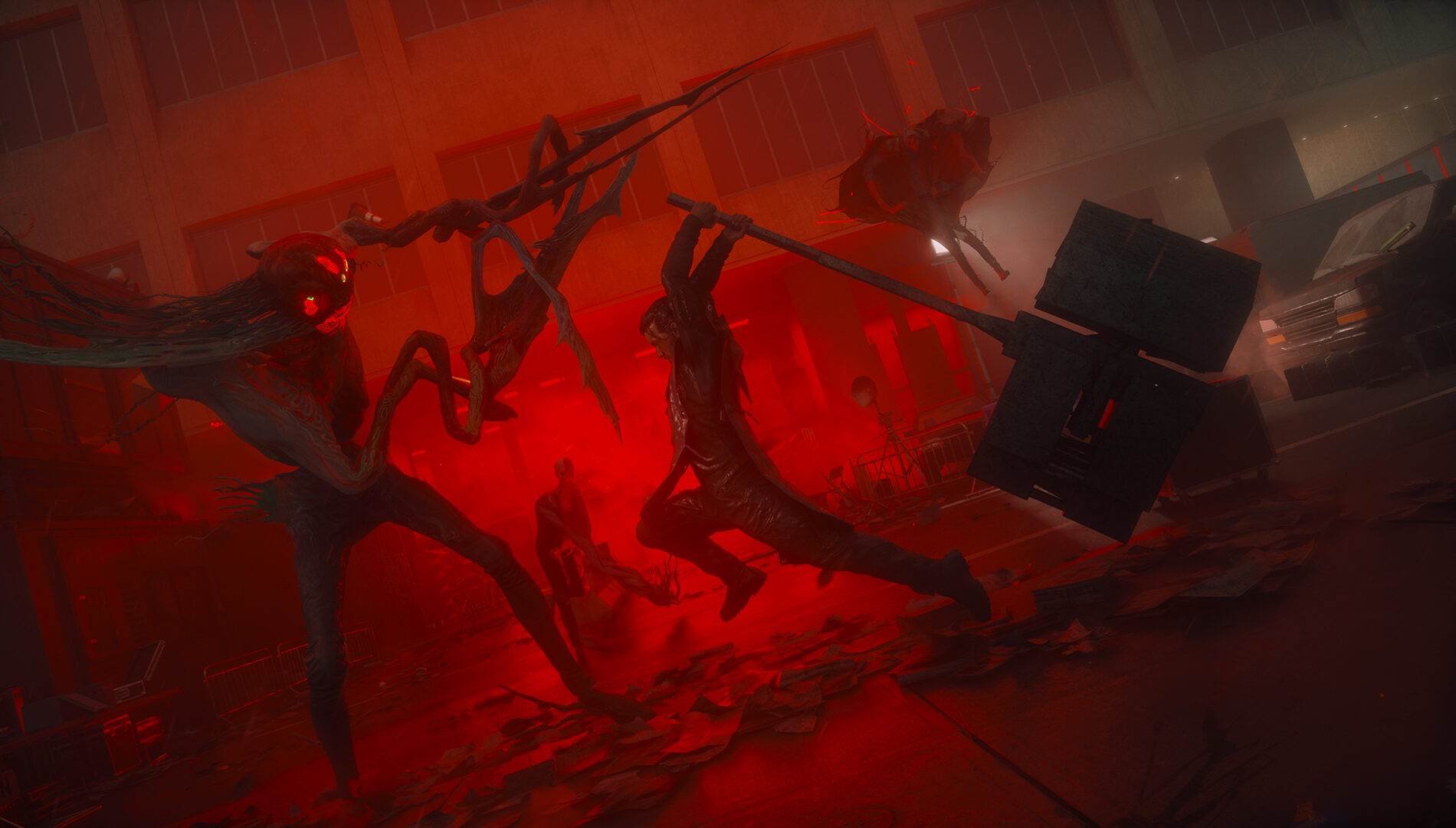
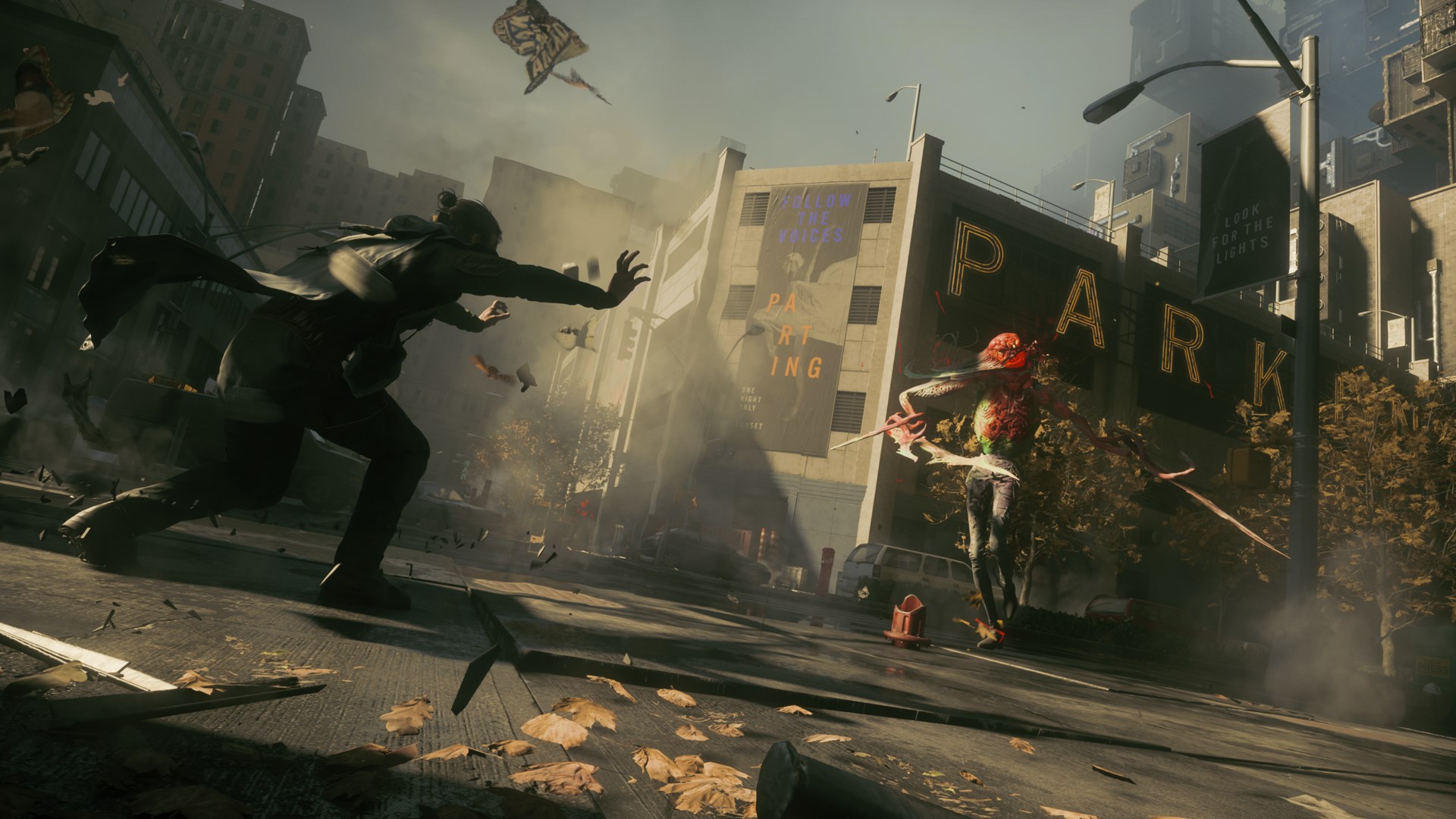
Field capture: Bureau agents breaching a warped Manhattan streetscape in Control Resonant
Sector Intelligence: Manhattan Grid Breached
Control Resonant has moved from rumor to operational reality. Over the last seven days, Remedy’s follow‑up to Control has locked in a launch date, pushed a new story trailer, and broadcast fresh Manhattan‑focused footage that reframes the Oldest House playbook for a fully exposed urban theater. This isn’t just a sequel; it’s a systems test of what happens when paranatural containment fails at city scale.
Control Resonant launches September 24 on PS5, positioning itself squarely in the pre‑holiday window while staking out a technically ambitious niche: dense, mutable architecture and high‑risk anomalies as baseline environmental hazards. For #gamedev teams, the weekly signal traffic around this project reads like a live case study in how to escalate a known IP without abandoning the core design language that made the original Control a cult classic.
Story Signal: Resonance as a Weaponized Narrative Layer
The new story trailer foregrounds three pillars: altered states, narrative recursion, and weaponized resonance. Visually, the trailer leans into corridor compression, looping spaces, and overlapping timelines—familiar to Control veterans, but now framed less as mysterious anomalies and more as deliberate, hostile systems.
From a narrative‑design perspective, this week’s intel suggests:
1. Tighter Atmosphere, Heavier Psychic Pressure
The language in the official transmissions repeatedly flags “psychic pressure,” “audiovisual overload,” and “reality fractures” as primary vectors. That implies a design emphasis on perceptual instability over traditional jump scares—leveraging sound design, UI distortion, and spatial uncertainty to keep players cognitively off‑balance.
For #indiegame creators working on smaller‑scale horror or thriller experiences, Control Resonant’s approach is a reference point: you don’t need more enemies; you need more ways to make the space itself feel adversarial.
2. Narrative Echoes and Temporal Looping
The mention of “narrative echoes that loop back on themselves” points to structural experimentation. Expect:
- Revisited locations that remember previous states.
- Dialogue and mission structures that fold back on earlier beats.
- Storytelling that uses resonance as both lore and mechanic—potentially gating information behind altered timelines or parallel instances of the same space.
For writers and quest designers, this is a reminder that systemic narrative doesn’t have to mean branching paths; it can mean reframing the same path through altered context and player perception.
Systems Briefing: From Oldest House to Open Grid
The Manhattan ops trailer is the clearest look yet at how Control Resonant is evolving its systemic toolkit.
1. Shifting Geometry in a Real‑World City
Where the Oldest House justified impossible architecture through brutalist abstraction, Manhattan is a recognizable grid. That makes the showcased “streets folding” and ghosted realities more legible—and more jarring. Buildings shear sideways, roads stack vertically, and familiar silhouettes fracture under paranatural stress.
Technically, this hints at:
- Aggressive streaming and instancing strategies to support large‑scale transforms.
- Authoring tools that let level designers tag geometry for dynamic manipulation without manual scripting each event.
- A heavy reliance on baked and real‑time lighting blends to sell transitions between stable and resonant states.
For #gamedev teams, especially those working in Unreal or proprietary engines, the takeaway is the value of designing for deformation: building cities and interiors with pivot points, break lines, and modular seams planned from day one.
2. Environmental Hazards as Default State
The latest data packets describe “impossible architecture, reality drift, and high-risk paranatural anomalies as standard environmental hazards.” That phrasing matters. Instead of treating anomalies as set‑piece events, Control Resonant appears to normalize them into the core gameplay loop.
Expect:
- Combat arenas that mutate mid‑encounter, forcing on‑the‑fly pathfinding recalculations and AI repositioning.
- Traversal routes that are intentionally unstable, using collapses, folds, and phase‑shifts as timing and pacing tools.
- Systemic interactions between player abilities and environmental resonance—e.g., amplifying or dampening anomalies through equipped mods, narrative choices, or loadout tuning.
Combat and Encounter Design: Psychic Suppression Fire
The Manhattan trailer’s brief combat glimpses emphasize coordinated Bureau squad movement under “psychic suppression fire.” That phrasing suggests enemy archetypes capable of:
- Area‑of‑effect mental debuffs (aim sway, input latency, perception distortion).
- Line‑of‑sight manipulation, where enemies can occlude or falsify spatial information.
- Crowd‑control fields that interact with resonance zones, turning safe cover into lethal ground.
From an encounter‑design standpoint, the opportunity is to push beyond HP‑driven difficulty and lean into cognitive load as a resource. By taxing player perception and orientation, the game can stay tense without inflating bullet‑sponginess.
Platform and Production Read: Why PS5‑First Matters
The explicit callout that Control Resonant is entering a “global PS5 deployment phase” on September 24 signals both technical ambition and production confidence. A PS5‑focused launch (with other platforms likely staggered or unannounced) enables:
- Heavy use of fast SSD streaming for rapid geometry state changes.
- Advanced haptics for resonance feedback—turning controller rumble into a diegetic signal of nearby anomalies.
- Higher baseline for volumetrics, reflections, and particle density to sell the city‑scale paranormal storm.
For studios tracking market positioning, Remedy is effectively planting a flag in the “prestige mid‑AA/AAA” space: high‑concept, technically expressive, but tightly focused on a single‑player, atmosphere‑driven experience.
Strategic Takeaways for Developers and Analysts
As a weekly snapshot, Control Resonant’s latest transmissions reinforce a clear thesis:
- Escalate setting, not just scale. Moving to Manhattan isn’t about bigger maps; it’s about more legible reality distortion.
- Make perception a mechanic. Psychic pressure, audiovisual overload, and narrative loops all converge on one axis: how the player interprets the world.
- Invest in deformable spaces. Whether you’re AAA or #indiegame, planning for spaces that can change meaning mid‑play is a powerful differentiator.
Control Resonant is shaping up as a case study in how to evolve a strong systemic foundation into a more open, more hostile, and more narratively experimental sequel—without losing the sharp, paranatural edge that defined the original.
Keep following Control Resonant
News, guides, posts, and game details in one place.
Open the game hub, then save it to build your personal Breach feed.
More images and video
About the game
Control Resonant
Remedy Entertainment
Mission Briefing: Control Resonant is Remedy’s first fully melee-focused action deployment set in the Control universe. Operators will engage in close-quarters encounters that emphasize timing, spacing, and reading enemy intent over spray-and-pray ballistics. Expect punchy impact feedback, precise hit detection, and reactive environments tuned for high-intensity brawls. Keywords: melee combat, physics-driven action, Xbox, Remedy, Control universe.
Open game pageTopics
Control Resonant
control resonant release date
control resonant ps5
control resonant manhattan
control resonant story trailer
#gamedev
#indiegame
game development analysis
paranormal action game
Remedy Entertainment
level design shifting geometry
environmental storytelling
paranatural systems
third-person action adventure