Automated archive / Control Resonant
Control Resonant Turns Combat Into a High-Speed Paranatural Lab
Control Resonant’s latest field intel confirms a hard pivot into high-speed, melee-first action where physics, parries, and buildcrafting drive every encounter. Remedy isn’t just refining Control’s combat—they’re turning it into a live paranatural lab for systemic design.
AI-generated summary. This archive article does not have a current recorded source check. Check linked sources before relying on details. Editorial policy
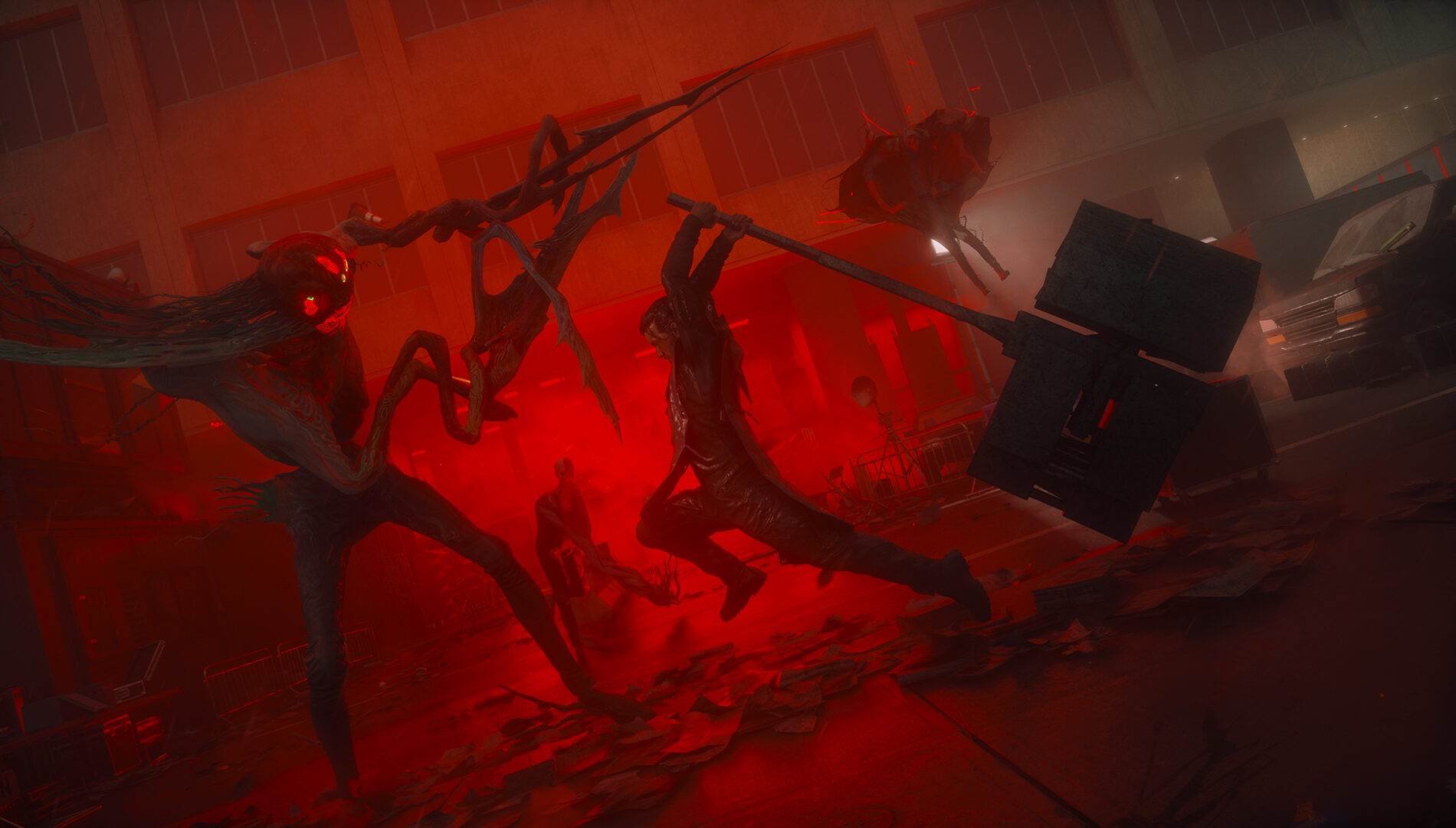
Weekly Sector Intelligence: Control Resonant Combat Grid Comes Into Focus
The last seven days of telemetry on control resonant paint a clear picture: Remedy isn’t iterating on Control’s gunplay, it’s detonating the old framework and rebuilding it as a high-speed melee and ability lab. The new feeds show a combat system tuned for aggressive mobility, precision parries, and live physics manipulation rather than slow, attritional play.
From a #gamedev perspective, this week’s data points suggest a systemic re-architecture of how encounters are framed, read, and resolved. This is less “third‑person shooter with powers” and more paranatural fighting game in a reactive environment.
High-Velocity Systems: Killing the Soulslike Assumption
The March 4 field briefing explicitly orders us to abort all “Soulslike” assumptions. Control Resonant is being positioned as a forward‑leaning, momentum-first action game:
- Aggressive mobility: Surgical dashes and instant recalibration dominate the loop. This implies short animation locks, forgiving input buffering, and a design priority on staying in motion rather than circling for openings.
- Parry-precision over patience: The language around “parry-precision” and “rapid target acquisition” suggests tight counter windows and generous, readable telegraphs—more about rhythm and timing than attrition.
- High-speed melee lab: Calling it a “high-speed melee lab” signals a sandbox mindset: encounters are testbeds for player expression, not just DPS checks.
For #indiegame and AA teams watching from the sidelines, this is a strong case study in reframing franchise expectations: same universe, radically different combat doctrine.
Melee First: Remedy’s Close-Quarters Experiment
The melee-focused dispatch underlines that Control Resonant is Remedy’s first-ever melee action game in earnest, not just a ranged shooter with a panic button.
- Short-range threat vectors: Encounters are being tuned for close-quarters engagement. That means enemy archetypes, arena shapes, and camera behavior must all accommodate tight spacing without visual chaos.
- Animation-driven tells: The report stresses “animation-driven tells” and “timing-critical counters,” which implies a combat readability pipeline where animation, VFX, and sound are tightly synced to telegraph intent.
- Platform-tuned calibration: The note about calibration for Xbox hardware hints at platform-specific performance targets—frame pacing and input latency will be critical when your entire design rests on parries and micro-dodges.
This is a notable pivot in Remedy’s internal toolchain and design culture: physics-heavy spectacle is being harnessed into frame-tight, melee-centric clarity.
A Live Physics Lab in Open Revolt
One of the most telling descriptions from the week calls Control Resonant a “live physics lab in open revolt.” That’s not just marketing copy; it’s a design thesis.
- Environment as system, not backdrop: Environmental geometry, particle effects, and power feedback loops are treated as active puzzle components. The battlefield is a systemic machine the player hacks in real time.
- Synergistic combat puzzle: Instead of chaotic gunfire, the combat feed shows chained abilities and environmental manipulation forming a deliberate puzzle: pull, slam, parry, reposition, repeat.
- Precision ability chaining: The emphasis on “precision ability chaining” suggests low friction between powers—short cooldowns, animation cancel windows, and possibly build-driven modifiers that reward execution.
For #gamedev observers, this is a masterclass in turning VFX and physics from noise into legible mechanics.
Buildcrafting as Systems Engineering
Watch: Transmitting Gameplay footage from the field: Extended combat and buildcrafting showcase
The systems brief on PS5 Pro positions Control Resonant as a modular combat lab rather than a linear power progression.
- Tightly tuned builds: Players are encouraged to chain paranatural abilities, firearm forms, and perks into bespoke builds, tuned per enemy archetype and arena layout.
- Constant respec loops: The intel expects “constant respec loops” and “experimental loadouts,” framing buildcrafting as an ongoing R&D process, not a one-time meta chase.
- Platform-scale chaos: Calling out PS5 Pro‑level chaos indicates a push for dense on-screen effects and high enemy counts, with the systems layer robust enough to maintain clarity.
From a design standpoint, this is Remedy leaning hard into player-driven systems engineering—the combat sandbox is the product, not just the campaign.
Visual Clarity: Tighter Feedback, Cleaner Reads
The latest field scan on the refreshed visual pass is all about readability under pressure:
- Tighter impact feedback: Hits now register with sharper VFX, audio stingers, and camera response, crucial for a melee-focused title where micro-confirmation (did that parry land?) drives decision-making.
- Denser particles, cleaner targets: Interestingly, the team is increasing particle density while simultaneously improving target clarity. That points to careful color grading, silhouette discipline, and depth-of-field tuning—busy, but legible.
- High-clarity power usage: Powers are being visually tuned so players can parse cooldown cadence and risk windows at a glance, even in the thick of close-quarters chaos.
For developers, this is a strong reminder: visual spectacle must serve state clarity, especially when your combat loop leans on speed and precision.
Tactical Verdict: A Systems-First Sequel With Teeth
Across all uplinks, the message is consistent: Control Resonant is evolving into a systems-first sequel that weaponizes physics, melee, and buildcrafting into a cohesive, high-speed combat grid.
- Not a Soulslike; it’s a parry-driven, dash-heavy melee lab.
- Not just a shooter; it’s a modular sandbox of abilities, firearms, and perks.
- Not chaos for its own sake; it’s a carefully tuned puzzle of movement, timing, and environmental exploitation.
As more gameplay surfaces, the key watchpoints for this Sector will be:
- How far Remedy pushes input responsiveness and animation canceling.
- Whether build diversity holds up under late-game pressure.
- How consistently the team maintains readability in particle-dense arenas.
For now, the combat telemetry is clear: Control Resonant is shaping up as a flagship case study in systemic, melee-forward action design, with plenty for #gamedev and #indiegame teams to dissect in the months ahead.
Sources and corrections
This archive entry does not have a verified article-source list. Images and video embeds alone are not evidence for every claim.
Found an error? Request a correction. Include the passage and a supporting source.
Your games, in one place
Keep up with Control Resonant
Follow this game to collect its posts in your personal feed. Come back to see what you missed.
More to read about Control Resonant
- Source-checked briefControl Resonant is available on PS5 with DualSense features
Control Resonant is available on PS5. The game uses the DualSense speaker for radio calls and adaptive-trigger feedback for specific abilities, according to the announcement. PS5 players can...
- Source-checked briefControl Resonant launches on PS5 September 24
Control Resonant is scheduled to launch on PlayStation 5 on September 24. Players control Dylan across focused Manhattan areas, with main missions, side stories, and optional timed arcade...
- Source-checked briefControl Resonant is scheduled for Xbox on September 24
Xbox Wire lists Control Resonant for September 24, optimized for Xbox Series X|S and supporting Xbox Play Anywhere. The announcement describes Dylan Faden emerging into a warped Manhattan during a...