Back to guides and news
Gaming
March 9, 2026
Sector Intelligence Report: Control Resonant Turns Combat Into a High-Speed Paranatural Lab
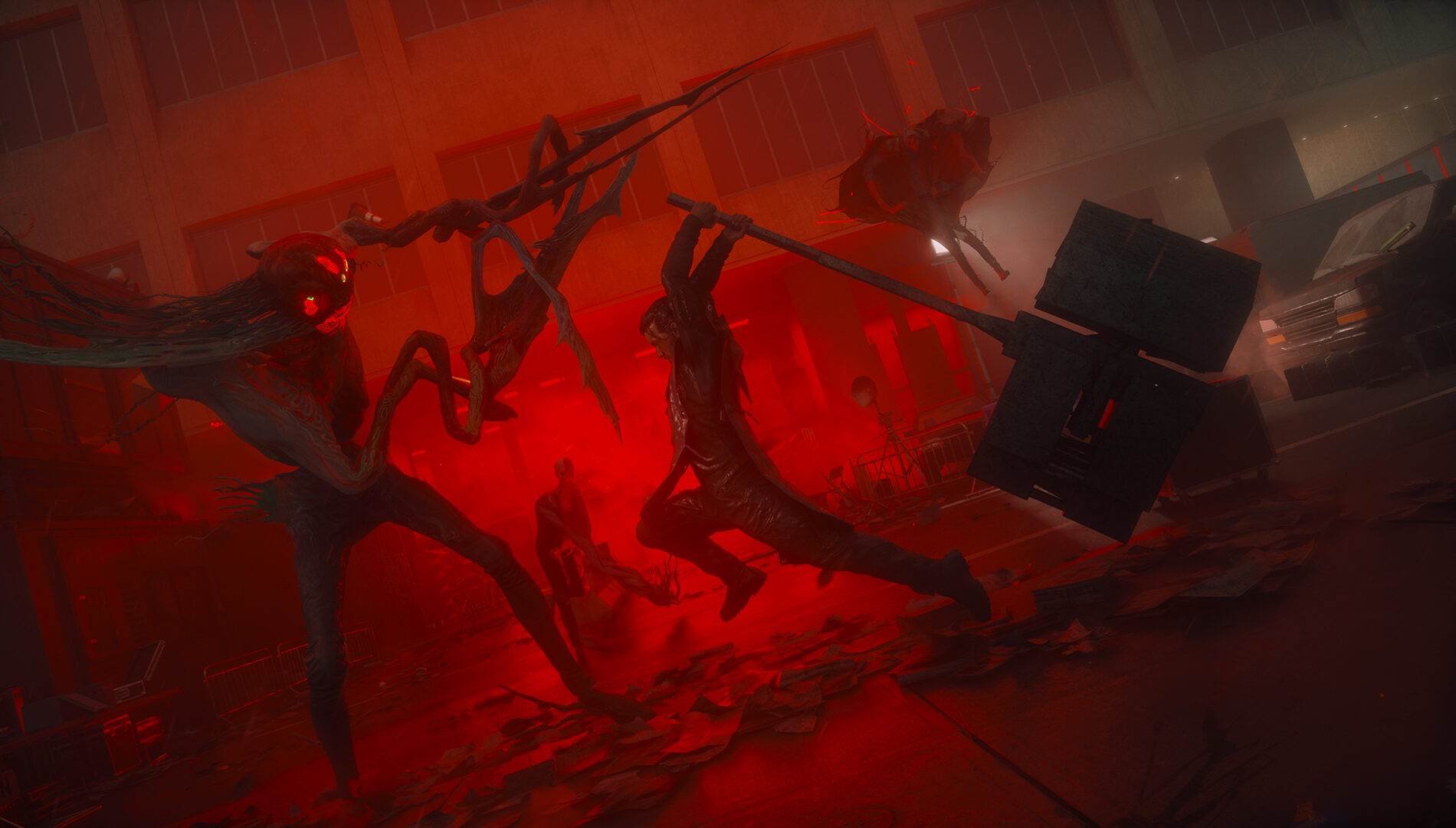
Field capture: High-intensity Control Resonant combat scenario
Sector Intelligence Report // Control Resonant – Week of March 9
Control Resonant’s latest combat telemetry paints a clear picture: Remedy is no longer experimenting with action systems around the edges of a third‑person shooter. The studio is building a dedicated high‑speed melee lab where paranatural powers, physics, and precision reads collide in tightly tuned arenas. This week’s data burst reframes the project not as a moody shooter follow‑up, but as a full systems-first sequel with a radically more aggressive combat doctrine.
From a #gamedev perspective, the last seven days have been all about one message: Control Resonant is not a Soulslike, it’s not a cover shooter, and it’s not content to be a reskinned Control. It’s a pressure‑driven, close‑quarters action grid built for rapid decision‑making and high clarity under chaos.
High-Velocity Combat Doctrine: No Soulslike, No Patience Simulator
The “High-Velocity Combat Systems Briefing” uplink explicitly orders players to abort all Soulslike assumptions. Instead of slow attrition and stamina‑gated duels, Control Resonant is tuned around:
- Aggressive mobility – surgical dashes, instant repositioning, and forward momentum as a survival tool, not just a style choice.
- Parry-precision – timing‑critical defensive actions that flip pressure back onto enemies rather than simply mitigating damage.
- Rapid target acquisition – enemy silhouettes, telegraphs, and arena compositions are built to be legible at speed.
This is core to the game’s identity: the combat loop is designed for constant commitment, not cautious circling. Remedy is effectively repositioning its combat language from “methodical shooter with powers” to “high-tempo melee action game that happens to be drenched in physics and particles.”
Melee as the New Center of Gravity
The melee-focused field reports confirm a major design pivot. Previous Control entries leaned on long‑range telekinesis and sidearm forms; Control Resonant pulls the camera and the player into the danger zone.
Key takeaways from the melee framework analysis:
- Short-range threat vectors dominate encounter design, forcing players to read tight arenas instead of sniping from safety.
- Animation-driven tells and timing-critical counters anchor the combat feel, especially on console hardware where input latency and visual clarity are non‑negotiable.
- The game is described as Remedy’s first-ever melee action game, which has serious implications for animation systems, hit detection, and camera behavior.
This shift reframes the battlefield as a live physics lab in open revolt. Enemies, debris, and architecture combine into a kinetic puzzle where closing distance isn’t optional—it’s the whole thesis.
Visual Readability: Chaos, But Curated
The latest combat scan highlights a refreshed visual pass on the core loop: denser particle effects, sharper impact feedback, and cleaner target readability. That’s a critical balance problem in a game that thrives on chaos.
Remedy’s current solution appears to hinge on:
- Readable silhouettes and telegraphs even when the screen is saturated with debris and particles.
- Impact-forward feedback — hits, parries, and power usage punch through the noise with distinct VFX and audio cues.
- Arena flow design that funnels players toward optimal sightlines and traversal routes during peak intensity.
The result is a combat language that allows players to parse threat, opportunity, and cooldowns in milliseconds. For #indiegame and AA studios studying this space, Control Resonant is shaping up to be a strong reference for how to push spectacle without sacrificing mechanical readability.
Buildcrafting: A Modular Paranatural Lab
The “Systems Brief: Tactical Buildcrafting” uplink emphasizes that Control Resonant is not just about moment‑to‑moment execution—it’s also an ongoing experiment in loadout engineering.
Core pillars of the buildcrafting layer include:
- Modular ability kits that let players chain paranatural powers into bespoke combos.
- Firearm forms and perks that respond to enemy archetypes and arena constraints.
- Constant respec loops, encouraging players to treat each encounter as a live‑fire test rather than settling into a single meta build.
On PS5 Pro‑class hardware, this translates into high-density combat scenarios where the system load is as much about player decision‑making as GPU throughput. For #gamedev observers, this is a case study in how to turn buildcrafting into an active, encounter‑to‑encounter behavior rather than a passive menu ritual.
Design Readout: What This Means for the Final Game
Taken together, this week’s activity feed signals a coherent design doctrine for control resonant:
- Speed over attrition – Encounters are built to reward decisive aggression, not defensive turtling.
- Clarity in chaos – Visual noise is high, but so is the emphasis on clean telegraphs and impact readability.
- Systems-first sequel – Combat, traversal, cooldown cadence, and buildcrafting are tightly interlocked rather than bolted onto a narrative framework.
For players, that means Control Resonant is evolving into a high-speed, close-quarters action experience that weaponizes physics and powers without burying you in incomprehensible FX. For developers, it’s a live demonstration of how to iterate on a beloved IP by re‑anchoring the entire experience around a new combat philosophy.
This week’s verdict: Control Resonant is less a spiritual successor and more a controlled detonation of Remedy’s prior combat playbook—and the blast radius is only getting bigger.
Keep following Control Resonant
News, guides, posts, and game details in one place.
Open the game hub, then save it to build your personal Breach feed.
More images and video


About the game
Control Resonant
Remedy Entertainment
Mission Briefing: Control Resonant is Remedy’s first fully melee-focused action deployment set in the Control universe. Operators will engage in close-quarters encounters that emphasize timing, spacing, and reading enemy intent over spray-and-pray ballistics. Expect punchy impact feedback, precise hit detection, and reactive environments tuned for high-intensity brawls. Keywords: melee combat, physics-driven action, Xbox, Remedy, Control universe.
Open game pageTopics
Control Resonant
control resonant combat
control resonant gameplay
control resonant melee
control resonant buildcrafting
Remedy Entertainment
#gamedev
#indiegame
action game design
third person action combat
physics-based combat systems
PS5 Pro action games
Xbox melee combat
game development analysis
sector intelligence report