Automated archive / Control Resonant
Control Resonant Turns Remedy’s Paranatural Sandbox into a High-Speed Melee Lab
Control Resonant is pivoting Control’s paranormal sandbox into a high-speed melee lab built on aggressive mobility, parry-precision, and systemic buildcrafting. The latest intel shows a systems-first sequel that rejects Soulslike pacing in favor of relentless forward momentum and tight arena design.
AI-generated summary. This archive article does not have a current recorded source check. Check linked sources before relying on details. Editorial policy
Sector Intelligence Report // Control Resonant
Control Resonant isn’t quietly iterating on Control’s ranged telekinesis formula—it’s detonating it. The latest field intel paints a clear picture: this is a high-speed melee action experiment built on aggressive mobility, tight arena reads, and systemic buildcrafting that feels closer to a combat lab than a traditional sequel. For #gamedev watchers and #indiegame teams studying pacing, readability, and encounter design, there’s a lot of signal in this week’s data.
Kinetic Uprising: Melee-First, Systems-Forward
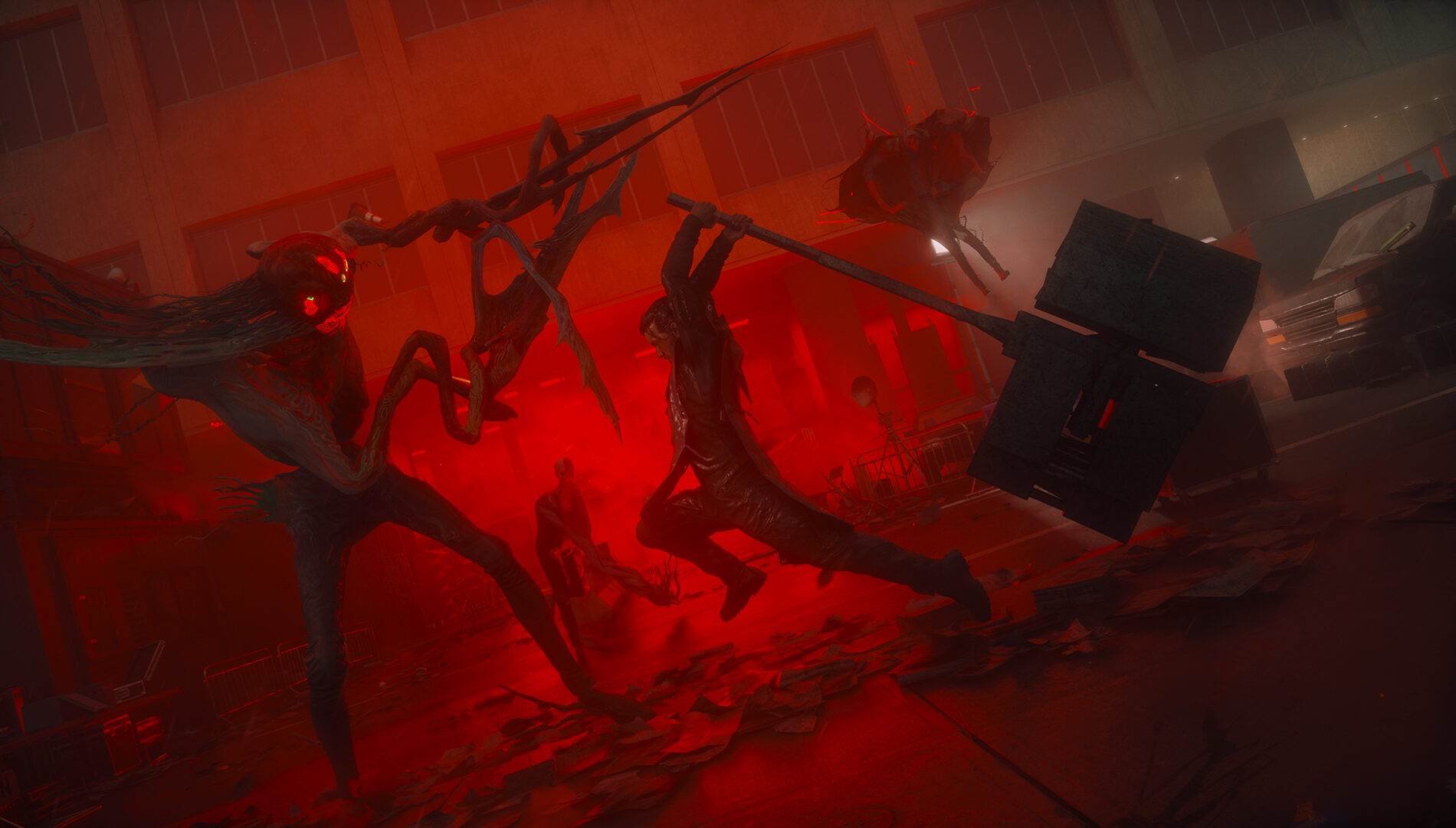
The new "Kinetic Uprising" combat feed positions Control Resonant as a close-quarters brawler where psychic power is expressed primarily through melee impact rather than distant object-flinging.
From Telekinetic Sniping to Psychic Knife-Fighting
The footage emphasizes:
- Heavier melee focus: Strikes land with dense hit-stop and camera shake calibrated for clarity, not chaos. Animations telegraph intent clearly, supporting timing-based counters rather than wild flailing.
- Arena flow over corridors: Encounter spaces are circular and layered, built to support flanking, backline dives, and rapid repositioning. Remedy is clearly designing for 360-degree threat management.
- Readability in noise: Even with particles and distortion effects firing, silhouettes and enemy tells remain legible. For combat designers, this is a live case study in VFX restraint serving gameplay.

High-Velocity Combat: Not a Soulslike, a Sprinting Blade
One of the more important corrections in the latest preview: Control Resonant is explicitly not a Soulslike. The core loop is tuned around forward momentum, not attrition.
Mobility and Parry over Patience and Shields
Key reads from the field test:
- Aggressive mobility: Short, surgical dashes replace slow, committal rolls. The language is closer to character action than methodical stamina duels.
- Parry-precision: Timing windows on counters appear tight but fair, designed to reward pattern recognition and muscle memory rather than passive turtling.
- Rapid target acquisition: Lock-on and camera behavior pivot quickly between threats, suggesting an expectation that players juggle multiple enemies rather than isolate them.
This recalibration matters for player onboarding and marketing alike: Control Resonant is positioning itself as a high-speed melee lab, not a punishment-driven endurance test.
Buildcrafting as Systems Engineering on PS5 Pro
The "Systems Brief" reframes Control Resonant as a modular combat sandbox where every encounter is a build test.
Paranatural Loadouts, Not Just Skill Trees
Remedy’s design language suggests:
- Chained abilities + firearm forms + perks: Builds are less about linear power curves and more about synergy—how telekinetic strikes, weapon modes, and passive modifiers interlock.
- Encounter-responsive respecs: Players are expected to iterate between missions, treating loadouts as hypotheses to be validated in live fire.
- Hardware-leveraged chaos: On PS5 Pro, particle density, enemy counts, and physics-driven debris appear tuned to create controlled visual chaos without sacrificing input responsiveness.
For #gamedev teams, this is a visible push toward systems-first design: create flexible verbs, then let players and encounter designers stress-test the combinations.
Melee Framework: Short-Range Threats, Long-Term Implications
The "Kinetic Systems Check" on Xbox hardware underlines Remedy’s first serious foray into melee as a primary verb.
Timing, Tells, and Telemetry
The melee framework is built on:
- Animation-driven tells: Enemies broadcast intent through exaggerated wind-ups, posture shifts, and VFX cues, giving players a readable parry and dodge rhythm.
- Timing-critical counters: The combat loop hinges on committing to strikes, then canceling or parrying at the last possible moment—rewarding players who internalize enemy archetypes.
- Short-range threat vectors: With engagement distances compressed, spatial awareness and micro-positioning matter more than long-range line-of-sight control.
This pivot forces a different mental model than the original Control: less "manage the room from afar," more "solve the knife-fight puzzle in real time."
Tactical Takeaways for Devs and Operators
For players, Control Resonant is shaping up as a fast, melee-centric evolution of the Control universe. For developers, the intel highlights several design pillars worth tracking:
- Clarity in chaos: Aggressive VFX and physics are carefully constrained to preserve animation readability.
- Forward-momentum combat: Systems that reward pressure, not passivity, while avoiding Soulslike stamina tax.
- Buildcrafting as experimentation: Loadouts are framed as ongoing experiments, not final answers.
Watch: Transmitting Gameplay footage from the field: Extended Control Resonant combat test
As more telemetry arrives, Control Resonant is emerging as a case study in how to evolve a beloved IP into a more kinetic, melee-driven direction without losing its systemic core. For anyone tracking control resonant as a project—or building their own high-speed action prototype—this week’s transmissions are essential viewing.
Sources and corrections
This archive entry does not have a verified article-source list. Images and video embeds alone are not evidence for every claim.
Found an error? Request a correction. Include the passage and a supporting source.
Your games, in one place
Keep up with Control Resonant
Follow this game to collect its posts in your personal feed. Come back to see what you missed.
More to read about Control Resonant
- Source-checked briefControl Resonant is available on PS5 with DualSense features
Control Resonant is available on PS5. The game uses the DualSense speaker for radio calls and adaptive-trigger feedback for specific abilities, according to the announcement. PS5 players can...
- Source-checked briefControl Resonant launches on PS5 September 24
Control Resonant is scheduled to launch on PlayStation 5 on September 24. Players control Dylan across focused Manhattan areas, with main missions, side stories, and optional timed arcade...
- Source-checked briefControl Resonant is scheduled for Xbox on September 24
Xbox Wire lists Control Resonant for September 24, optimized for Xbox Series X|S and supporting Xbox Play Anywhere. The announcement describes Dylan Faden emerging into a warped Manhattan during a...