Automated archive / Clockwork Revolution
Clockwork Revolution Dials In Heist Spectacle and Temporal Exclusivity
Clockwork Revolution’s latest intel drop showcases a tightly tuned heist mission, a volatile time-manipulation system, and a locked-in Xbox console exclusive strategy. Under the brass-and-neon veneer, inXile is quietly building one of the most ambitious cause-and-effect sandboxes in the current RPG-shooter space.
AI-generated summary. This archive article does not have a current recorded source check. Check linked sources before relying on details. Editorial policy

Sector Intelligence: Clockwork Revolution’s Latest Temporal Disturbances
Avalon’s chrono-grid has lit up again. Over the last seven days, Clockwork Revolution has pushed a sharp new slice of footage, clarified its platform strategy, and doubled down on its identity as a systemic, time-twisting RPG-shooter hybrid. This week’s signals sketch a clearer picture of how inXile wants players to inhabit — and repeatedly break — its neo‑Victorian sandbox.
At a glance, the new intel converges on three fronts: a curated look at “The Heist” scenario, confirmation of Xbox console exclusivity with PC support, and fresh context on how cause-and-effect gunplay will cascade through Avalon’s story and level design. For #gamedev watchers and #indiegame teams chasing reactive worlds, Clockwork Revolution is shaping up as a live case study in narrative volatility.
The Heist: Time-Bending Infiltration as a Design Pillar
The newly surfaced “The Heist” sequence is more than a flashy trailer; it reads like a vertical slice of the game’s design philosophy. inXile frames the mission as a precision heist protocol: tight corridors, brass-and-steam firepower, and a focus on spectacle-tuned encounters that still leave room for systemic play.
Key takeaways from the footage and activity feed:
1. Layered Encounters, Not Linear Shootouts
The mission structure suggests stacked encounter layers — infiltration, escalation, and extraction — each modulated by time manipulation. The activity feed references “layered encounters” and “shifting timelines”, implying that what appears to be a fixed set piece may in fact be a branching node in a wider temporal graph.
For level designers, this points to a heist that can be replayed multiple times with different NPC states, patrol routes, and narrative beats. The design goal seems clear: make a mission feel authored the first time, but reveal its systemic seams on subsequent runs.
2. Time as a Combat and Routing Tool
The intel emphasizes “time‑bending infiltration” and “cause‑and‑effect gunfights”, which suggests time manipulation isn’t just a narrative wrapper but a primary verb. Expect players to:
- Rewind or branch micro-scenarios to test alternate approaches.
- Exploit temporal shifts to reroute through previously closed spaces.
- Trigger paradoxes that remap AI behavior and objective flow mid-mission.
From a #gamedev standpoint, this is closer to a stateful simulation layer than a simple checkpoint reload. Every temporal interference appears to “rewire the mission space”, forcing the engine to recalculate who’s alive, who’s angry, and who’s suddenly in charge.
3. Built for Replay Hunters
The feed explicitly calls out “high-stakes choices built for replay hunters”. That phrasing matters. It signals that the team is designing with:
- Short, dense loops that can be re-run for different outcomes.
- Persistent consequences that echo beyond a single mission.
- Meta-progression incentives (build experimentation, narrative permutations) that reward players who stress-test the timeline.
For Clockwork Revolution, replayability isn’t just more loot; it’s about re-authoring Avalon across runs.
Avalon as a Volatile Narrative System
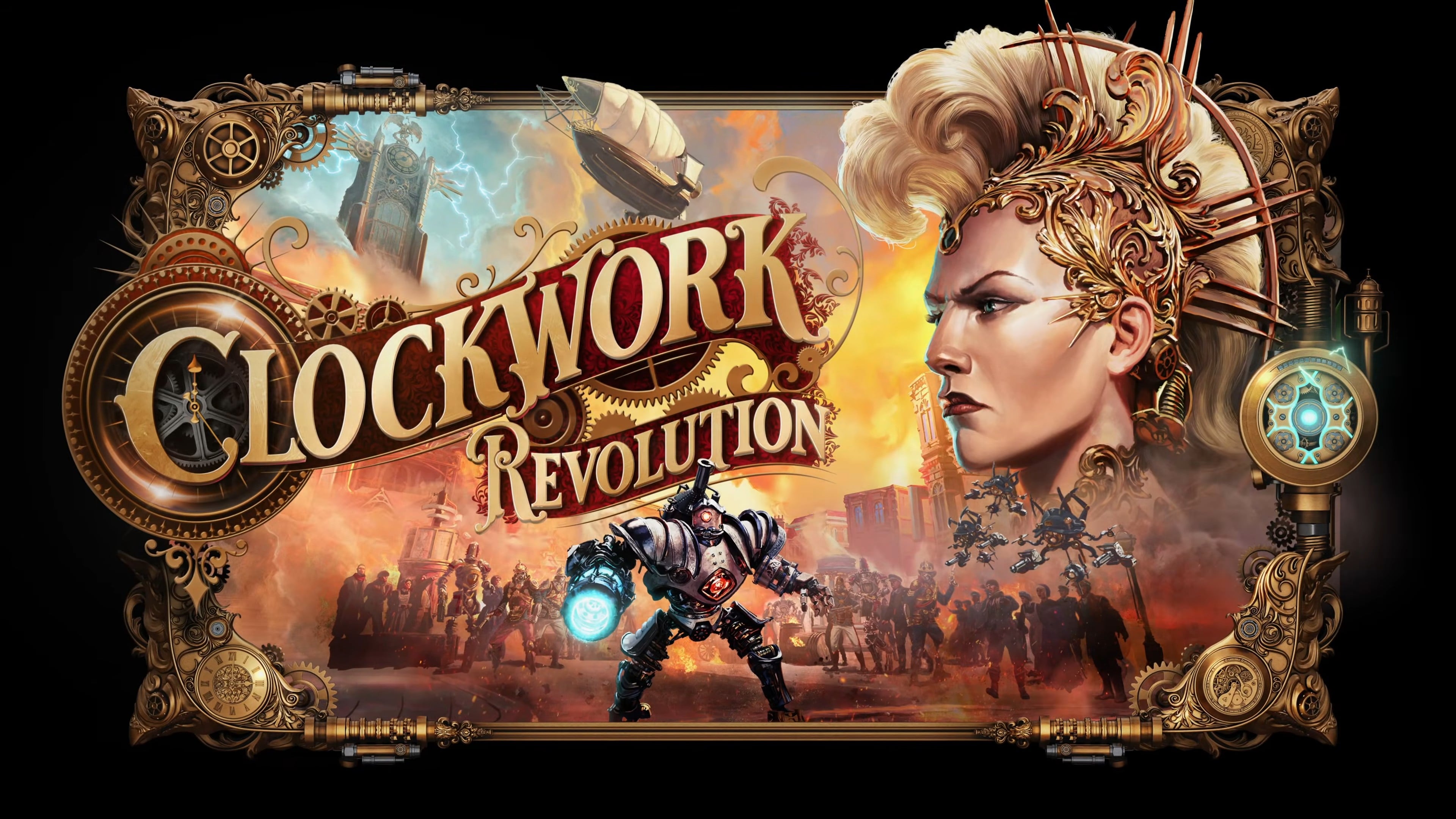
The broader Temporal Systems Report frames Avalon as a “neo-Victorian time‑manipulation shooter” with burlesque dens, dense clockwork cityscapes, and cascading paradox chains. Under the hood, that implies a world model where:
- NPC roles are mutable: The intel points to NPC roles and routes mutating mid‑campaign. An ally in one timeline can plausibly resurface as an antagonist in another, or shift social standing based on player-induced anomalies.
- Routes and outcomes are fluid: Level topology may remain fixed, but access, hostility, and faction control appear to be timeline-dependent variables.
- Narrative volatility is a feature, not a bug: The phrase “proceed assuming narrative volatility” is telling. inXile is signaling that players should expect — and embrace — unstable story states.
For developers tracking reactive narrative design, Clockwork Revolution is positioning itself alongside the likes of systemic immersive sims, but with time as the primary axis of reactivity rather than stealth or social manipulation alone.
Platform Strategy: Xbox Locks the Console Timeline
The second major data packet confirms Clockwork Revolution as an Xbox console exclusive, with PC firmly in the loop. There’s still no precise release date, but studio chatter pegs deployment for next year, leaving the exact launch window deliberately redacted for now.
From a market and production perspective:
- Platform focus (Xbox + PC) gives inXile a tighter hardware target, which is crucial for a systems-heavy game juggling shifting timelines and stateful world logic.
- The exclusivity move positions Clockwork Revolution as a flagship RPG-shooter in Xbox’s portfolio, filling a niche between narrative-first RPGs and high-intensity shooters.
For #indiegame and mid-size studios watching from the sidelines, this is also a reminder: deep systemic design scales best when platform variables are controlled. Fewer SKUs can mean more time spent on AI state management, QA across paradox branches, and performance tuning.
Outlook: What This Week’s Intel Signals for Development
This week’s activity paints a clearer picture of where Clockwork Revolution sits in its development arc:
- Public-facing content has moved from broad concept pitches to mission-level sequences like The Heist, which typically indicates a push into content completion and polishing.
- The language around “cascading paradox chains” and “mutating NPC roles” suggests that the core temporal simulation is already online, with current work likely focused on content authoring, balance, and edge-case handling.
- The absence of a pinned release date, despite a target year, implies that inXile is leaving room to stabilize the simulation layer — the smart move for a game where one bad paradox bug can unravel a campaign.
For players, the signal is clear: expect a spectacle-forward heist experience layered atop a deeply reactive, time-warped city. For developers, Clockwork Revolution is fast becoming a must-watch experiment in cause-and-effect game design, where every pull of the trigger risks rewriting the story’s ledger.
As further chrono-anomalies surface, we’ll continue logging how inXile’s temporal engineering reshapes both Avalon — and the expectations around what a time-travel RPG-shooter can be.
Sources and corrections
This archive entry does not have a verified article-source list. Images and video embeds alone are not evidence for every claim.
Found an error? Request a correction. Include the passage and a supporting source.
Your games, in one place
Keep up with Clockwork Revolution
Follow this game to collect its posts in your personal feed. Come back to see what you missed.