Automated archive / Clair Obscur: Expedition 33
Clair Obscur: Expedition 33 Just Got Knighted – And So Did Game Development
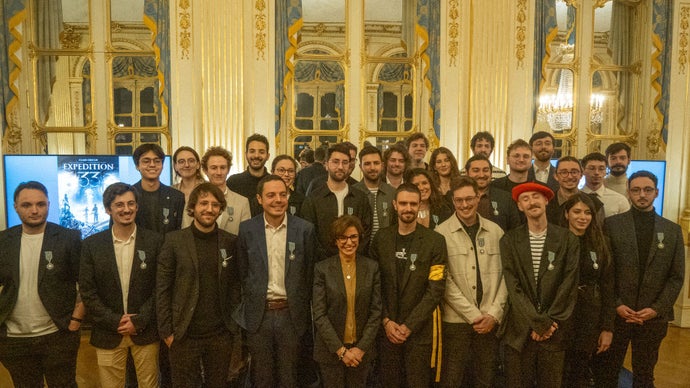
The team behind Clair Obscur: Expedition 33 has been knighted by the French government, formally recognizing their game as a work of cultural significance. This quiet but powerful move signals a new era where ambitious game design, narrative, and visual craft stand shoulder-to-shoulder with film and literature.
AI-generated summary. This archive article does not have a current recorded source check. Check linked sources before relying on details. Editorial policy
Sector Intelligence Report: Clair Obscur – Expedition 33 Enters the Cultural Canon
In the last seven days, Sandfall Interactive, the studio behind clair obscur: expedition 33, didn’t just ship a trailer or tease a new system—they got written into cultural history. The French government has awarded members of the team knighthoods in the Ordre des Arts et des Lettres, formally recognizing their work as on par with traditional arts like film, literature, and fine art.
For a studio still on the runway to launch, this is more than a prestige badge. It’s a live case study in how #gamedev is crossing a hard boundary: from entertainment product to state-recognized cultural artifact.
Why This Knighthood Matters for Developers
1. System Design as Cultural Capital
The citation frames Sandfall’s work as a fusion of game design, narrative, and visual craft—not as separate disciplines, but as a single cultural output. For developers, that’s a crucial reframing:
- Worldbuilding and systems design are being evaluated with the same seriousness as cinematography or choreography.
- The interactive structure of clair obscur: expedition 33—its combat rhythm, exploration pacing, and story delivery—is implicitly treated as a legitimate artistic language.
This recognition signals that the bar for “cultural impact” now fully includes interactivity as a core component, not a novelty layer.
2. A Buff to Funding, Grants, and Institutional Support
When a government decorates a studio, cultural institutions and funding bodies take notes. Expect knock-on effects for #indiegame and mid-sized studios:
- Grant committees can now point to Sandfall as precedent when backing ambitious narrative or stylistic experiments.
- Export agencies may begin to track games like clair obscur: expedition 33 alongside cinema and literature as flagship cultural exports.
- Universities and art schools gain ammo to justify game-focused programs that treat design, writing, and engineering as co-equal to more established arts.
In practice, this could mean more risk-tolerant funding for projects that lean heavily into stylization, experimental storytelling, or genre fusion.
Expedition 33 as a Case Study in Hybrid Craft
Clair obscur: expedition 33 has already been positioned publicly as a painterly, surrealist RPG—a space where visual direction, combat design, and narrative themes are tightly interwoven.
From a development standpoint, the knighthood underscores three trends:
1. Visual Identity as Design, Not Just Dressing
The game’s painterly aesthetic isn’t simply a shader pipeline flex; it’s part of how players parse the world. For devs:
- Strong, coherent art direction is increasingly being read as authorship, not just production value.
- Visual motifs (color palettes, brush-stroke textures, surreal architecture) become mechanical signposting and thematic reinforcement.
2. Narrative Structure as Systemic Spine
The recognition explicitly calls out narrative as a pillar. That suggests:
- Story beats in clair obscur: expedition 33 are likely tightly coupled to progression systems and combat scenarios.
- The industry trend continues toward narrative-system fusion—where choices, failure states, and build paths are part of the story’s grammar, not an optional layer.
3. Cross-Discipline Collaboration as the New Baseline
For the French government to see the game as “art,” Sandfall’s internal pipeline almost certainly aligned:
- Writers, designers, engineers, and artists converged around a unified thematic north star.
- Tech decisions (engine features, rendering approaches, animation systems) were likely justified not just on performance, but on expressive impact.
For studios watching from the sidelines, this is a reminder: interdisciplinary coherence is becoming a key metric of cultural value.
Strategic Takeaways for Studios and Creators
- Pitch with cultural language. When framing your own projects, especially to public institutions or grants, reference games like clair obscur: expedition 33 as proof that interactive works are now recognized on the same tier as film and literature.
- Lean into distinctiveness. This recognition rewards a strong, non-generic identity. A clear visual and narrative thesis isn’t just good branding—it’s now a path to institutional legitimacy.
- Track government signals. As more states look to games as cultural exports, expect:
- New funding lines specifically for narrative-rich and stylistically bold projects.
- Cross-industry partnerships (museums, galleries, festivals) that treat games as centerpieces, not side exhibits.
The Bigger Picture: Games as Core Cultural Exports
The intercepted signal frames this knighthood as a “quiet but powerful buff” for the medium. That’s accurate. On paper, this is one studio’s accolade; in practice, it’s a flag planted for the entire sector.
For clair obscur: expedition 33, it raises expectations ahead of launch and cements the title as a key reference point in conversations around games-as-art. For the broader #gamedev and #indiegame ecosystems, it’s a data point you can cite in pitches, decks, and curriculum proposals: governments are now treating ambitious, authored games as serious cultural infrastructure.
The next phase isn’t just about shipping polished builds—it’s about understanding that your design documents, art bibles, and narrative outlines are now part of a much larger cultural ledger.
Sources and corrections
This archive entry does not have a verified article-source list. Images and video embeds alone are not evidence for every claim.
Found an error? Request a correction. Include the passage and a supporting source.