Automated archive / Call of Duty: Black Ops 7
Black Ops 7 Season 3 Turns Live Ops Into a Data-Driven Warzone
Black Ops 7 Season 3 isn’t just a content drop—it’s a live-ops laboratory where maps, monetization, and free trials are all tuned as data-driven experiments. We break down how Treyarch is using Season 3 to stress-test balance, progression, and player behavior across Multiplayer, Zombies, and Warzone.
AI-generated summary. This archive article does not have a current recorded source check. Check linked sources before relying on details. Editorial policy

Strategic Overview: Season 3 as a Live-Fire Systems Test
Call of Duty: Black Ops 7 enters its third seasonal cycle not as a simple content drop, but as a tightly orchestrated live-ops experiment. Across Multiplayer, Zombies, and Warzone, Season 3 is structured like a layered test bed for pacing, progression, and player retention, with the Season 3 Free Trial acting as a controlled influx of new data.
From a #gamedev perspective, Season 3 looks less like a marketing beat and more like a systems-level calibration phase. The cadence of updates in the last seven days—map rotations, Battle Pass deployment, cross-mode synchronization, and a timed free trial—signals a studio leaning hard into telemetry-driven design and monetization tuning.
Map Design: Choke Points as Telemetry Nodes
Recent intel flags a fresh rotation of multiplayer maps “engineered for different engagement ranges and flanking lanes,” with explicit emphasis on tightened sightlines, vertical power positions, and objective choke points.
For developers, that language is telling:
- Tightened sightlines indicate an intentional effort to compress time-to-contact and reduce downtime, a classic response to heatmaps that show players avoiding exposed lanes.
- Vertical power positions are high-risk/high-reward anchors that let designers sculpt match tempo—especially useful for testing how players respond to power positions under different weapon balance passes.
- Objective choke points are natural telemetry hubs. Every contested Hardpoint, Domination flag, or Control zone becomes a density spike for kill, death, and ability usage data.
This is where Black Ops 7’s map team appears to be iterating aggressively: by designing maps as data amplifiers, they can stress-test weapon balance, ability viability, and spawn logic in a compressed timeframe.
Watch: Transmitting Gameplay footage from the field: Season 3 Multiplayer & Live Ops Trailer
For #indiegame teams studying AAA patterns, this is a masterclass in using environment design not just for aesthetics, but as a structural tool for balance and analytics.
Progression & Monetization: Battle Pass as Behavioral Funnel
The Season 03 Battle Pass, BlackCell, and bundle matrix reads like a case study in tiered value propositions:
- Base Battle Pass (1,100 COD Points) – Standard engagement loop: 100+ rewards, free base weapons, operator skins, blueprints, finishing moves. This is the broad funnel, optimized for maximum daily/weekly active users.
- Battle Pass Bundle (2,400 COD Points) – 20+ Tier Skips front-load the dopamine. The design intent is clear: convert time-poor but cash-rich players by selling acceleration instead of pure exclusivity.
- BlackCell – The apex package, loaded with exclusive cosmetics and elite-grade blueprints. This is prestige-based monetization: low volume, high margin, aimed at the most invested segment.
From a design lens, this layered structure lets Treyarch and Activision:
- Segment their audience by spend and engagement profile.
- A/B test cosmetic desirability via uptake rates across the three tiers.
- Tune progression pacing based on how quickly different cohorts clear the pass.
The introduction of Valkyrie (JSOC)—with explicit lore about next-gen mobility rigs and neural-linked targeting—also serves a dual role: narrative worldbuilding and a test case for how far they can push operator identity and sci-fi-adjacent tech before it fractures the Black Ops tonal ceiling.
Free Trial Deployment: Controlled Chaos as Onboarding Lab
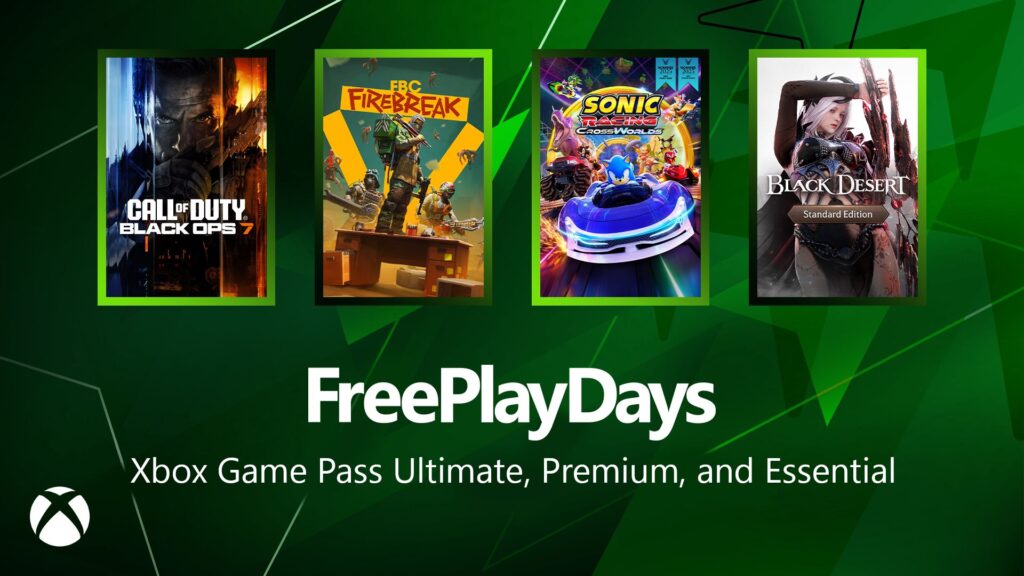
The Season 3 Free Trial is the most transparent systems experiment in the current activity feed. By opening a limited-time “combat sandbox” to non-owners, Treyarch effectively spins up a parallel onboarding cohort.
Key design and business implications:
- Frictionless sampling – Letting players stress-test maps, modes, and arsenal variants without full purchase lowers the acquisition barrier while generating high-fidelity performance data from fresh eyes.
- Balance validation at scale – New players interact with weapons and modes without the bias of prior metas, giving designers a cleaner read on whether certain guns or perks are intrinsically overtuned, rather than just culturally popular.
- Conversion telemetry – When and where free trial players convert (post-streak, after unlocking a specific attachment, or following a strong Warzone round) becomes critical insight for future funnel design.
For other studios, especially #indiegame teams operating smaller ecosystems, the lesson is clear: time-boxed free access windows can double as both marketing and high-impact usability testing, provided you have the analytics stack to capture and interpret the surge.
Cross-Mode Synchronization: Triple-Front Pressure Testing
Season 3’s “triple-front assault” across Multiplayer, Zombies, and Warzone isn’t just content breadth—it’s a stress test of systemic coherence:
- Unified progression keeps players moving between modes without feeling like they’re abandoning progress, boosting total session length.
- Shared seasonal theming (operators, blueprints, cosmetic language) builds a consistent brand layer over otherwise mechanically distinct experiences.
- Live balance triangulation lets devs see how a single weapon tuning pass ripples differently across TTK-heavy MP, co-op horde modes, and long-form BR pacing.
From a #gamedev operations standpoint, tying three modes to one seasonal backbone increases coordination cost but also multiplies data yield. Every patch, buff, or nerf becomes a cross-environment experiment.
Forward Intel: What Season 3 Signals About Black Ops 7’s Trajectory
Zooming out, the last week of activity around call of duty: black ops 7 suggests a live-ops strategy anchored on three pillars:
- Maps as balance laboratories, built to concentrate conflict and expose tuning issues fast.
- Monetization as segmentation, with Battle Pass, Bundles, and BlackCell mapping cleanly to distinct player psychographics.
- Free access as data capture, turning trials into structured experiments rather than one-off marketing stunts.
For developers watching from the outside, Black Ops 7 Season 3 is a reminder that modern AAA shooters are less “boxed products” and more ongoing service simulations, where every playlist, bundle, and map lane is an input into an ever-learning design machine.
Sources and corrections
This archive entry does not have a verified article-source list. Images and video embeds alone are not evidence for every claim.
Found an error? Request a correction. Include the passage and a supporting source.
Your games, in one place
Keep up with Call of Duty: Black Ops 7
Follow this game to collect its posts in your personal feed. Come back to see what you missed.