Automated archive / Besiege: The Broken Beyond
Engineering the Unknown in ‘Besiege: The Broken Beyond’
Besiege: The Broken Beyond is gearing up to push its physics sandbox into stranger, more demanding territory, turning siege engines into adaptive problem-solving machines. This week’s signals point to a sector-wide shift toward deeper systemic design — and Besiege is preparing to break beyond its own boundaries.
AI-generated summary. This archive article does not have a current recorded source check. Check linked sources before relying on details. Editorial policy

Strategic Overview: Besiege Arms Itself for the Broken Beyond
“Besiege: The Broken Beyond” is positioning itself as the next escalation in physics-driven destruction, and this week’s intelligence feed confirms one thing: the classic sandbox of medieval machinery is being retooled for a far stranger frontier. While the official signal in the feed is brief — “Unleash Chaos in 'Besiege: The Broken Beyond'... Dive into a dimension of new challenges and design siege engines to conquer them all” — it’s dense with implications for both players and #gamedev observers.
The core promise remains unmistakable: you’re not just building machines, you’re architecting failure states, iterating on chaos, and pushing the physics simulation until it screams. The phrase “dimension of new challenges” strongly suggests this is more than a content pack; it reads like a structural evolution of the original Besiege formula, with new environmental constraints, enemy behaviors, and possibly systemic modifiers that demand fresh engineering patterns.
Design Intelligence: From Medieval Fields to the Broken Beyond
A New Theatre of War for Player-Created Machines
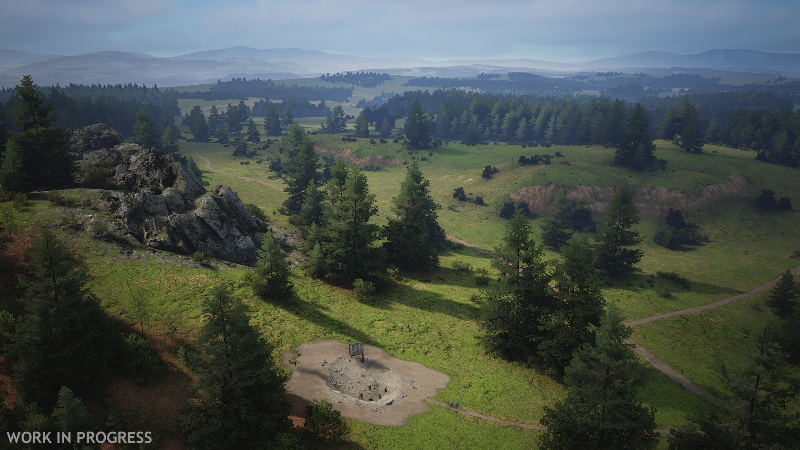
The original Besiege thrived on clear, readable objectives in mostly grounded environments. “The Broken Beyond” implies a shift toward more alien, possibly fragmented landscapes that could impact traction, stability, and line-of-sight in meaningful ways. Expect:
- Non-standard terrain that forces you to rethink wheelbases, suspension, and center of mass.
- Multi-layered objectives where siege engines must adapt mid-mission — transforming, detaching segments, or deploying sub-constructs.
- Failure-as-design loops, where explosions, partial destruction, and improvised recovery become core to success rather than pure optimization for flawless runs.
From a #gamedev standpoint, this likely means the team is extending their physics sandbox to better support edge cases: modular destruction, joint stability under extreme forces, and more granular collision behavior. The “dimension of new challenges” line reads like a promise that the simulation itself is being stress-tested and expanded.
Watch: Transmitting Gameplay footage from the field: Official Besiege: The Broken Beyond briefing
Cross-Sector Signals: Cosmic Design, Hooded Horse, and Systemic Thinking
The broader activity feed this week forms a coherent pattern of systemic, simulation-driven design across the strategy and #indiegame space:
- “Cthulhu: The Cosmic Abyss” showcases developers calmly unpacking how exploration, resource management, and sanity-shredding encounters interlock into a “delightfully terrifying feedback loop.” That language — feedback loops, interlocking systems, non-linear pressure — is exactly what keeps Besiege relevant as a sandbox. The Broken Beyond can learn from this: make every engineering choice echo through multiple layers of risk and reward.
- Hooded Horse’s update signal highlights a focus on bug fixes, balance, performance, and a new map. It’s a reminder that even the most ambitious systemic titles live or die on stability and iteration. For Besiege: The Broken Beyond, that translates into a clear priority: if you want players to build cursed, 300-part siege abominations, the physics and performance budget must hold.
Taken together, these transmissions point toward a shared design trajectory: games that don’t just add content, but refine the rules of the universe players operate within. Besiege: The Broken Beyond appears ready to join that cohort by expanding its simulation rather than merely inflating its level count.
Engineering Implications: What Builders Should Expect
For veteran Besiege engineers, this expansion is less about “more blocks” and more about new constraints. The marketing beat — “engineer destruction” and “design siege engines to conquer them all” — is coded language for:
- Higher systemic difficulty: Enemies, objectives, or environmental hazards that punish single-purpose designs.
- Incentivized versatility: Multi-mode constructs that can pivot between artillery, mobility, and utility roles within a single mission.
- Emergent problem-solving: Encounters tuned so that brute force is possible, but elegant, physics-aware solutions are faster and more satisfying.
From a #gamedev perspective, this is where Besiege can meaningfully evolve. Introducing new constraints (limited resources, weight budgets, environmental modifiers like wind or gravity anomalies) without smothering creativity is a delicate balance. The best outcome for Besiege: The Broken Beyond is a meta where players are still free to be ridiculous, but the game rewards clever engineering over pure excess.
Sector Forecast: Why The Broken Beyond Matters
In a landscape where many physics sandboxes plateau after the initial novelty spike, Besiege: The Broken Beyond has a clear opportunity: reframe construction as long-term mastery rather than short-term spectacle. By leaning into:
- Stronger systemic interplay between environment, objectives, and machine design.
- Robust performance and stability to support escalating complexity.
- A design philosophy aligned with other emergent, systems-heavy titles highlighted in this week’s feed.
…this expansion can reassert Besiege as a flagship case study in physics-driven #indiegame design.
For builders, that means one thing: it’s time to revisit your old blueprints. The Broken Beyond won’t just ask whether your siege engine works — it’ll ask whether it adapts.
Sources and corrections
This archive entry does not have a verified article-source list. Images and video embeds alone are not evidence for every claim.
Found an error? Request a correction. Include the passage and a supporting source.