Automated archive / Battlefield 6
Battlefield 6 Season 2 Opens the Gates as EA Downsizes the War Room
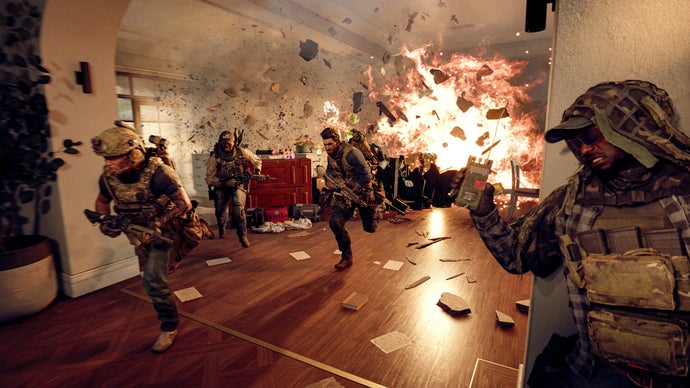
Battlefield 6 is entering a decisive phase: Season 2 opens to everyone in a free trial week just as EA quietly downsizes multiple Battlefield studios. Player counts may spike, but the real stress test is whether a leaner team can sustain the franchise’s live-service ambitions.
AI-generated summary. This archive article does not have a current recorded source check. Check linked sources before relying on details. Editorial policy

Sector Intelligence Report // Battlefield 6 – Week of March 15, 2026
Battlefield 6’s second season is entering a critical test window: Electronic Arts is throwing the doors open with a free-access week just as multiple Battlefield studios absorb fresh layoffs. On one side, players get a cost-free stress test of new content and systems; on the other, production capacity for future seasons is being quietly compressed. This is the kind of moment where live-service trajectories are made—or broken.
Operational Window: Season 2 Free Trial as Live-Fire UX Test
EA has authorized a Battlefield 6 Season 2 free-access week, effectively turning the full ecosystem into a public R&D lab. New maps, weapons, and tactical systems are being exposed to the widest possible audience without a paywall, which serves three purposes:
1. Conversion Funnel and Retention Probe
- The free week functions as a conversion funnel for fence-sitters who skipped launch.
- It’s also a retention probe: how many lapsed players re-engage when the barrier is removed, and how long do they stick once the trial ends?
- Expect internal teams to be tracking session length, squad formation rates, and churn post-trial as key KPIs.
2. Progression and Monetization Telemetry
- With a surge of new and returning players, Season 2’s progression loops—battle pass pacing, weapon unlock cadence, and cosmetic acquisition—will be under a microscope.
- Any friction points in the early hours (slow unlocks, confusing UI, weak starter kits) will directly impact conversion from free trial to paid.
3. Large-Scale Stability and Matchmaking Stress
- A free week is also a server and matchmaking stress test. Queue times, rubber-banding, and disconnects during peak hours will all feed into future infrastructure planning.
- For #gamedev teams watching from the outside, this is a case study in how to align marketing beats with live-ops telemetry gathering.
Watch: Transmitting Gameplay footage from the field: Battlefield 6 Season 2 Free Trial Week Trailer
Meta Intelligence: Season 2 Weapon Matrix Narrows the Killfeed
A fresh data packet highlights that only a handful of guns now dominate the Season 2 killfeed. The current meta is consolidating around a tight cluster of assault rifles, LMGs, and hyper-mobile SMGs.
1. Meta Concentration and Balance Risk
- When a small set of weapons defines the majority of eliminations, it simplifies onboarding for new players but raises long-term balance risk.
- If left unchecked, this concentration can flatten tactical diversity, as squads feel forced into a narrow range of optimal loadouts.
2. Attachment Ecosystem as Design Lever
- Attachments are doing heavy lifting to differentiate playstyles: recoil tuning, ADS speed, and damage falloff are shaping which weapons rise to the top.
- For Battlefield 6’s design team, attachments are the most agile lever for micro-tuning without gutting an entire weapon class.
3. Opportunity Window Before the Next Tuning Wave
- The report explicitly frames this as a “use it before it’s nerfed” moment. High-skill players and content creators will rush to exploit these loadouts before the next balance patch.
- From a systemic #gamedev perspective, this is the familiar live-ops cycle: identify emergent meta → gather data → deploy a tuning wave → reset the sandbox.
Studio Shock: Layoffs Amid a Record-Breaking Launch
The most jarring signal this week isn’t in the killfeed—it’s in the org chart. Multiple Battlefield 6 studios have been hit with layoffs despite a record-breaking launch, and EA has confirmed reductions across four interconnected Battlefield teams.
1. Revenue vs. Resourcing: The New Live-Service Paradox
- Battlefield 6’s strong commercial start hasn’t translated into long-term headcount stability.
- This reflects a broader industry pattern: even high-performing franchises are being restructured into leaner live-ops models with smaller core teams and heavier outsourcing.
2. Impact on Production Bandwidth
- With four studios affected, production bandwidth for large-scale features—new maps, modes, and tech-heavy events—is likely to tighten.
- Short term, Season 2 and any already-locked content should remain on track.
- Medium to long term, expect:
- More conservative content drops.
- Increased reuse of existing assets and locations.
- A heavier emphasis on systemic updates (balance, events, progression tweaks) over massive new content slabs.
3. Morale, Risk, and Knowledge Drain
- Layoffs after a record launch can be a morale gut-punch, especially for developers who just pushed through a brutal ship cycle.
- The risk isn’t just slower output—it’s the loss of institutional knowledge, including:
- Engine-specific optimization tricks.
- Map scripting expertise.
- Live-ops tooling know-how.
- For #indiegame and smaller studio teams observing from the outside, this underscores the volatility of AAA employment even on “successful” projects.
Live-Ops Outlook: What Players and Developers Should Watch
1. Cadence of Future Seasons
- Watch the gap between Season 2 and Season 3. If the interval grows, that’s a visible symptom of reduced bandwidth.
- Any pivot toward smaller, more frequent updates could indicate a strategic shift to incremental iteration over blockbuster drops.
2. Communication Strategy Post-Layoffs
- Transparent communication around roadmaps, feature prioritization, and live-ops philosophy will be critical.
- Silence, or vaguely worded updates, will only fuel speculation about Battlefield 6’s long-term support horizon.
3. Technical Ambition vs. Operational Reality
- Battlefield 6 is built on tech that thrives on scale—huge maps, dense destruction, and high player counts.
- With fewer hands on deck, the team may need to dial back experimental features and focus on stabilizing and polishing the existing sandbox.
Strategic Takeaways
- For players: Season 2’s free-access week is the ideal moment to evaluate Battlefield 6’s current state—performance, meta health, and progression feel—without spending anything.
- For developers and #gamedev observers: Battlefield 6 is a live case study in the tension between blockbuster launch success and lean, cost-controlled live-ops.
- For the franchise: The next 6–12 months will be defined less by raw sales and more by how effectively a slimmed-down team can sustain content cadence, balance passes, and community trust.
In other words, the war for market share is ongoing—but behind the scenes, the war for sustainable development has just begun.
Sources and corrections
This archive entry does not have a verified article-source list. Images and video embeds alone are not evidence for every claim.
Found an error? Request a correction. Include the passage and a supporting source.
Your games, in one place
Keep up with Battlefield 6
Follow this game to collect its posts in your personal feed. Come back to see what you missed.
More to read about Battlefield 6
- Source-checked briefBattlefield 6 joins EA Play with Season 5 rewards
Battlefield 6 is available through EA Play via Xbox Cloud Gaming, Xbox PC Game Pass, or Game Pass Ultimate. Season 5 adds three Las Vegas-area maps, while an EA Play Season 5 Pack can be claimed...