Automated archive / Battlefield 6
Battlefield 6 Holds the High Ground Amid Studio Shockwaves
Battlefield 6 just pulled off a paradoxical week: award-winning success on the public stage and quiet structural downsizing behind the scenes. Season 2’s sharpened weapons meta keeps the game tactically lethal even as its development footprint contracts.
AI-generated summary. This archive article does not have a current recorded source check. Check linked sources before relying on details. Editorial policy
Strategic Overview
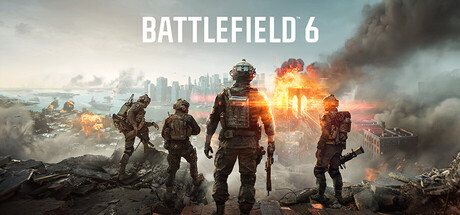
Battlefield 6 just logged one of its strangest operational weeks yet: a decorated awards sweep, a sharpened Season 2 meta, and simultaneous layoffs across multiple development nodes. From a #gamedev and live-ops perspective, the shooter is performing like a frontline unit under mixed conditions—racking up wins on the public battlefield while its command structure quietly restructures behind the lines.
For players, the signal is clear: the game’s momentum is still strong, with Season 2 balance changes creating a defined meta and renewed interest in high-skill, squad-centric play. For developers and industry watchers, the combination of record-breaking launch performance, UKIE awards, and post-launch layoffs raises sharp questions about sustainability, tooling, and what a “lean” AAA live service actually looks like in 2026.
Awards & Market Position: Battlefield 6 as Flagship Asset
Battlefield 6 securing UK Game of the Year and Best PC Game at the UKIE Video Game Awards 2026 is more than trophy polish; it’s a data point that validates EA’s long-term bet on the franchise as a platform.
From a sector-intel angle:
- Critical validation: UKIE’s recognition reinforces Battlefield 6 as a benchmark for large-scale multiplayer design, systemic destruction, and visual fidelity.
- Platform leverage: Awards strengthen the game’s position as a technical and creative reference for future internal projects and potential cross-studio tech sharing.
- Player trust: For the active community, this confirms what the concurrent player charts already suggested—Battlefield 6 is now the “default” modern combined-arms sandbox.
This makes the week’s layoff news even more jarring. You don’t typically see a title crowned Game of the Year while its supporting studios are being downsized.
Operational Shock: Layoffs in a Record-Breaking Cycle
Two separate intel packets confirm personnel reduction protocols across four Battlefield 6 studios, following a record-breaking launch window. Headcount specifics remain redacted, but the pattern matches a broader industry move toward:
- Lean live-ops orgs focused on data, tooling, and content pipelines over large pre-production armies.
- Cross-studio consolidation, where core expertise (netcode, engine, monetization) is centralized and satellite teams are trimmed.
- Financial optimization after launch, when peak burn rate is no longer justifiable to stakeholders.
From a #gamedev standpoint, the key risk isn’t immediate content collapse; it’s cadence fragility:
- Fewer hands mean less redundancy when firefighting regressions or shipping hotfixes.
- Experimental features and ambitious seasonal beats are the first to get cut in favor of safe, repeatable content drops.
- Morale impact can slow iteration speed, especially in areas that rely on close collaboration (map design, live balance, narrative beats).
Yet the external signal EA is sending is that Battlefield 6 will continue as a flagship live product—just under a more aggressively optimized structure.
Season 2 Meta: A Sharpened Weapons Matrix
Season 2 has recalibrated the weapons matrix, and the killfeed is now dominated by a smaller, more clearly defined set of tools. For players and competitive designers alike, this is a crucial inflection point.
Key reads from the field reports:
Assault Rifles: Precision Over Spray
Assault rifles in Battlefield 6 Season 2 have tilted toward precision-first, mid-range control:
- The top ARs now reward burst discipline and recoil mastery instead of pure DPS spam.
- Optimal builds lean on stability and recoil tuning over raw damage attachments.
- This aligns with a design philosophy that emphasizes skill expression in gunplay—a throughline that likely contributed to its UKIE recognition.
For #indiegame developers studying Battlefield 6, this is a case study in how to nudge a meta toward mastery without alienating casual players: buff clarity, tighten recoil profiles, and ensure that “best-in-class” options are strong but counterable.
LMGs: Suppression as a Tactical Role
LMGs have solidified into suppression anchors rather than all-purpose laser beams:
- Season 2 tuning favors sustained fire and zone denial, especially when paired with bipods and stability grips.
- Their role is now clearer in squad compositions: lock lanes, pin rotations, and feed intel rather than chase frag reels.
This is smart systemic design: by giving LMGs a distinct battlefield job, DICE reinforces role clarity—vital in a 64+ player sandbox where chaos can easily overwhelm intentional teamplay.
SMGs: Hyper-Mobility in the Gaps
SMGs occupy the hyper-mobile close-quarters niche, thriving in vertical playspaces and objective interiors:
- Movement-focused builds (stocks, lightweight attachments) are outperforming raw damage setups.
- The best squads are pairing SMG flankers with LMG anchors and AR midliners, creating triangulated pressure on objectives.
This triad—precision ARs, suppression LMGs, and mobile SMGs—forms the current Season 2 squad meta. For designers, it’s a clean example of complementary weapon ecosystems that drive emergent tactics without needing hard class locks.
Live-Ops Cadence: What Changes After the Cutbacks?
The central question for the coming quarter: Does Battlefield 6’s live-ops velocity hold under reduced headcount?
Based on current intel and industry precedent, expect:
- Fewer, more focused seasonal overhauls rather than constant micro-tuning.
- Heavier reliance on data-driven balance—automated telemetry and internal dashboards will guide changes more than large-scale manual QA.
- Increased reuse and remixing of existing content (modes, map variants, event rulesets) to stretch production value.
For #gamedev teams watching from the outside, Battlefield 6 is fast becoming a bellwether for AAA live-service efficiency: how far can you push a flagship shooter with streamlined teams, robust tools, and a clear seasonal spine?
Takeaways for Developers and Operators
- Awards don’t guarantee structural stability. Battlefield 6’s UKIE wins coexist with layoffs—a reminder that business models, not just critical acclaim, dictate team health.
- Meta clarity is a retention tool. Season 2’s sharper weapon hierarchy gives players obvious goals and build paths, which is crucial for onboarding and long-term engagement.
- Role clarity scales chaos. The delineation between AR, LMG, and SMG roles is a blueprint for any #indiegame or AAA team building large-scale PvP.
- Lean live ops demand strong tooling. As Battlefield 6 shifts to leaner structures, expect more investment in internal tools, automation, and data pipelines.
Sector Outlook: Battlefield 6 as a Live-Service Test Case
Battlefield 6 currently occupies a rare position: commercially successful, critically decorated, and simultaneously undergoing structural contraction. In sector terms, it’s a live experiment in whether a mega-franchise can:
- Maintain high community expectations for spectacle and scale.
- Deliver meaningful seasonal refreshes like the Season 2 weapons matrix.
- Operate under a leaner, more efficiency-obsessed org chart.
For players, the short-term read is reassuring: the game is strong, the meta is interesting, and Season 2 is worth investing in. For developers, Battlefield 6 is now a critical case study in post-peak optimization—what happens to a blockbuster shooter once the launch dust settles and the spreadsheets take over.
Breach.gg will continue to monitor content cadence, balance shifts, and studio signals as this cycle unfolds. Battlefield 6 still holds the high ground—for now. The real test will be how well it can defend it with fewer boots on the dev floor.
Sources and corrections
This archive entry does not have a verified article-source list. Images and video embeds alone are not evidence for every claim.
Found an error? Request a correction. Include the passage and a supporting source.
Your games, in one place
Keep up with Battlefield 6
Follow this game to collect its posts in your personal feed. Come back to see what you missed.
More to read about Battlefield 6
- Source-checked briefBattlefield 6 joins EA Play with Season 5 rewards
Battlefield 6 is available through EA Play via Xbox Cloud Gaming, Xbox PC Game Pass, or Game Pass Ultimate. Season 5 adds three Las Vegas-area maps, while an EA Play Season 5 Pack can be claimed...