Automated archive / Baldur's Gate 3
Baldur’s Gate 3 Breaches HBO, Redefines CRPG-to-TV Adaptation
Baldur’s Gate 3 has breached prestige TV, with HBO and Craig Mazin betting big on one of the most complex CRPGs ever made. The result could redefine how systemic, choice-driven games are adapted—and how narrative designers shape the next era of transmedia IP.
AI-generated summary. This archive article does not have a current recorded source check. Check linked sources before relying on details. Editorial policy
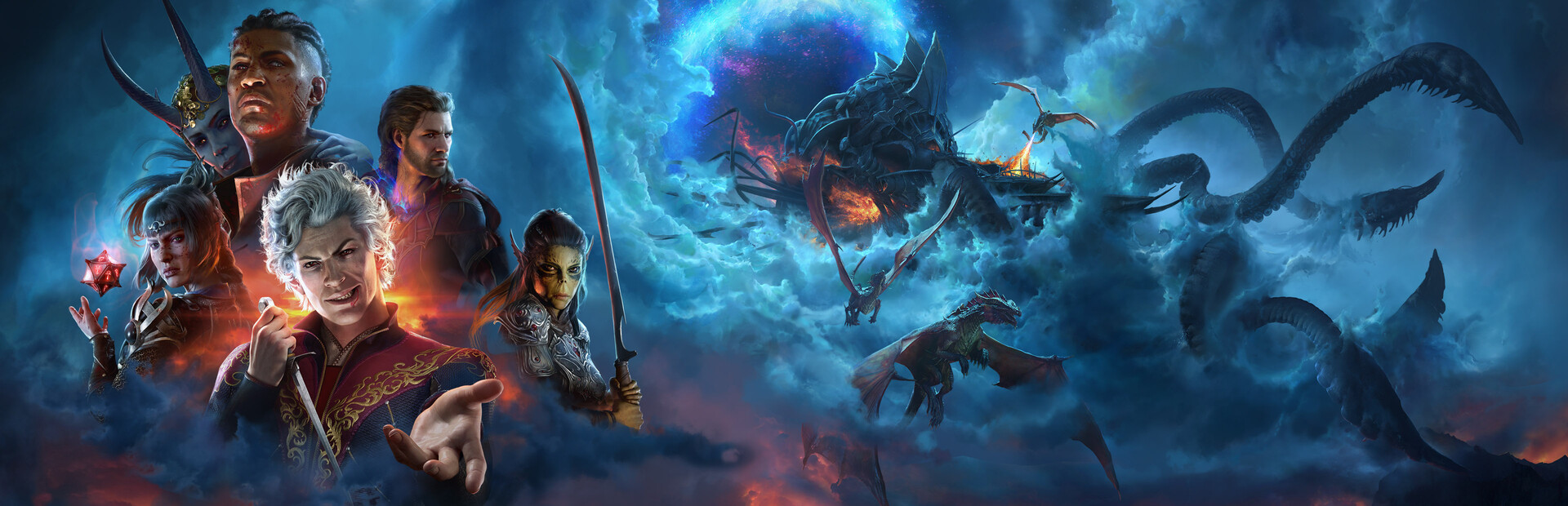
Sector Overview: Baldur’s Gate 3 Steps Onto the Prestige Stage
In the last seven days, baldur's gate 3 has shifted from a genre-defining CRPG to a full-blown transmedia IP with real teeth. HBO has officially greenlit a Baldur’s Gate series, with The Last of Us showrunner Craig Mazin attached—a move that instantly positions the franchise in the same prestige orbit as other big-budget adaptations.
For the #gamedev sector, this isn’t just another fantasy show announcement. It’s a live case study in how a deeply systemic, reactive RPG can be translated into linear television without losing the design DNA that made it a phenomenon. The coming months will be a stress test for how far game-native storytelling can push into mainstream TV.
HBO Adaptation: From Dice Rolls to Scripted Drama
Multiple intercepted transmissions this week circle one core signal: HBO is all‑in on Baldur’s Gate. The chatter highlights several key vectors:
1. Craig Mazin as Narrative Dungeon Master
Mazin’s track record on The Last of Us matters. He’s already proven he can translate interactive emotional beats into episodic arcs without flattening them. If that same philosophy is applied here, we could see:
- Companion-style subplots mapped to character-centric episodes.
- Season-long arcs mirroring campaign acts and major questlines.
- Moral dilemmas structured like high-stakes set pieces rather than simple plot twists.
For writers and narrative designers, this is a rare moment where quest design logic may directly inform TV structure.
2. The Larian Question: Who Owns the Soul of the Story?
One of the most pointed notes in the feed warns that an HBO Baldur’s Gate 3 without Larian deeply involved risks becoming a “generic fantasy show wearing its skin.” That critique cuts to a crucial #gamedev reality:
- Larian’s reactive storytelling and systemic chaos are not surface aesthetics—they’re core design pillars.
- The game’s identity comes from player-driven choices, not just Forgotten Realms lore.
Any adaptation that sidelines Larian’s creative leadership could hollow out the very texture that differentiates BG3 from other fantasy IP. Expect the community—and other studios—to watch closely for signs of Larian’s creative producer or co‑showrunner footprint.
Design DNA Under the Microscope: Choices, Companions, and Tadpoles
The reports repeatedly spotlight three design elements HBO will have to solve for:
1. Player Agency vs. Fixed Canon
Baldur’s Gate 3 is built on branching choices and wildly divergent outcomes. The show can’t replicate player freedom, but it can:
- Embrace moral ambiguity and conflicting agendas instead of clean hero/villain binaries.
- Use Origin characters as parallel “builds” on the same theme—different answers to the same narrative question.
How the writers handle the tadpole problem—a literal, shared affliction that drives both plot and character—will be a litmus test for whether they understand BG3’s blend of body horror, power fantasy, and ethics.
2. Party Dynamics as Core Structure
Companions are the emotional engine of Baldur’s Gate 3. The adaptation chatter repeatedly flags party dynamics as the heart of the show:
- Expect serialized arcs built around trust, approval, and ideological clashes.
- Anticipate a heavy focus on characters like Astarion, whose fandom gravity and moral messiness are already a talking point in the intel feed.
If HBO leans into party composition as a narrative tool—who is present in which episode and why—it could mirror the feel of a long‑running tabletop campaign.
Easter Eggs and Legacy: Divinity DNA in Faerûn
Beyond the HBO noise, another signal this week zooms in on something more granular: Divinity: Original Sin callbacks hidden throughout baldur's gate 3. Items, dialogue fragments, familiar names, and environmental props quietly stitch Larian’s older universe into Faerûn.
For players and #indiegame veterans who followed Larian from its more modest days, these Easter eggs function as a meta‑game of recognition:
- They reward obsessive exploration and close listening to party banter.
- They act as a living archive of Larian’s design evolution—from experimental systems to full‑scale AAA RPG.
From a sector perspective, this shows how studio continuity and internal lore can deepen worldbuilding without requiring massive budgets—an approach smaller teams can emulate by threading their past projects into new worlds.
Watch: Transmitting Gameplay footage from the field: Baldur's Gate 3 systems and narrative in motion
Strategic Impact for #gamedev and Narrative-Driven Studios
The HBO deal is more than a marketing win; it’s a design validation event. Several implications stand out for studios across the spectrum, from AAA to #indiegame:
1. Complex Systems Are Now Adaptation-Grade
Baldur’s Gate 3 is not a streamlined, cinematic-only experience. It’s a dense CRPG built on D&D 5E logic, systemic combat, and sprawling quest trees. HBO choosing this as a flagship fantasy project sends a clear message:
- System-heavy games are no longer adaptation poison.
- Narrative complexity and branching structures are assets, not liabilities, when mining IP for TV.
This opens the door for other CRPGs and systems‑driven titles to be pitched as prestige-ready properties, not just cult curiosities.
2. Narrative Designers Move to the Front of the Pitch Deck
One activity note frames each future episode as a “design doc in disguise.” That’s not hyperbole. If BG3’s adaptation lands, it will:
- Prove that quest lines, branching dialogues, and lore bibles are primary IP, not disposable scaffolding.
- Elevate narrative designers and writers as core creative stakeholders in transmedia deals.
Studios would be wise to treat their narrative pipelines as exportable assets—organized, pitchable, and ready for cross‑media collaboration.
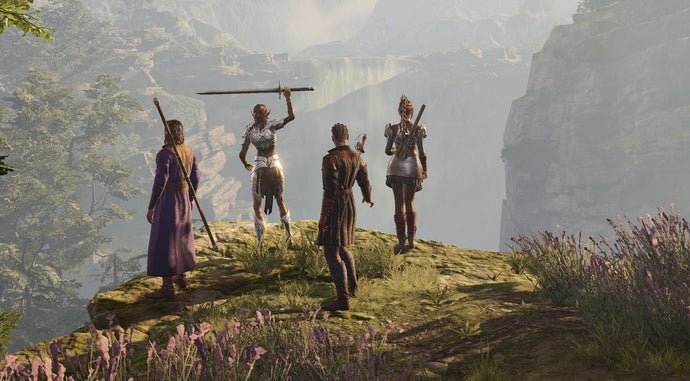
Outlook: Risk, Reward, and the New Baseline for CRPG IP
The sector consensus from this week’s intel is cautiously optimistic:
- Upside: If Mazin and HBO preserve Larian’s moral complexity and party-centric storytelling, Baldur’s Gate could become the template for future CRPG adaptations.
- Downside: If Larian is sidelined or the show flattens interactivity into generic fantasy, it will be read as a critical fumble—a warning shot about stripping games of their systemic identity.
Either way, baldur's gate 3 has already breached a new frontier. Its journey from save file to screen will be one of the most important live experiments in how game-native narrative design can evolve beyond the monitor—and how the rest of the industry positions its own worlds for the next wave of adaptations and development update cycles.
Sources and corrections
This archive entry does not have a verified article-source list. Images and video embeds alone are not evidence for every claim.
Found an error? Request a correction. Include the passage and a supporting source.