Automated archive / Baldur's Gate 3
Baldur’s Gate 3 Charts a New Multiverse From Rivellon to HBO
Baldur’s Gate 3 is shifting from landmark CRPG to cross-media power player, weaving Divinity: Original Sin’s legacy into Faerûn while lining up a high-risk, high-reward HBO adaptation. The critical question now is whether Larian’s systemic narrative DNA will guide that evolution—or be left on the cutting room floor.
AI-generated summary. This archive article does not have a current recorded source check. Check linked sources before relying on details. Editorial policy
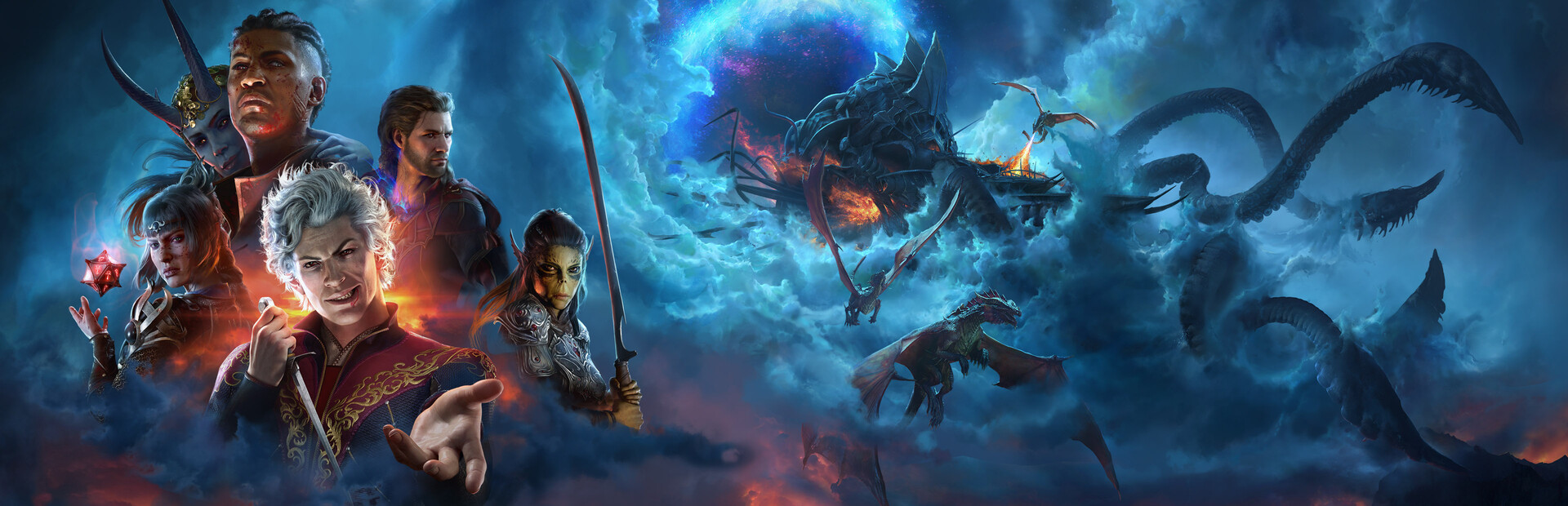
Sector Overview: Baldur’s Gate 3 in a Post-Launch Power Position
Baldur’s Gate 3 is no longer just a landmark CRPG—it’s evolving into a cross-media ecosystem that’s reshaping expectations for narrative-driven #gamedev. Over the last week, intelligence signals cluster around two key vectors: deep-cut Divinity: Original Sin lineage quietly embedded in the game’s design, and a high-stakes HBO adaptation that could redefine how AAA and #indiegame storytelling pipelines intersect with prestige television.
The throughline: Larian’s systemic narrative craft is the irreplaceable core asset. Everything—from sly Easter eggs to potential showrunners’ rooms—now orbits that creative gravity.
Hidden Divinity DNA: Rivellon’s Ghost in the Faerûn Machine
Recent field reports highlight just how aggressively Baldur’s Gate 3 leverages its Divinity: Original Sin heritage as more than simple fan service. Veterans of Larian’s earlier work are spotting:
- Item-level callbacks: Trinkets, books, and gear that echo Divinity’s lore, quietly reinforcing that BG3’s world is built by the same narrative architects, even if it’s a different universe.
- Character and naming echoes: Familiar names and personality archetypes that act as a design shorthand, letting Larian rapidly establish tone and player expectations without heavy exposition.
- Environmental storytelling crossovers: Props and micro-setpieces that function as “Rivellon fingerprints” on Faerûn—rewarding players who scrutinize every corner of the map.
From a #gamedev perspective, this is a case study in soft continuity: using callbacks not to lock players into prior canon, but to build trust and texture. It’s a meta-game of recognition that turns exploration into a loyalty loop. Players who caught Divinity’s systemic chaos feel instantly at home, which is particularly valuable in a dense CRPG like baldur's gate 3 where onboarding risk is high.
This is also a smart retention strategy. By layering hidden Divinity references into party banter, loot tables, and background dressing, Larian keeps completionists and lore hunters engaged long after the main narrative arc concludes—without needing a constant stream of traditional “content updates.”
HBO Adaptation: From Save Files to Prestige Screen Time
Watch: Transmitting Gameplay footage from the field: Baldur’s Gate 3 – Narrative & Cinematic DNA
The biggest narrative shockwave this week is confirmation that Baldur’s Gate 3 is marching beyond the desktop and into an HBO series. On paper, the fit is strong: HBO’s appetite for morally complex, politically layered dramas aligns with BG3’s core strengths—mind flayer invasions, factional intrigue in the Forgotten Realms, and companion arcs that are built on tension rather than comfort.
But the adaptation risk profile is high. The game’s identity is not just its lore; it’s the reactive narrative architecture that lets players bend the story around their choices. Translating that into a fixed-format TV script without losing the sense of agency will be the central design challenge.
Key watchpoints for the sector:
- Companion-Centric Structure: If the show leans into origin characters as rotating POV anchors, it can simulate player choice by shifting narrative emphasis episode to episode.
- Tadpole as Narrative Device: The parasitic mind flayer tadpole is an elegant metaphor for temptation, power, and corruption. How much the series foregrounds that moral tension will determine whether it feels like baldur's gate 3 or just another fantasy show with tentacles.
- Political Intrigue Fidelity: The Forgotten Realms backdrop needs to function like a living systemic world, not a static stage. That means persistent consequences, not reset-button plotting.
The Critical Variable: Larian’s Direct Involvement
Watch: Transmitting Gameplay footage from the field: Baldur’s Gate 3 – Systems-Driven Storytelling
Intelligence chatter is already framing a Baldur’s Gate 3 HBO series without Larian at the creative helm as a potential critical fumble. This isn’t fan paranoia; it’s a sober read of the IP’s value chain.
Larian’s unique blend of:
- systemic encounter design,
- branching narrative logic,
- and improvisational party dynamics
is the non-transferable tech stack behind BG3’s success. Remove that, and you risk a generic fantasy serial wearing a very expensive skin.
For #gamedev observers, this is a live test of how game-native storytelling expertise is treated in cross-media deals. Do studios recognize that the writers and quest designers who engineered baldur's gate 3’s reactive narrative are as crucial as any showrunner? Or do they treat the game as a static lore bible to be strip-mined?
A best-case scenario sees Larian operating as co-showrunners or deeply embedded narrative leads, ensuring that:
- party dynamics remain messy, contradictory, and human;
- moral choices have teeth and lasting consequences;
- and the series embraces systemic chaos—failures, bad rolls, and unintended outcomes—as core dramatic fuel.
If that doesn’t happen, the adaptation risks becoming a textbook IP cash-in: high production values, low systemic soul.
Strategic Takeaways for Devs and Publishers
For studios tracking Baldur’s Gate 3 as a sector bellwether, three lessons stand out:
-
Leverage Legacy, Don’t Be Shackled by It
The Divinity: Original Sin callbacks show how to mine your own back catalog for emotional resonance without demanding prior knowledge. This is a scalable tactic for both AAA and #indiegame teams with smaller but passionate fanbases. -
Systemic Narrative Is Your Moat
BG3’s real moat isn’t just D&D licensing—it’s the underlying narrative systems. Any studio building narrative-heavy projects should treat those tools and processes as core IP, not ancillary tech. -
Cross-Media Requires Native Creators in the Room
As more games chase TV and film deals, Baldur’s Gate 3’s HBO adaptation will be a case study in what happens when (or if) you sideline the original creative DNA. The outcome will influence how future devs negotiate for creative control.
Baldur’s Gate 3 is no longer just a successful launch; it’s a live, evolving blueprint for how deeply authored games can project influence across media while still doubling down on the systemic storytelling that made them matter in the first place.
Sources and corrections
This archive entry does not have a verified article-source list. Images and video embeds alone are not evidence for every claim.
Found an error? Request a correction. Include the passage and a supporting source.