Automated archive / Avowed
Avowed’s Anniversary Offensive: How Obsidian Reforged Combat, Systems, and Platforms in One Massive Push
Obsidian’s Anniversary Update turns Avowed into a full-fledged 2.0 relaunch, synchronizing a PS5 debut with combat, narrative, and systems overhauls. For developers, it’s a live case study in how to treat a single‑player RPG like an evolving platform instead of a finished product.
AI-generated summary. This archive article does not have a current recorded source check. Check linked sources before relying on details. Editorial policy
Sector Intelligence Report: Avowed – Anniversary Uplink and PS5 Breach
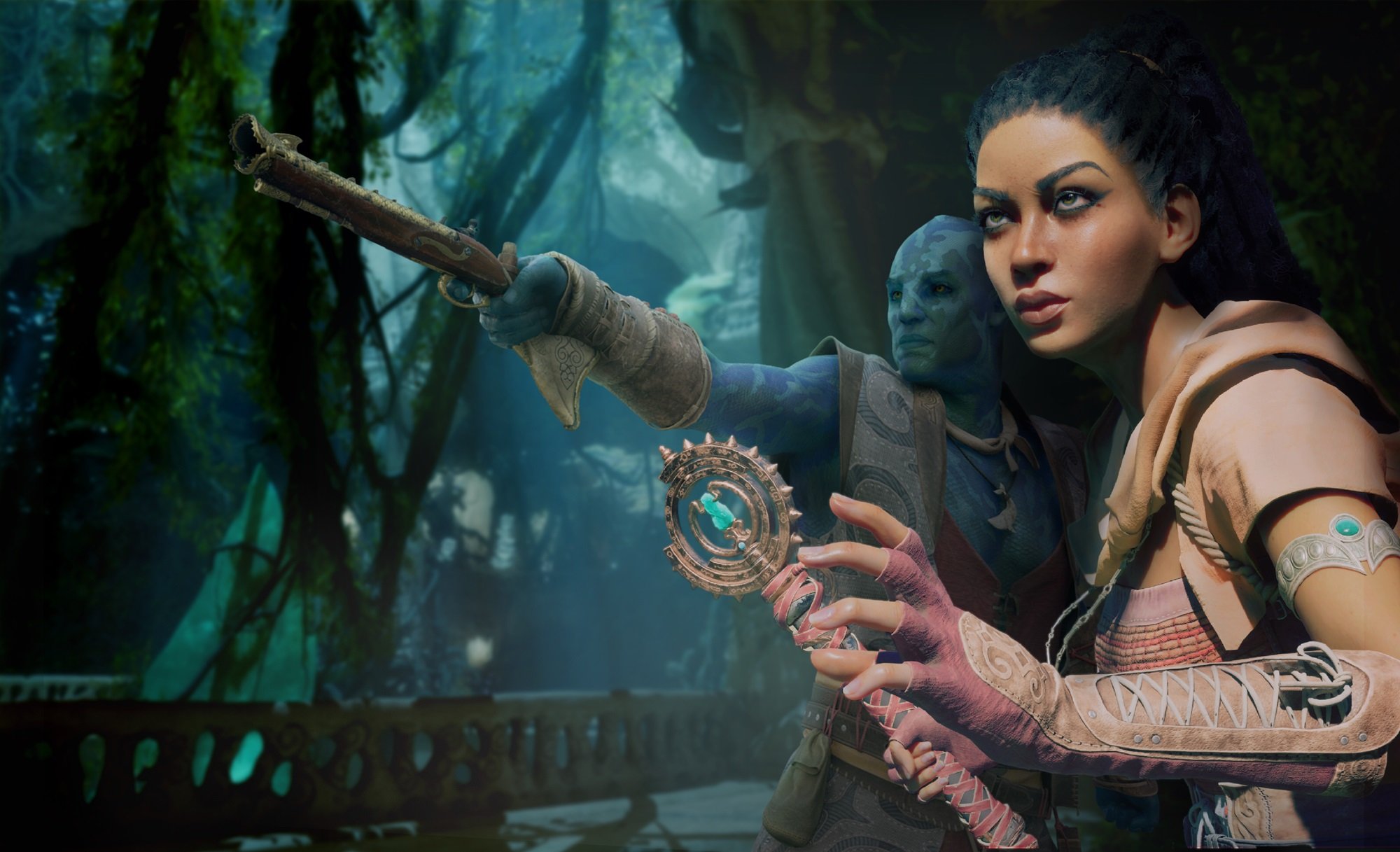
Obsidian has flipped Avowed into its second operational phase, and this week’s telemetry shows a studio treating the game less like a finished SKU and more like a live, evolving RPG platform. The Anniversary Update v2.0 doesn’t just polish edges; it rewires progression, widens buildcraft, and opens a new deployment theater on PlayStation 5. For #gamedev teams watching AAA pipelines and systems-driven narrative, Avowed’s latest pass is a case study in how to relaunch a single‑player RPG one year in.
PS5 Systems Breached: Cross-Platform as Design Lever
The biggest strategic move is Avowed’s arrival on PS5 alongside the Anniversary Update. Rather than a straight port, Obsidian has synchronized this new platform drop with a systemic uplift: New Game+, new playable species, and extensive tuning across combat and exploration.
From a production standpoint, pairing a platform expansion with a feature-rich patch is smart risk management. It concentrates QA on one major milestone instead of a slow drip of minor builds, and it ensures PS5 players hit the game at its most stable and feature-complete state. For designers, this also means telemetry from a fresh audience feeds directly into the v2.0 balance model instead of legacy 1.0 assumptions.
The move beyond the Xbox ecosystem also reframes Avowed as a longer-tail RPG rather than a launch-window showcase. That has implications for content cadence: once you commit to multi-platform, systemic updates like this Anniversary build become table stakes, not bonuses.
Systems, Steel, and Sorcery: Combat and Readability Overhaul
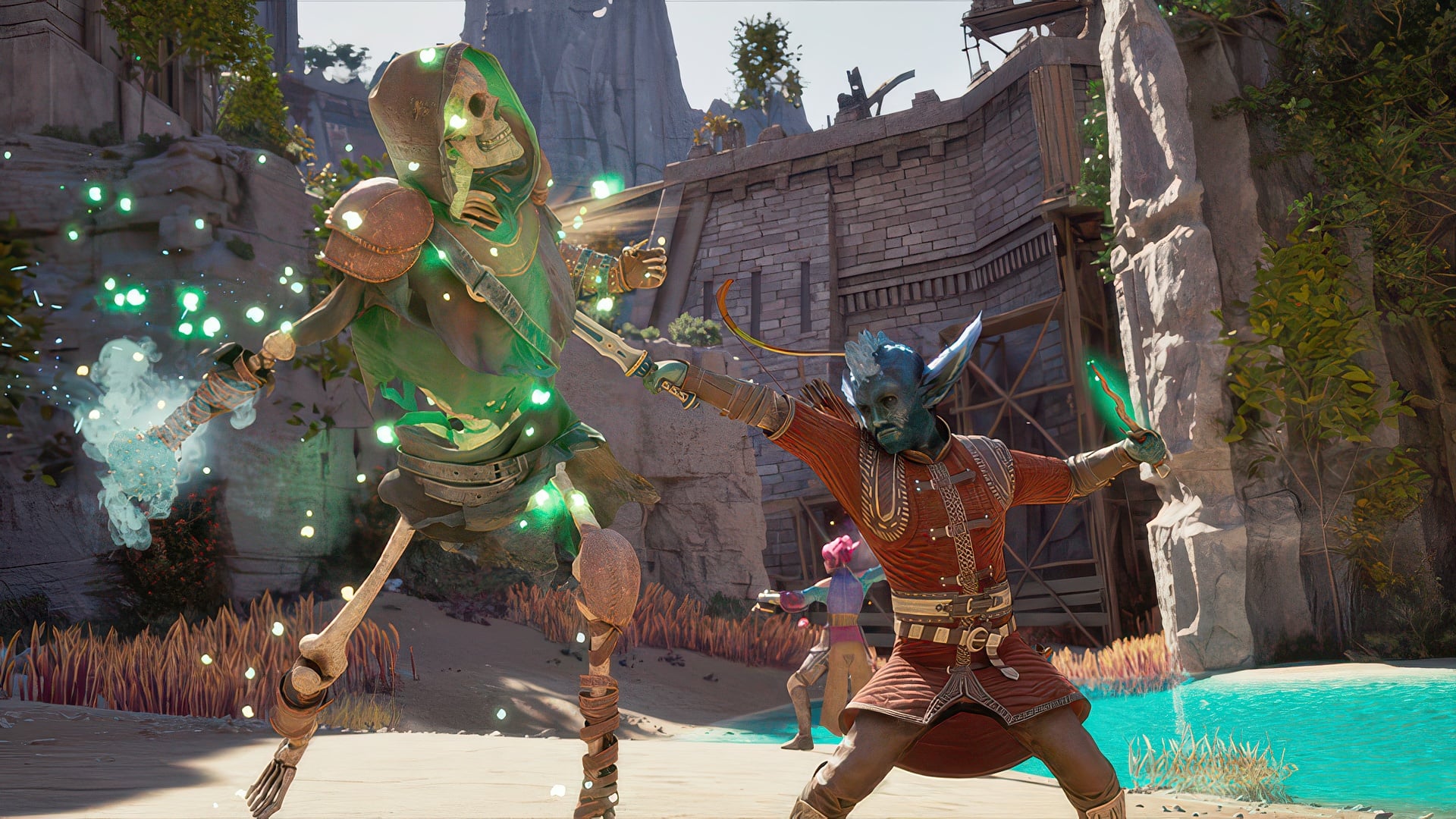
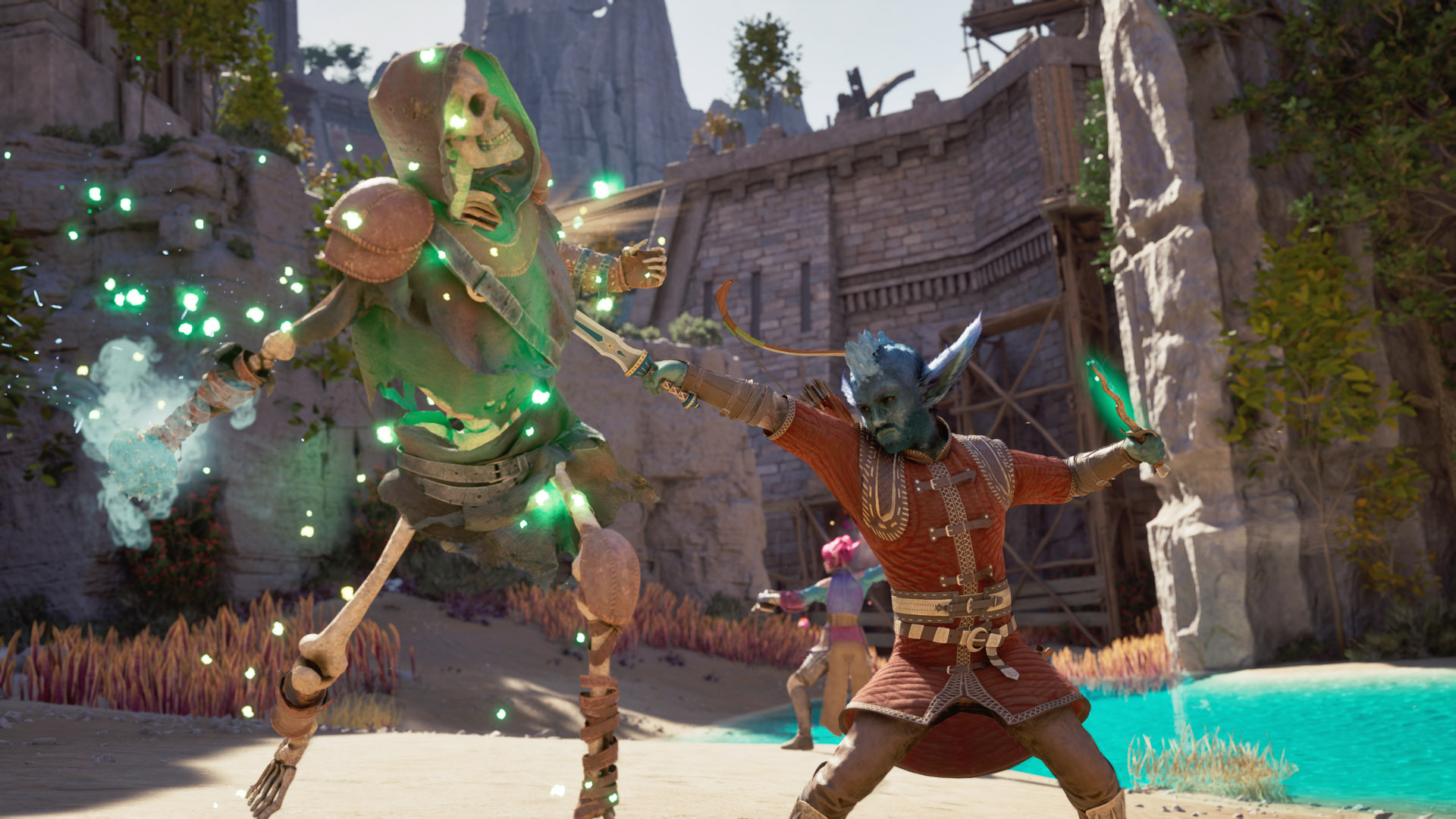
The Anniversary Uplink reads like a full combat UX audit. Obsidian calls out enhanced spell effects, refined melee feedback, and sharper encounter pacing. In practical terms, this is a readability pass aimed at the crucial half-second where players decide whether to dodge, block, or commit.
Key signals from the update:
- Improved VFX readability: Spell and ability effects have been tuned to be more legible under motion, which reduces input latency perception even if the underlying frame timings are unchanged.
- Tightened animations and timing: Weapon swings, spell wind-ups, and hit reactions are being compressed and clarified, making combat feel more lethal but less muddy.
- Enemy behavior iteration: Adjustments to AI patterns and telegraphs aim to keep encounters lethal yet fair—vital for a first-person RPG that wants tactical depth without full sim-jank.
For #gamedev combat designers, the interesting takeaway is how these changes are being framed: not as pure difficulty tweaks, but as clarity and feedback passes. That’s the language of service games being applied to a narrative RPG.
Narrative Sync: Companions and Choice Under Live-Fire Conditions
The update notes also highlight better synchronization between narrative beats, companion interactions, and player actions. This suggests Obsidian is doing late-cycle narrative systems tuning—something many studios avoid after launch due to localization and scripting risk.
What’s notable:
- Companion timing: Barks and interjections are being aligned more tightly with combat and exploration states, which improves perceived reactivity without needing massive new dialogue dumps.
- Deeper faction routes: Expanded narrative routes into faction politics indicate Obsidian is confident enough in its quest backbone to expose more branching without destabilizing the critical path.
From a tools perspective, this implies robust narrative debugging and flag visualization pipelines. You don’t comfortably re-thread companion logic a year in unless your scripting and test harnesses are mature.
New Game+, New Species: Replayability as a Systems Testbed
The addition of New Game+ and fresh playable species in the Anniversary Update is more than fan service. It’s a replayability strategy that doubles as a data-gathering engine.
- New Game+ lets the team observe high-level builds hitting early-game content, stress-testing encounter tuning and progression pacing.
- New playable species introduce new stat profiles, silhouette changes, and animation demands, forcing the underlying systems to prove they’re robust rather than hand-tuned to a single humanoid baseline.
For #indiegame developers, there’s a scalable lesson here: New Game+ doesn’t have to be a loot treadmill. It can be a structured way to validate your systems under extreme conditions and extend your balancing window without shipping a sequel.
Post-Launch Uplift: From Patchwork to Platform
Looking back across the last year, Avowed has accumulated incremental upgrades—combat tuning, quest stability, visual clarity passes, and performance optimization. The Anniversary Update consolidates those into a coherent 2.0 identity.
- Performance profiling across PC and consoles is converging on launch-readiness targets for the PS5 expansion.
- UI and pacing improvements smooth out friction points in the Dyrwood-adjacent warzone, reducing cognitive load while preserving tactical decision space.
The pattern is clear: Obsidian is treating Avowed as a living RPG framework rather than a one-and-done boxed product. Each update steps closer to a stable, extensible base that can support future content drops, expansions, or even systemic crossovers with the broader Eora setting.
Signal for Developers: Why Avowed’s Anniversary Matters
For developers tracking AAA RPG production, Avowed’s Anniversary Update is a useful reference point:
- It shows how to bundle a platform launch with a systemic relaunch, maximizing impact and minimizing fragmented QA.
- It demonstrates a combat readability pass as a late-cycle, high-value investment rather than a pre-launch-only concern.
- It highlights how narrative systems can be iterated post-launch when your tools and pipelines are strong enough.
Avowed’s current trajectory positions it as a long-tail RPG asset, not just a launch-window talking point. For teams building first-person narrative RPGs, this is one to watch—not just as a game, but as an evolving development update playbook.
Sources and corrections
This archive entry does not have a verified article-source list. Images and video embeds alone are not evidence for every claim.
Found an error? Request a correction. Include the passage and a supporting source.
Your games, in one place
Keep up with Avowed
Follow this game to collect its posts in your personal feed. Come back to see what you missed.