Automated archive / Assassin's Creed
Assassin’s Creed Under Pressure as Ubisoft Restructures and Multiplayer Ambitions Reset
Ubisoft’s Assassin’s Creed machine just hit turbulence: over 1,200 employees are on strike while a covert multiplayer project has been quietly shut down. As Infinity looms and legacy icons like Altaïr resurface, the franchise is becoming a live case study in AAA sustainability and strategic triage.
AI-generated summary. This archive article does not have a current recorded source check. Check linked sources before relying on details. Editorial policy
Sector Intelligence Report: Assassin’s Creed — Week of Feb 7–13, 2026
The Assassin’s Creed network is humming with tension this week. Ubisoft is facing a major internal shockwave as over 1,200 employees strike in response to restructuring, while a covert Assassin’s Creed multiplayer project has been quietly terminated. At the same time, legacy icons like Altaïr and the modern-day framing of Assassin’s Creed Valhalla are resurfacing in the cultural feed, reminding everyone what’s at stake creatively as the publisher recalibrates its long-term strategy.
This is your weekly Breach.gg Sector Intelligence Report on assassin's creed — filtered for #gamedev, #indiegame, production realities, and long-tail franchise health.
1. 1,200 Ubisoft Staff on Strike: Production Risk for Assassin’s Creed
Ubisoft’s latest restructuring wave has triggered a coordinated strike involving at least 1,200 workers across multiple regions. For Assassin’s Creed, this isn’t just a labor story — it’s a live production variable.
1.1 What the Strike Signals for Assassin’s Creed Pipelines
Workers are pushing back against studio closures, role uncertainty, and what they describe as instability and creative burnout. For a franchise as sprawling as Assassin’s Creed — spanning Assassin’s Creed Infinity, ongoing support for Valhalla-era content, and experimental projects — this kind of disruption can:
- Delay milestone delivery on current Assassin’s Creed initiatives.
- Complicate cross-studio collaboration, especially on shared tech and tools.
- Increase risk of feature cuts as management prioritizes what can realistically ship under pressure.
For developers watching from the outside, this is a case study in how aggressive cost-cutting can collide with AAA live-service ambitions.
1.2 Sustainability vs. Scale in AAA
The strike explicitly calls for more sustainable production practices. Assassin’s Creed has long been a symbol of industrial-scale development — giant maps, dense historical simulation, multi-studio co-dev. The current unrest suggests that model may be reaching its breaking point without structural changes to scheduling, staffing, and creative planning.
For #gamedev teams — including #indiegame studios operating at smaller scale — Ubisoft’s situation is a reminder that:
- Unsustainable roadmaps eventually surface as public friction (strikes, attrition, cancellations).
- Talent retention is now a strategic asset, not just an HR metric, especially when building multi-year franchises.
2. Assassin’s Creed Multiplayer Project Canceled: Strategy Reboot
Signal intercepted: Ubisoft has “hard-stopped” a covert Assassin’s Creed multiplayer project — no more builds, no more patches. In production terms, that means sunk R&D, reassigned staff, and a pivot in portfolio strategy.
Watch: Transmitting Gameplay footage from the field: Assassin’s Creed short-form promo signal
2.1 From Standalone Multiplayer to Connected Ecosystems
The shutdown points to a recalibration away from standalone multiplayer experiments and toward:
- Flagship platforms like Assassin’s Creed Infinity, where Ubisoft can centralize progression, content drops, and live-service monetization.
- Core single-player experiences that still anchor the brand — the historical sandboxes that made Assassin’s Creed a household name.
This is classic project triage:
- Kill the lower-confidence bet (a separate multiplayer offshoot).
- Consolidate resources around a long-term hub (Infinity) and proven formats.
For developers, it’s a reminder that not every bold prototype survives contact with the business model — even at mega-publishers.
2.2 Design Implications for Future Assassin’s Creed
Expect future assassin's creed initiatives to:
- Lean into “connected single-player”: strong narrative arcs with light-touch online integration instead of full PvP/PvE ecosystems.
- Use shared infrastructure (accounts, progression systems, data pipelines) rather than bespoke multiplayer stacks per title.
That approach mirrors what many #gamedev teams are doing: build one robust service layer, then scale multiple experiences on top, instead of reinventing network tech per project.
3. Altaïr and Valhalla Resurface: The Power of Legacy IP
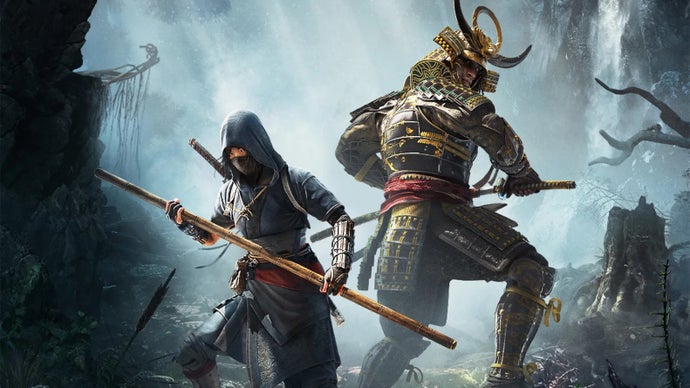
Amid the structural turbulence, the feed surfaced two quieter but telling signals: a deep-dive into Altaïr Ibn-La'Ahad and a rustic, present-day cabin shot from Assassin’s Creed Valhalla in PlayStation’s Share of the Week.
3.1 Altaïr as a Design North Star
The “Unmasking Altaïr” feature revisits the original master assassin — a character defined by:
- Focused stealth design.
- Clear ideological conflict.
- Tight, systemic gameplay loops.
For developers, Altaïr is more than nostalgia; he’s a design anchor. As Assassin’s Creed experiments with live-service frameworks and broader RPG systems, looking back at Altaïr’s clarity of purpose can guide:
- More readable stealth sandboxes.
- Stronger narrative throughlines across eras.
3.2 Rustic Valhalla: Visual Storytelling Beyond Combat
PlayStation’s “Rustic” Share of the Week highlighted a quiet, present-day cabin belonging to Layla in Assassin’s Creed Valhalla — a moment far removed from raids and sieges. The shot underscores how the franchise’s modern framing can:
- Deliver emotional grounding amid mythic, historical chaos.
- Showcase environmental storytelling that isn’t just about scale, but mood and memory.
For #indiegame creators, this is a useful reminder: you don’t need a blockbuster budget to create powerful “rustic” vignettes. Lighting, composition, and environmental detail can sell atmosphere just as effectively as set-piece spectacle.
4. Strategic Outlook: Assassin’s Creed in a Volatile Cycle

Over the next few quarters, watch for:
- Production Slippage: Strike impact could surface as delayed content beats or re-scoped features on Assassin’s Creed projects.
- Sharper Portfolio Focus: More energy funneled into Assassin’s Creed Infinity and fewer experimental spin-offs.
- Talent Retention Moves: Ubisoft may need to improve communication, job protections, and roadmap transparency to stabilize its core teams.
For the wider #gamedev sector, Assassin’s Creed is once again a bellwether. It’s where questions of scale, sustainability, and live-service design are being stress-tested in real time. How Ubisoft responds — to its striking workforce, its canceled multiplayer ambitions, and its enduring legacy characters — will help define what “next-gen” AAA franchise management looks like.
Transmission ends. Monitoring continues.
Sources and corrections
This archive entry does not have a verified article-source list. Images and video embeds alone are not evidence for every claim.
Found an error? Request a correction. Include the passage and a supporting source.