Automated archive / Assassin's Creed
Assassin’s Creed Multiplayer Scrubbed as Ubisoft Recalibrates the Creed
Ubisoft has quietly terminated a covert Assassin’s Creed multiplayer project, signaling a sharper focus on Infinity and core single-player experiences. At the same time, a renewed spotlight on Altaïr suggests the franchise is re‑anchoring itself in its original assassin mythos before its next big structural evolution.
AI-generated summary. This archive article does not have a current recorded source check. Check linked sources before relying on details. Editorial policy
Sector Intelligence Report: Assassin’s Creed – Week of Feb 12, 2026
The Assassin’s Creed grid just lit up with a high‑impact systems change: Ubisoft has reportedly hard‑stopped an in‑development Assassin’s Creed multiplayer project, freezing builds and killing further patches. For a franchise increasingly framed as a connected ecosystem—Assassin’s Creed Infinity, transmedia tie‑ins, and long‑tail live ops—this is more than a cancelled experiment. It’s a visible course correction in how Ubisoft wants its flagship IP to live, scale, and monetize.
This week’s signals point to two intertwined narratives: a quiet but telling retreat from a risky multiplayer offshoot, and a renewed spotlight on the series’ foundational icon, Altaïr Ibn-La'Ahad. Together, they sketch a future where brand cohesion and curated experiences matter more than throwing every live‑service idea at the wall.
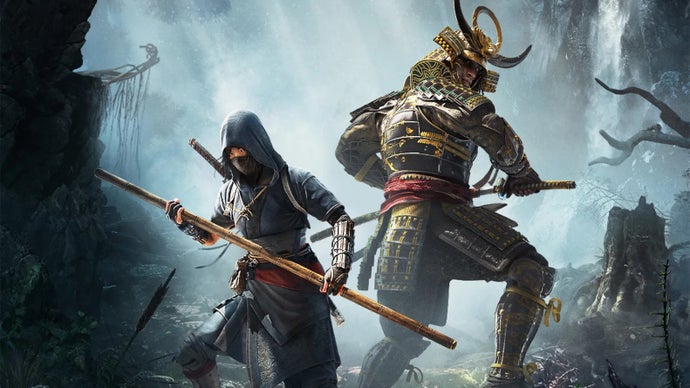
Signal 1: Assassin’s Creed Multiplayer Project Gets Hard-Stopped
According to the latest transmission, Ubisoft has pulled the plug on a covert Assassin’s Creed multiplayer initiative. No soft sunset, no slow fade—this is a hard stop: production halted, builds frozen, patches terminated.
From a #gamedev perspective, this is textbook project triage at AAA scale:
Resource Reallocation Over Infinite Experimentation
Ubisoft appears to be consolidating resources around higher‑certainty bets: Assassin’s Creed Infinity and core single‑player worlds. Rather than spin up standalone multiplayer experiments that compete for tech, talent, and marketing bandwidth, the strategy now seems to favor:
- Fewer parallel Assassin’s Creed projects
- Deeper integration into a unified live ecosystem
- Stronger brand coherence across timelines and protagonists
For developers, this is a reminder that even under a mega‑publisher, a greenlit multiplayer project is not guaranteed to ship—especially when it risks fragmenting a tentpole IP.
Risk Management in the Live-Service Era
Live‑service multiplayer is expensive to build and even more expensive to sustain. Server infrastructure, anti‑cheat, content pipelines, and community management all stack up. If early internal metrics—engagement, retention, or playtest sentiment—aren’t convincing, a pre‑launch kill can be cheaper than a tepid release followed by a fast sunset.
This Assassin’s Creed decision looks like a pre‑emptive strike against:
- Brand dilution via a weak or unfocused multiplayer spin‑off
- Live‑service fatigue in a market already saturated with battle passes and seasonal grinds
- Opportunity cost draining focus from Infinity and narrative‑driven flagships
For #indiegame teams watching from the perimeter, the lesson is sharper: if a giant like Ubisoft is willing to abort a multiplayer bet this late, smaller studios must be even more ruthless about prototype validation and scope control.
Signal 2: Spotlight on Altaïr – Rebooting the Brand’s Core Mythology
Alongside the shutdown intel, Ubisoft’s channels amplified a deeper dive into Altaïr Ibn-La'Ahad—the original master assassin whose arc effectively defined the tone, ethics, and visual language of Assassin’s Creed.
Positioning Altaïr front and center right now is not accidental. It’s a strategic reminder of what the franchise is for:
- Stealth and social infiltration over pure power fantasy
- Ideological conflict—freedom vs. control—over shallow historical tourism
- Intimate, character‑driven narratives anchoring the series’ sprawling meta‑story
As Ubisoft leans into Infinity and more connected timelines, Altaïr functions as a stabilizing mythos. For narrative and systems designers, this is a case study in how legacy characters can:
- Provide thematic continuity across wildly different settings and eras
- Serve as a design north star when experimenting with new structures (hubs, seasons, or anthology formats)
- Help marketing re‑center lapsed fans who bounced off more recent tonal shifts
Watch: Transmitting Gameplay footage from the field: Classic Assassin’s Creed Altaïr action
Strategic Readout: Where the Creed Is Heading Next
The combined signals suggest the next phase of Assassin’s Creed will prioritize:
- Connected ecosystems over standalone experiments – Expect Infinity‑style hubs, cross‑title progression, and shared systems rather than isolated multiplayer products.
- Flagship single‑player as the spine – Narrative campaigns remain the primary value driver, with live elements built around, not instead of, story.
- Tighter brand control – Altaïr’s renewed prominence shows Ubisoft is shoring up the IP’s core identity before pushing further into new modes and formats.
For developers charting their own roadmaps, Assassin’s Creed this week is a live case study in portfolio management: kill the experiments that don’t clearly reinforce the main vision, double down on the experiences that define your universe, and never underestimate the power of a strong, enduring protagonist to anchor even the most ambitious structural overhaul.
The creed is evolving—but it’s doing so by circling back to the assassin who started it all.
Sources and corrections
This archive entry does not have a verified article-source list. Images and video embeds alone are not evidence for every claim.
Found an error? Request a correction. Include the passage and a supporting source.