Automated archive / Assassin's Creed IV: Black Flag
Why Assassin’s Creed IV: Black Flag Just Raised Its Colors Again
Assassin’s Creed IV: Black Flag just raised its colors again, with Ubisoft resyncing the pirate sandbox to modern platforms and redeploying Edward Kenway himself as a live ops asset. This week’s activity shows how a 2013 classic still sets the bar for systemic open-world design, character-driven marketing, and...
AI-generated summary. This archive article does not have a current recorded source check. Check linked sources before relying on details. Editorial policy
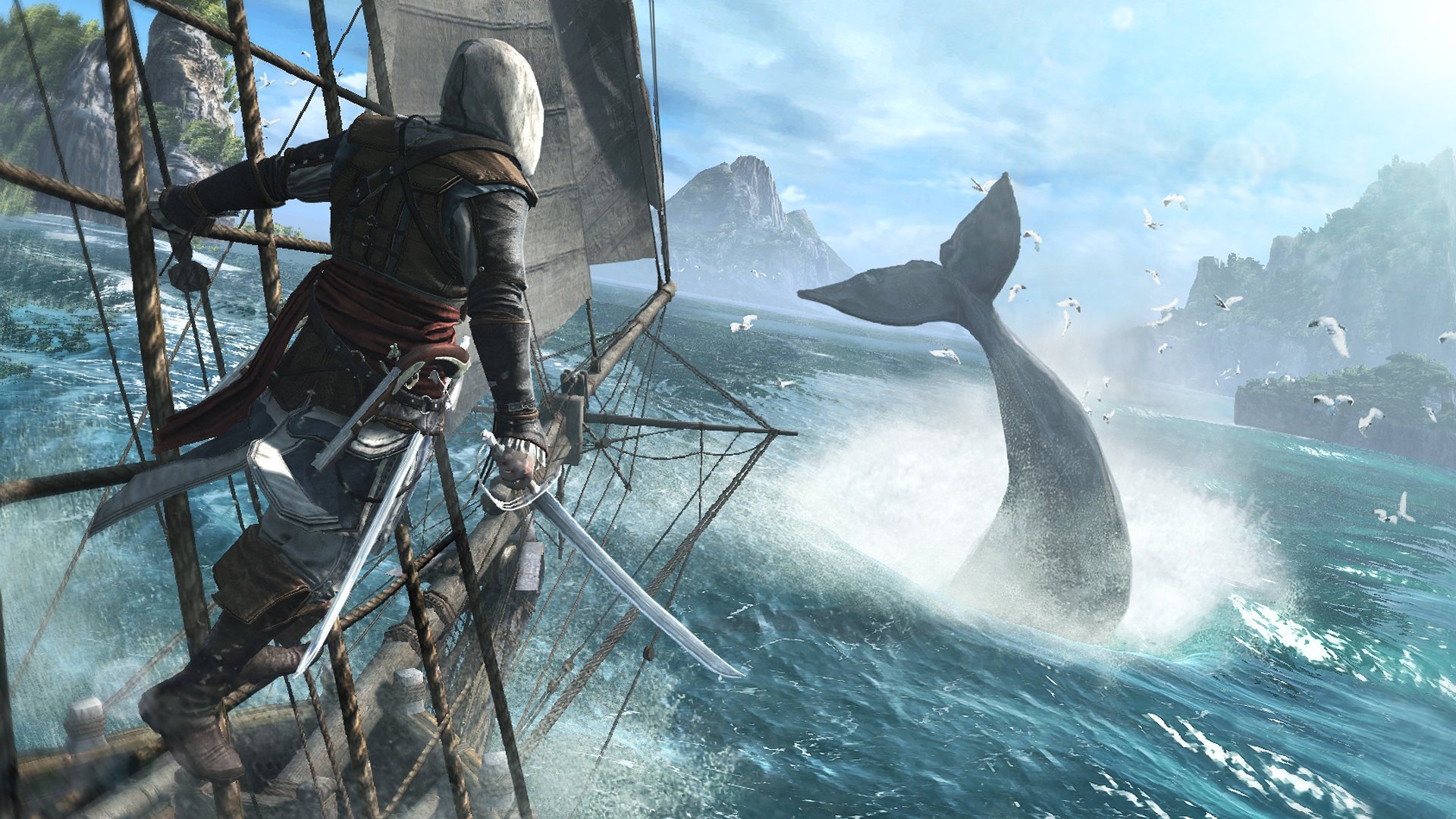
Sector Intelligence Report // Assassin’s Creed IV: Black Flag
Ubisoft’s pirate-era classic is quietly spinning up for another tour of duty. Over the last week, Assassin’s Creed IV: Black Flag has shifted from dormant legend to active theater, with official channels pushing resync messaging, meme-driven nostalgia, and direct in-character broadcasts from Edward Kenway himself. For a 2013 release, the signal traffic feels less like a museum piece and more like a soft relaunch.
This report breaks down what’s moving, what it implies for long-tail live ops strategy, and why Black Flag’s systems design still matters for #gamedev and #indiegame creators studying open-world retention in 2026.
1. Resync Complete: Black Flag Re-enters the Platform Grid
The clearest tactical ping in the feed is the “Legacy Pirate Ops Recompiled for Modern Systems” dispatch: Assassin’s Creed IV: Black Flag has been “resynced and redeployed to current platforms.” That phrasing isn’t just marketing flourish—it’s a positioning move.
In practical terms, Ubisoft is:
- Reasserting Black Flag as an actively supported SKU, not just franchise back catalog.
- Framing the Caribbean sandbox as a viable on-ramp for new players discovering Assassin’s Creed post-Valhalla/Mirage.
- Stress-testing how far nostalgia and naval combat fantasy can still convert in 2026.
For developers, this is a textbook example of long-tail lifecycle management: keep the codebase accessible, surface it with a fresh narrative wrapper, and let the community do the amplification.
The language around “optimized for a fresh wave of operatives” suggests minor technical uplift rather than a full remaster, but the strategic goal is clear: keep Black Flag in the conversation while the franchise explores new historical theaters.
2. Edward Kenway as Live Ops Asset, Not Just Protagonist
The week’s most interesting maneuver is the redeployment of Matt Ryan (Edward Kenway’s original actor) as an active content node. Two key beats stand out:
- Memetic Performance Review: Ryan scores Assassin’s Creed IV: Black Flag memes using an IGN-style rubric.
- Crew Broadcast: An in-character call-to-arms urging players to “hoist the black flag” and return to the Caribbean.
This isn’t just fan service; it’s a smart character-IP utilization play. Ubisoft is effectively turning Kenway into:
- A brand-aligned curator of community artifacts (memes, clips, in-jokes).
- A diegetic announcer for what is functionally a reactivation campaign.
For #gamedev teams, especially #indiegame creators with strong leads, the lesson is sharp: your protagonist can operate as a quasi-live-ops host long after launch. Voice talent becomes a renewable asset, not a sunk cost.
3. Meme Culture as Telemetry: Nostalgia With Measurable Throughput
The “Legacy Sync: Assassin’s Creed Icon Audits Meme Culture Payload” entry reads like a joke, but it’s actually a clean snapshot of how publishers now treat memes as soft telemetry.
The intel calls out:
- “High nostalgia throughput” – indicating strong emotional recall around Black Flag’s characters, sea shanties, and ship combat.
- “Strong brand-recognition pings” – the Assassin’s Creed iconography remains instantly legible.
- “Memetic bandwidth remains fully synchronized with franchise legend status” – in plainer terms, Black Flag is still culturally fluent.
For developers, this underlines a crucial design-era truth: the most durable open worlds are memeable worlds. Black Flag’s:
- Readable silhouettes (white hood vs. dark rigging).
- Highly legible systemic loops (spot ship → chase → broadside → board).
- Audio hooks (sea shanties as shareable, repeatable content).
…all contribute to an ecosystem where short-form content and jokes keep the game circulating algorithmically years later.
4. Systems Design: Why Black Flag Still Feels “Current” in 2026
The “Tactical Reboot of a Pirate Simulation Protocol” dispatch explicitly spotlights boarding, broadsides, and stealth approach vectors. That’s not nostalgia copy; it’s a reminder of how modern Black Flag’s core loop still feels:
- Naval combat as primary verb: The Jackdaw isn’t just transport; it’s a mobile progression hub, economy driver, and identity anchor.
- Seamless sea-to-shore transitions: Minimal friction between exploration, combat, and stealth remains a benchmark for open-world flow.
- Layered economies: Plunder, upgrades, crew maintenance, and cosmetic expression all feed into a unified fantasy: become the most feared pirate in the Caribbean.
In a landscape where many contemporary open worlds chase checklist density, Black Flag’s design reads almost restrained—and that restraint is aging well. It’s a useful case study for teams wrestling with:
- How many overlapping systems a player can meaningfully track.
- How to keep traversal intrinsically fun instead of purely functional.
- How to embed progression inside a strong, singular fantasy rather than a generic “do more stuff” treadmill.
5. Strategic Outlook: A Quiet but Calculated Reactivation
Taken together, this week’s activity around Assassin’s Creed IV: Black Flag looks less like a random nostalgia spike and more like a controlled reactivation:
- Platform resync keeps the title frictionless to access.
- Character-led content (Matt Ryan as Kenway) rehumanizes the IP.
- Meme audits and reactions validate and amplify community creativity.
For Ubisoft, it’s low-risk, high-yield: no full remake budget, but renewed engagement and sales from a proven classic. For developers watching from the sidelines, Black Flag’s latest wave is a reminder that:
- A well-architected systemic sandbox can sustain multiple marketing cycles.
- Strong character work and iconic audio-visual hooks are long-term multipliers.
- Community memes are not noise; they’re a retention surface to design for.
Sector conclusion: the Black Flag isn’t just a relic on the masthead—it’s an active signal. And in 2026, that signal is still cutting cleanly through the open-world noise.
Sources and corrections
This archive entry does not have a verified article-source list. Images and video embeds alone are not evidence for every claim.
Found an error? Request a correction. Include the passage and a supporting source.
Your games, in one place
Keep up with Assassin's Creed IV: Black Flag
Follow this game to collect its posts in your personal feed. Come back to see what you missed.