Automated archive / Assassin's Creed IV: Black Flag
Black Flag Resurfaces as Ubisoft Re-Arms Its Best Naval Sandbox
Ubisoft is quietly rearming Assassin’s Creed IV: Black Flag for a new tour of duty, blending technical resyncs with actor-led meme warfare and in-universe rallying calls. This week’s signals show how a decade-old naval sandbox can still shape modern gamedev and player behavior.
AI-generated summary. This archive article does not have a current recorded source check. Check linked sources before relying on details. Editorial policy
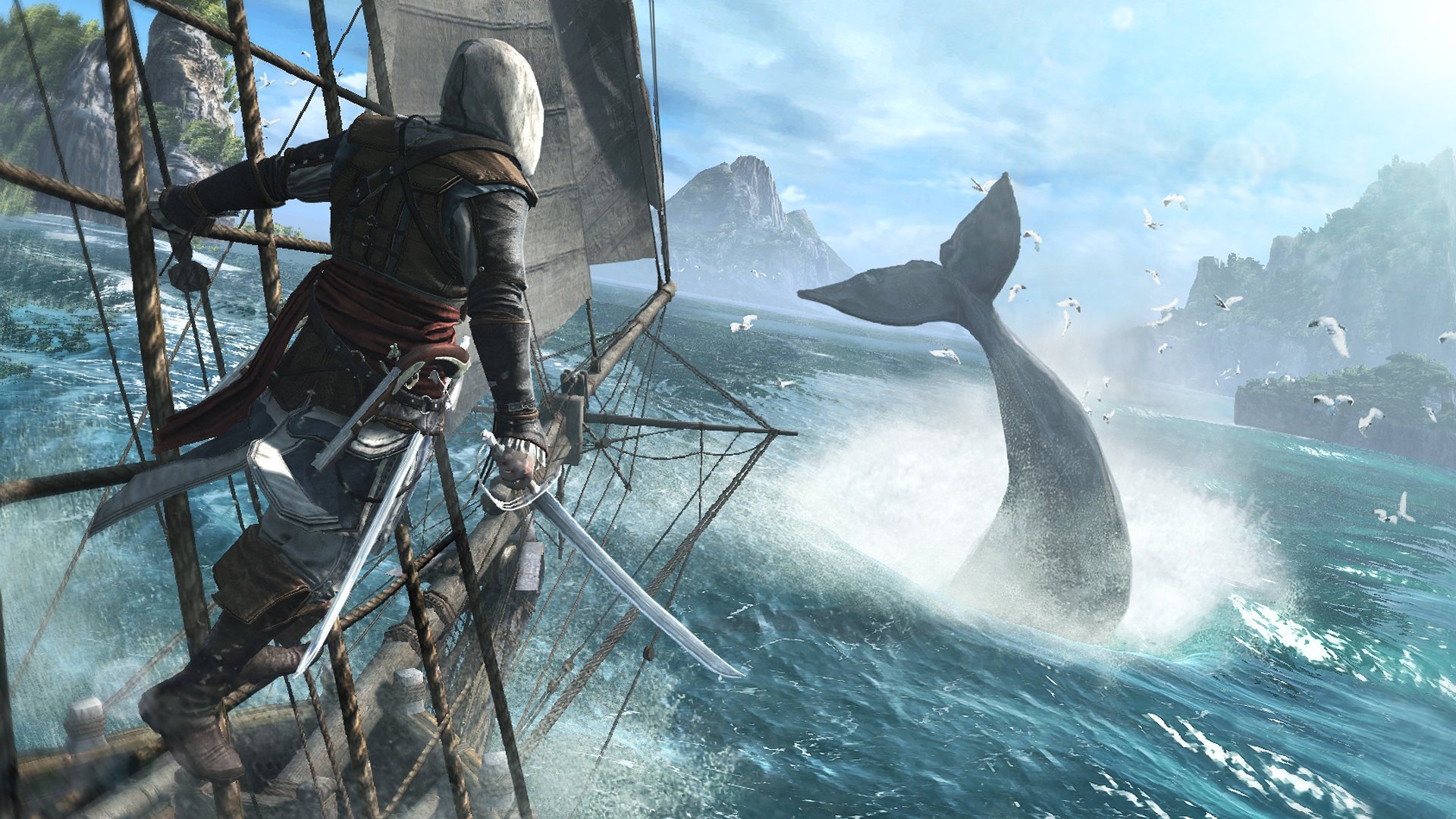
Sector Intelligence Report // Assassin's Creed IV: Black Flag
Assassin's Creed IV: Black Flag is quietly surging back into the discourse, and the signals over the last week point to a coordinated nostalgia offensive rather than random pirate chatter. Between fresh "resync" messaging, actor-led meme audits, and renewed calls to hoist the colors, Ubisoft is effectively soft-relaunching its most beloved naval sandbox without calling it a full remaster. For players, creators, and #gamedev watchers, this is a live case study in how to reactivate a legacy title and reinsert it into the modern content stream.
Legacy Ops Reactivated: The Resync Strategy
The clearest tactical move in the last seven days is the explicit "resynced and redeployed" positioning for assassin's creed iv: black flag. The language around "granting renewed access" and optimization for "current platforms" frames this not as a museum piece, but as an actively maintained piracy simulation protocol.
From a development update perspective, that suggests:
- Technical uplift over wholesale remake: Expect compatibility, stability, and possibly higher baseline performance rather than systemic redesign.
- Naval combat and stealth as evergreen pillars: The activity feed emphasizes boarding, broadside management, and stealth approach vectors—Ubisoft is doubling down on the idea that Black Flag’s core loop still benchmarks well against modern open-world design.
- Low-friction re-entry: The messaging is explicitly a call for lapsed players to “re-enter the Caribbean theater,” which implies the team is confident the UX, controls, and pacing still translate without major rework.
This is a textbook move in long-tail AAA portfolio management: keep a high-performing classic technically viable so it can continue to monetize, inspire new #indiegame experiments in naval and systemic design, and feed franchise nostalgia between flagship entries.
Watch: Transmitting Gameplay footage from the field: Edward Kenway returns to the Animus archive
Memetic Warfare: Matt Ryan, IGN Scores, and Brand Telemetry
The most telling signal in this week's traffic is the "Memetic Performance Review" featuring Matt Ryan—Edward Kenway himself—ranking Assassin’s Creed IV: Black Flag memes using an IGN-style scoring framework. This is more than a novelty cameo; it’s a deliberate calibration of the game’s cultural bandwidth.
Key takeaways:
- Canon voice as QA for fandom artifacts: Having the original actor audit memes blurs the line between in-universe canon and community output. It effectively certifies select memes as "franchise-adjacent lore," strengthening emotional attachment.
- IGN-style scoring as meta-commentary: Using a traditional review format on community content is a sly acknowledgment of how modern players consume games—through clips, jokes, and short-form content as much as through full playthroughs.
- Nostalgia throughput remains high: The field log explicitly cites "high nostalgia throughput" and "strong brand-recognition pings." In analytics terms, that’s a green light for further investment in Black Flag-themed content, crossovers, and possibly future pirate-era experiments.
For #gamedev teams, this is a live demonstration of how to treat memes as a design-adjacent feedback loop. Community humor becomes a form of qualitative telemetry: which characters, systems, and moments are still resonating strongly enough to warrant official amplification.
Crew Morale and Call-to-Action Design
The "Captain Kenway has a message for his crew" broadcast is framed as a morale spike before a high-risk naval op. It’s functionally a trailer, but the language is closer to a live service directive than a static marketing beat.
Design-wise, note how the call-to-action is structured:
- In-universe framing (Kenway addressing his crew) keeps immersion intact.
- Operational verbs—"hoist the black flag," "resume economic disruption"—speak directly to the core gameplay fantasy.
- Reactivation, not introduction: The assumption is that players already know the systems; the message is about returning to the loop, not onboarding from zero.
This style of messaging is increasingly relevant for both AAA and #indiegame teams operating in crowded ecosystems. Rather than shouting "play our game," the communication treats players as returning operatives with history in the world, which is a powerful retention tool.
Watch: Transmitting Gameplay footage from the field: Naval combat and boarding ops resurface
Design Echoes: Why Black Flag Keeps Getting Reactivated
Why is Assassin's Creed IV: Black Flag so viable for repeated reactivation cycles?
- Naval sandbox as a modular system: Ship combat, boarding, and open-sea traversal form a clean, modular loop. It’s easy to market in short clips and still feels distinct in a landscape of land-locked open worlds.
- Flexible fantasy: You can play as a stealth-first assassin, a broadside-obsessed captain, or a loot-focused privateer. That elasticity makes it meme-friendly and streamer-ready.
- Systemic coherence: The economy, ship upgrades, and exploration are tightly interlocked. For #gamedev observers, Black Flag remains a case study in how to align progression systems with narrative and fantasy.
As Black Flag resurfaces on modern systems, expect its design DNA to continue influencing both big-budget and #indiegame projects in the naval, survival, and open-world spaces. Ubisoft’s latest moves show they understand that the game is no longer just a 2013 release—it’s a living reference point in the wider development conversation.
Strategic Outlook
The last week’s signals—technical resync, actor-led meme audits, and in-universe rallying broadcasts—form a coherent strategy: reposition Assassin’s Creed IV: Black Flag as an always-on piracy sandbox rather than a retired classic.
For players, it’s an invitation to re-board the Jackdaw with smoother access on current hardware. For developers, it’s a reminder that a well-architected systemic game can be reactivated, recontextualized, and re-monetized long after its original launch—if you’re willing to treat memes, nostalgia, and platform updates as part of an ongoing development update rather than a postmortem.
Sources and corrections
This archive entry does not have a verified article-source list. Images and video embeds alone are not evidence for every claim.
Found an error? Request a correction. Include the passage and a supporting source.
Your games, in one place
Keep up with Assassin's Creed IV: Black Flag
Follow this game to collect its posts in your personal feed. Come back to see what you missed.