Automated archive / Assassin's Creed IV: Black Flag
Why Assassin’s Creed IV: Black Flag Just Refused to Stay Legacy Code
Assassin’s Creed IV: Black Flag just executed a full sector reactivation, from modern‑platform resyncs to Edward Kenway himself auditing memes in IGN fashion. This week’s signals show a legacy pirate sandbox repositioned as an evergreen reference point for both players and gamedev.
AI-generated summary. This archive article does not have a current recorded source check. Check linked sources before relying on details. Editorial policy
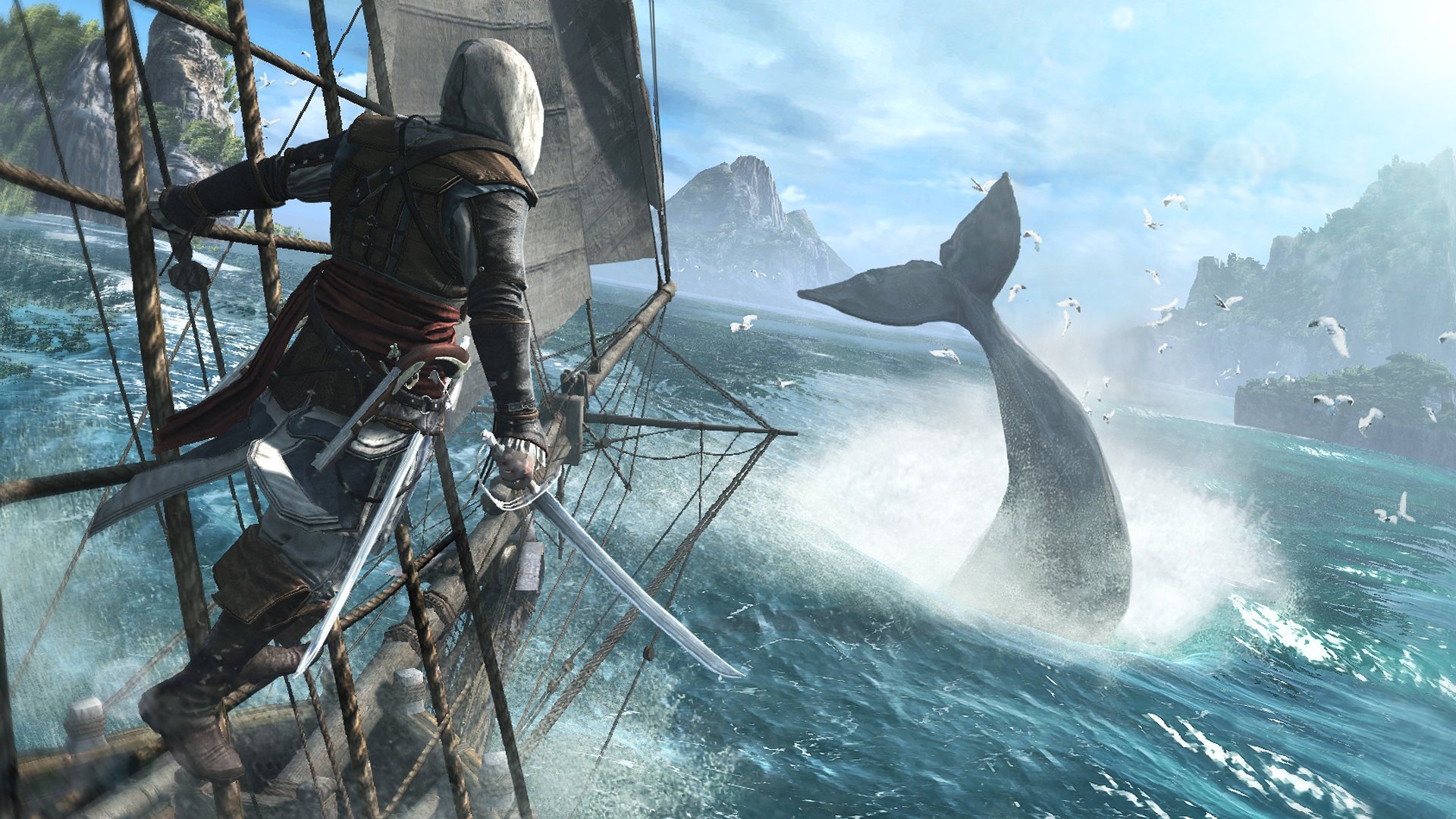
Weekly Sector Intelligence: Black Flag Re-Enters Active Service
Assassin's Creed IV: Black Flag just executed a clean break from “beloved legacy” status and re‑entered the live conversation. In the last seven days, Ubisoft has quietly spun up a multi‑vector nostalgia offensive: a resync to modern platforms, actor‑led meme audits, and in‑character broadcast drops that feel less like marketing and more like a soft relaunch of a classic pirate simulation protocol.
For a 2013 release, the signal strength is unusually high. The data points to a deliberate attempt to re‑weaponize Black Flag’s Golden Age piracy sandbox for a new generation of players—and to keep it culturally resident while the broader Assassin’s Creed roadmap pivots to new locales.
Legacy Pirate Ops, Modern Hardware
The most concrete development update is the "Legacy Pirate Ops Recompiled for Modern Systems" beat: Assassin’s Creed IV: Black Flag has been resynced and redeployed to current platforms. The language in the activity feed is explicit—naval combat, open‑sea exploration, and stealth ops have been “optimized for a fresh wave of operatives.”
From a #gamedev perspective, this suggests a technical pass focused on:
- Stability and compatibility on contemporary OS and console firmware.
- Possible performance tuning for higher resolutions and framerates, especially in dense naval engagements where particle effects, physics, and AI pathing converge.
- Input and UX refinements that align Black Flag’s systems with modern Assassin’s Creed expectations (camera behavior, control prompts, accessibility toggles), even if full‑scale remaster features aren’t on the table.
This isn’t a ground‑up remake, but it is a meaningful preservation move. It keeps one of Ubisoft’s most systemically rich sandboxes from drifting into unplayable abandonware territory, and that has knock‑on value for both franchise continuity and future pirate‑themed experiments—whether from AAA or #indiegame studios studying Black Flag’s design DNA.
Memetic Performance Review: Canon Voice Meets Community Chaos
The most intriguing signal this week is the “Memetic Performance Review” operation: original Edward Kenway actor Matt Ryan is redeployed to rank Assassin’s Creed IV: Black Flag memes using an IGN‑style scoring protocol. That’s more than a cute social beat; it’s a layered piece of brand maintenance.
Key implications:
- Canon validation of fan culture – Having the original operator (Ryan) re‑enter the Animus, so to speak, to evaluate fandom artifacts folds community output back into the official narrative. It blurs the line between authored content and player‑driven mythmaking.
- IGN‑style scoring as meta‑joke – Applying formal review language to memes acknowledges how critical discourse and meme culture have fused. The franchise is effectively reviewing its own afterlife.
- Nostalgia throughput – The feed notes “high nostalgia throughput and strong brand-recognition pings.” In practice, that’s Ubisoft measuring whether Black Flag still spikes sentiment and recall a decade later. The answer appears to be yes.
For developers, this is a case study in long‑tail community strategy. Instead of a straight trailer push, Ubisoft is using actor‑driven, low‑lift content to keep the IP emotionally current without committing to a full sequel or remake. It’s a tactic #indiegame teams can scale down: bring back key voices, react to community memes, and treat fan culture as a live system, not just free marketing.
Captain on Deck: In‑Character Broadcasts as Soft Relaunch
The “Field Broadcast” entry—Captain Edward Kenway addressing his crew—reads like a naval pep talk, but structurally it’s a re‑engagement funnel. The copy explicitly calls players to “re‑enter the Caribbean theater, hoist the black flag, and resume economic disruption against imperial shipping lanes.”
What’s notable is the framing:
- The message is diegetic. It’s Edward, not “the brand,” issuing orders.
- The call to action is systemic: board ships, manage broadsides, raid trade routes. It reminds returning players of the core simulation loops that made Black Flag distinct inside Assassin’s Creed’s broader stealth lineage.
- The tone is “high‑risk naval op,” not generic hype. That keeps the fantasy grounded in the game’s tactical verbs rather than vague nostalgia.
From a design‑communication angle, this is smart. It doesn’t oversell new features that aren’t there; it recontextualizes existing systems as worth revisiting, especially now that the game’s been resynced for current hardware.
Tactical Reboot: Why Black Flag Still Matters to #gamedev
The “Tactical Reboot of a Pirate Simulation Protocol” entry confirms that the community is once again hoisting the Black Flag and re‑evaluating its systems: boarding, broadside management, and stealth vectors are back under the microscope.
For developers—AAA and #indiegame alike—this renewed attention is a reminder of why assassin's creed iv: black flag remains a touchstone in systemic open‑world design:
- Integrated naval and on‑foot gameplay – The seamless transition from ship command to hand‑to‑hand stealth is still a benchmark. Many modern titles silo these experiences; Black Flag made them feel like a single continuum.
- Emergent combat economies – Disabling, boarding, and looting ships created a dynamic resource loop that fed back into upgrades and exploration. It’s a clean example of how economic systems can be expressed purely through moment‑to‑moment action.
- Worldbuilding through mechanics – The “economic disruption against imperial shipping lanes” isn’t just lore; it’s literally what you do minute to minute. Mechanics, not exposition, sell the fantasy of being a pirate operating in a contested geopolitical space.
As the game re‑enters circulation on modern systems, expect a new wave of breakdowns, post‑mortems, and video essays re‑interrogating its design—effectively a second‑life curriculum for aspiring designers.
Signal Assessment: Brand Health and Future Vectors
Across the week’s activity feed, three things stand out:
- Black Flag is being positioned as evergreen infrastructure, not a retired node in the Assassin’s Creed network.
- Memetic bandwidth is fully synchronized with franchise legend status—the actor‑led meme audits confirm that Black Flag still lives rent‑free in the community’s cultural cache.
- Technical resync plus soft‑roleplay marketing equals a low‑risk, high‑yield reactivation strategy while Ubisoft experiments with new Assassin’s Creed formats.
In sector terms, Assassin’s Creed IV: Black Flag has transitioned from “legacy archive” to active reference platform—for players rediscovering the Caribbean theater, and for developers dissecting how a decade‑old pirate sandbox can still command the sea lanes of attention.
Sources and corrections
This archive entry does not have a verified article-source list. Images and video embeds alone are not evidence for every claim.
Found an error? Request a correction. Include the passage and a supporting source.
Your games, in one place
Keep up with Assassin's Creed IV: Black Flag
Follow this game to collect its posts in your personal feed. Come back to see what you missed.