Automated archive / Assassin's Creed IV: Black Flag
Why Black Flag’s Pirate-Assassin Loop Still Outclasses Modern Stealth Sandboxes
Black Flag’s pirate-assassin fantasy still outperforms many modern sandboxes because its systems never stop talking to each other. From Obsidian Gold intimidation to Edward Kenway’s volatile arc, Ubisoft’s Caribbean sim remains a live design lesson for today’s devs.
AI-generated summary. This archive article does not have a current recorded source check. Check linked sources before relying on details. Editorial policy
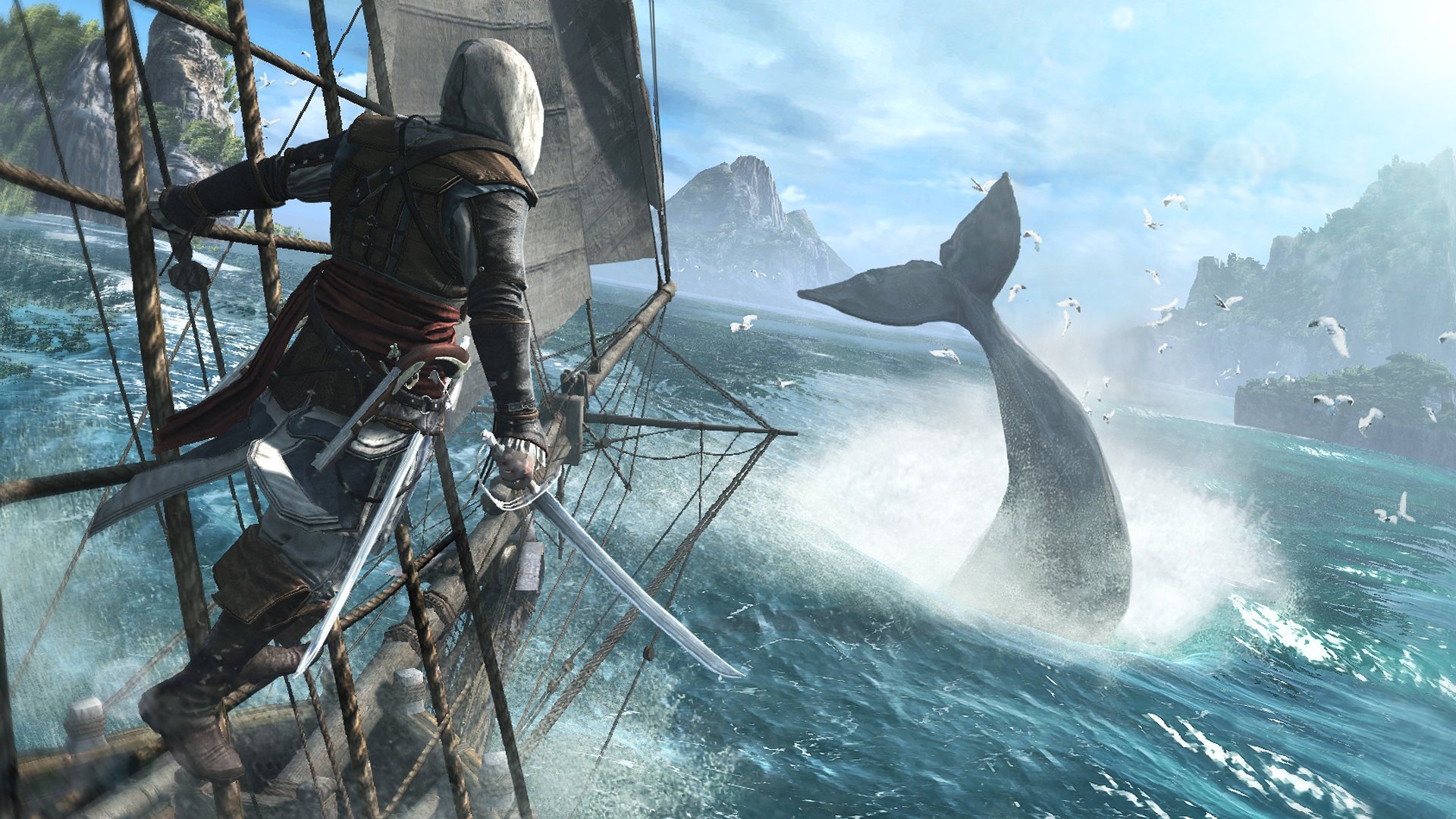
Sector Overview: Black Flag’s Simulation Stack Still Hits Like Broadsides
Across this week’s telemetry, assassin's creed iv: black flag continues to surface as a reference point for systemic naval stealth, character-driven design, and fantasy coherence. The activity feed shows players re-engaging not just for nostalgia, but for the specific way Black Flag welds pirate chaos to assassin precision into a single, continuous loop.
From a #gamedev and #indiegame perspective, Black Flag functions like a live design whitepaper: a mature open-world framework where traversal, stealth, and naval combat are not separate modes but interoperable systems that constantly feed each other.
Visual Dominance: Obsidian Gold as UX-Validated Drip
The Obsidian Gold Jackdaw sighting is more than cosmetic flex—it’s a lesson in how visual design can amplify both fantasy and readability.
The black-and-gold livery does three important things:
1. Intimidation as a Readable Mechanic
The activity feed frames the Jackdaw’s look as “maximizing intimidation per polygon.” That’s not just a joke; it’s a concise description of how strong silhouettes and high-contrast trim make a ship feel mechanically powerful before a single cannon fires.
- Dark hull + gold accents = instant faction identity in crowded sea lanes.
- The scheme preserves combat readability—targetable surfaces, mast lines, and weak points remain clear even under storm lighting.
For developers, this is a reminder: cosmetics that respect readability become pseudo-mechanics. They change how players and AI feel about an encounter long before stats enter the equation.
2. Style as Soft Progression
“If style were DPS, this loadout is fully broken” nails how cosmetics can signal progression without bloating numbers. The Obsidian Gold setup visually encodes:
- Narrative progress (a nobody pirate doesn’t sail in black-and-gold).
- Economic progress (you had to earn, unlock, or opt into this look).
- Skill progress (you survive long enough to flaunt it).
Black Flag quietly demonstrates how visual milestones can stand in for endless gear treadmills—an insight #indiegame teams can steal to keep scope sane.
The Pirate-Assassin Hybrid: A Single, Frictionless Kill-Loop
The second intel ping describes “full integration of pirate and assassin roles—parkour boarding, mast-top sniping, and covert deck executions under heavy sail.” That’s essentially a design postmortem in one sentence.
1. No Mode Switches, Only Context Switches
Black Flag’s biggest systemic win is that it never hard-cuts between game types:
- You spot a ship while free-roaming.
- You engage in naval combat, shearing masts and softening defenses.
- You close distance, leap from the Jackdaw, and chain into parkour boarding.
- You pivot into classic Assassin’s Creed stealth and melee on the enemy deck.
There’s no loading screen, no UI mode toggle—just a continuous state machine where the player’s verbs (run, climb, shoot, stab, steer) are always valid, just recontextualized. For #gamedev teams, this is a blueprint for hybrid-genre cohesion: design systems so that every verb survives across as many contexts as possible.
2. Verticality as Combat Telemetry
“Mast-top sniping” is more than a cinematic flourish; it’s vertical level design doing tactical work:
- Climbing masts gives you line-of-sight clarity over deck patrols.
- Height differentials create natural stealth entry points and escape routes.
- The same climbing system used in cities is repurposed at sea, reinforcing muscle memory.
Instead of building bespoke naval controls, Black Flag reuses the core traversal kit in a new context. That’s efficient development and excellent player onboarding.
Edward Kenway: Volatility as a Narrative Feature, Not a Bug
The third activity item calls Edward Kenway a “high-variance narrative asset” and “the antidote to boring Assassin’s Creed protagonists.” Under the flavor, there’s a sharp narrative design insight.
1. Pirate-First, Creed-Second Characterization
Edward doesn’t start as a believer; he starts as a selfish pirate who stumbles into Assassin–Templar conflicts. That misalignment does several things:
- Introduces moral ambiguity into almost every major choice.
- Makes alliances feel transactional, not preordained.
- Creates organic friction with established Creed loyalists.
The result is “higher emotional bandwidth per mission cycle”—missions aren’t just about objectives, but about who Edward is this time: opportunist, reluctant ally, or emerging idealist.
For narrative-focused #indiegame teams, this is a reminder that protagonist misalignment with the core faction can generate more drama than any plot twist.
2. Reducing Protagonist Fatigue in Long-Form Campaigns
Players spend dozens of hours inside a single character’s head. Later, more sanitized Assassin’s Creed leads often flatten into predictable moral arcs. Edward’s volatility—his selfishness, charm, and late-arriving conviction—keeps the emotional graph spiky.
That “reduced protagonist fatigue” isn’t accidental; it’s the payoff of:
- Allowing failure and selfishness early without soft-rebooting the story.
- Letting side characters call Edward out, creating interpersonal conflict loops.
- Tying mechanical progression (ship upgrades, crew loyalty) to his evolving worldview.
Takeaways for Modern Devs: Why Black Flag Still Charts the Course
Even years out, assassin's creed iv: black flag remains a high-value case study for anyone building systemic open worlds:
- Unbroken hybrid loops (ship → boarding → stealth) beat siloed mini-games.
- Cosmetic progression that respects readability can carry a lot of perceived power.
- Protagonist misalignment with core factions yields richer mission-to-mission drama.
As live-service sandboxes chase breadth, Black Flag’s enduring appeal underscores a different priority: tight integration over infinite feature lists. For teams across the spectrum—from AAA to two-person #indiegame outfits—the Caribbean still has lessons worth plundering.
Sources and corrections
This archive entry does not have a verified article-source list. Images and video embeds alone are not evidence for every claim.
Found an error? Request a correction. Include the passage and a supporting source.
Your games, in one place
Keep up with Assassin's Creed IV: Black Flag
Follow this game to collect its posts in your personal feed. Come back to see what you missed.