Automated archive / Assassin's Creed IV: Black Flag
Black Flag’s Underwater Resync Hints at a Full-Scale Pirate Engine Relaunch
Ubisoft’s latest Black Flag transmissions don’t look like nostalgia—they look like a systems reboot. Underwater resyncs, pirate engine retrospectives, and a renewed Edward Kenway profile all point to a deeper technical relaunch of Assassin’s Creed IV: Black Flag.
AI-generated summary. This archive article does not have a current recorded source check. Check linked sources before relying on details. Editorial policy
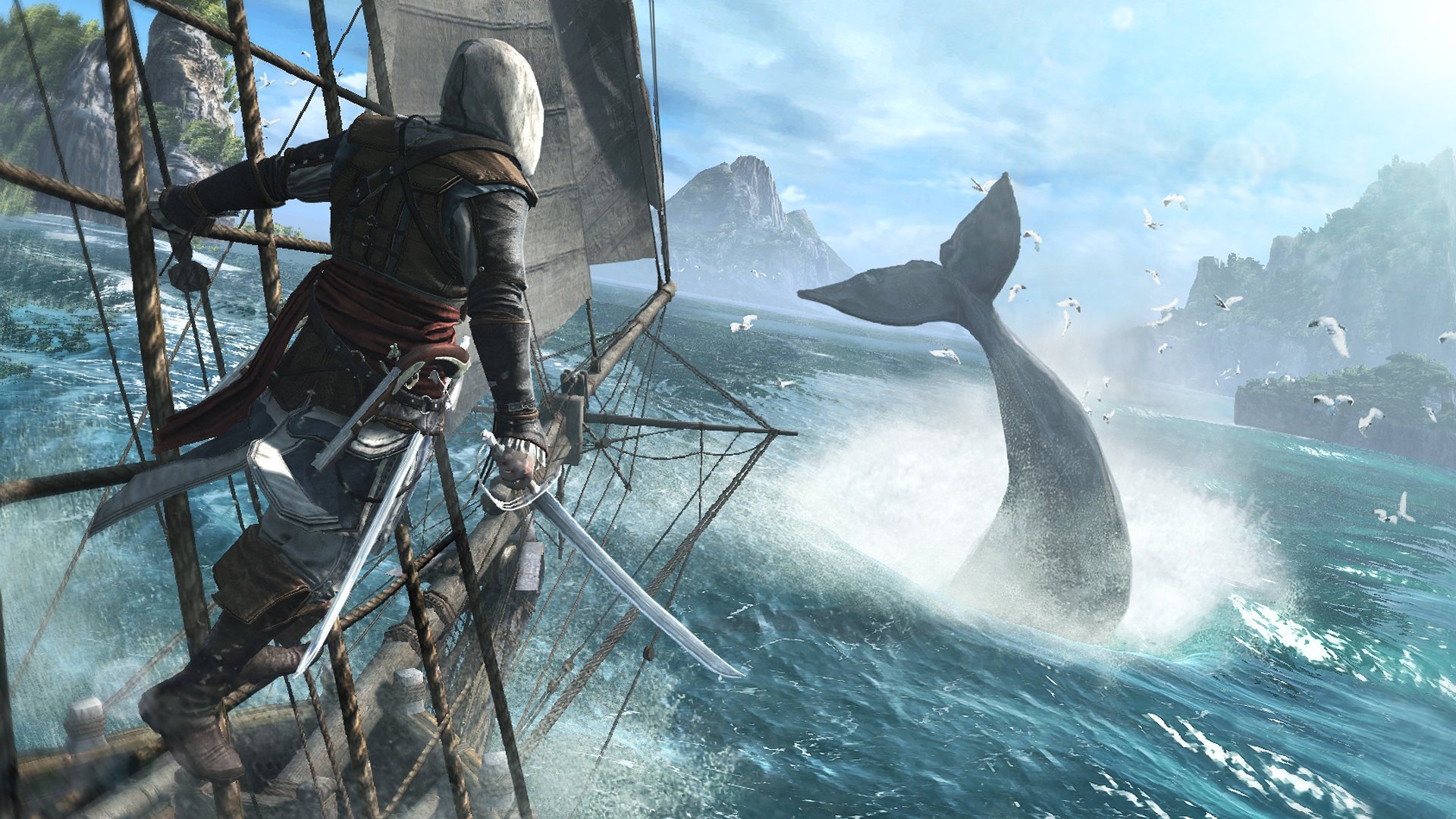
Sector Overview: Black Flag Surfaces With a Targeted Systems Resync
Ubisoft’s latest signals around assassin's creed iv: black flag don’t read like routine archival nostalgia—they read like a controlled systems reboot. Over the last week, the publisher has quietly broadcast fresh underwater gameplay, revisited the origins of its pirate engine, and even resurfaced historical references for Edward Kenway himself. Taken together, these transmissions form a clear pattern: Black Flag is being recalibrated, not merely remembered.
For #gamedev observers, this looks less like a content drip and more like a technical reconnaissance pass over one of Ubisoft’s most important systemic sandboxes. The focus on underwater stealth, shipwreck exploration, and pressure-zone traversal suggests pipeline work that goes beyond simple resolution bumps. If this is a remaster—or a deeper engine port—Ubisoft is treating the ocean layer as its proving ground.
Hydro-Op Sync Protocol: Underwater Layer as a Modern Benchmark
The most telling data point is the resurfaced underwater gameplay, described as a Hydro-Op Sync Protocol with resynced systems:
- Stealth-diving and fauna-rich shipwreck scans
- Reworked lighting volumes
- Updated aquatic AI paths
- Pressure-zone navigation tuned for modern hardware
This isn’t the kind of work you do for a quick legacy re-release. Underwater spaces are notoriously expensive to maintain in a live codebase: they stress lighting, visibility, AI navigation meshes, animation blending, and physics simultaneously. Revalidating those layers implies a broader engine or platform migration.
Watch: Transmitting Gameplay footage from the field: Black Flag Resynced – Underwater Systems Focus
From a #gamedev standpoint, modernizing Black Flag’s underwater segments likely involves:
1. Lighting & Volume-Based Rendering
The report notes recalibrated lighting volumes. In practice, that suggests:
- Migrating from older forward/partial-deferred setups to more robust physically based rendering (PBR) pipelines.
- Re-authoring fog and caustics to behave consistently with HDR and modern tone mapping.
- Tightening volumetric scattering so that visibility and stealth readability hold up at 4K+ resolutions.
For teams—AAA or #indiegame—this is a reminder that underwater biomes are lighting stress tests. If your volumetrics work underwater, they’ll usually scale everywhere else.
2. Aquatic AI Paths & Navmesh Complexity
The mention of recalibrated aquatic AI paths implies more than bug-fixing. AI that swims, orbits wreckage, and reacts to player stealth requires:
- 3D navmesh or layered navigation graphs instead of flat ground planes.
- Smarter avoidance around complex shipwreck geometry.
- Updated perception systems to handle modern visibility and post-processing.
Revisiting this stack a decade later suggests Ubisoft is either:
- Porting to a newer internal engine branch, or
- Building a shared tech baseline that can be reused in future oceanic titles.
Resync Protocol: The Pirate Engine’s Origins and Future
The second major intel drop is an archival dive into how Black Flag’s pirate engine was originally weaponized: naval combat, freeform Caribbean traversal, and systemic mission design.
Key takeaways for design-focused readers:
1. Naval Combat as the Core Loop, Not a Side Mode
Black Flag’s success hinged on treating the Jackdaw as a primary traversal and combat verb, not a minigame. The new retrospective underscores how:
- Cannon broadsides, boarding actions, and weather systems were iterated as a single systemic layer, not separate feature silos.
- Island discovery, side contracts, and treasure hunts were built to radiate out from ship movement, not compete with it.
For modern #indiegame teams chasing open-world ambitions, the lesson is sharp: pick one dominant verb (sailing, driving, flying) and let the rest of your systems orbit it, rather than scattering effort across disconnected modes.
2. Sandbox Missions Over Linear Scripting
The report highlights how Black Flag redefined Assassin’s Creed’s mission structure:
- Fewer narrow corridors, more softly bounded arenas (fort assaults, ship hunts, stealth infiltrations).
- Systemic affordances (crowds, foliage, line-of-sight, ship positioning) doing heavy lifting instead of bespoke, one-off scripting.
This shift is still instructive in 2026. The more your missions lean on reusable systemic ingredients, the easier it is to:
- Maintain content over time.
- Port to new platforms.
- Ship remasters or resyncs without rewriting half your mission logic.
Historical DNA Scan: Edward Kenway as a Pipeline Test Case
The third intel packet profiles the real Edward Kenway, cross-referencing archival portraits, facial structure, and era-accurate styling. On the surface, it’s lore candy. Underneath, it’s a window into Ubisoft’s character pipeline maturity.
Why this matters to developers:
- Re-examining face structure and historical styling hints at updated character shaders and facial rigs ready for higher-fidelity displays.
- If Ubisoft is comfortable putting Edward’s likeness back under the microscope, it likely trusts its modern rendering stack to hold up against close scrutiny.
For teams planning long-tail franchises, Kenway’s resurfacing is a case study in IP durability: a character anchored in real-world reference material can be reinterpreted visually without losing identity.
Strategic Read: Is This a Testbed for Future Ocean Tech?
Put all three signals together, and a pattern emerges:
- Underwater systems resynced for modern hardware.
- Pirate engine origins re-contextualized for a new audience.
- Edward Kenway’s visual DNA re-profiled.
This feels less like isolated marketing beats and more like a controlled soft-launch of a refreshed Black Flag build—possibly a remaster, possibly groundwork for future ocean-heavy projects.
From a #gamedev and #indiegame perspective, the key lessons from this week’s Sector Intelligence:
- Revisit your deepest systems first. If your underwater, space, or flight layers survive a modern rework, everything else will scale.
- Center your sandbox around one dominant verb. Black Flag’s pirate engine still holds up because everything—from missions to progression—flows from naval play.
- Treat historical and visual authenticity as living assets. Kenway’s renewed scrutiny shows how strong reference-based design can support multi-generation reintroductions.
For now, Assassin’s Creed IV: Black Flag isn’t just back in the discourse—it’s back in the lab. And Ubisoft’s latest transmissions suggest the Caribbean isn’t done evolving as a testbed for systemic open-world design.
Sources and corrections
This archive entry does not have a verified article-source list. Images and video embeds alone are not evidence for every claim.
Found an error? Request a correction. Include the passage and a supporting source.
Your games, in one place
Keep up with Assassin's Creed IV: Black Flag
Follow this game to collect its posts in your personal feed. Come back to see what you missed.