Automated archive / Assassin's Creed IV: Black Flag
How Black Flag’s Pirate Engine Just Got Resynced for 2026
Ubisoft’s Resynced initiative is dragging Assassin’s Creed IV: Black Flag’s pirate engine back into the spotlight, with fresh intel on visuals, systems, and quality-of-life upgrades. This week’s Sector Intelligence Report breaks down what the new Animus feed reveals about modernizing a decade-defining open world...
AI-generated summary. This archive article does not have a current recorded source check. Check linked sources before relying on details. Editorial policy
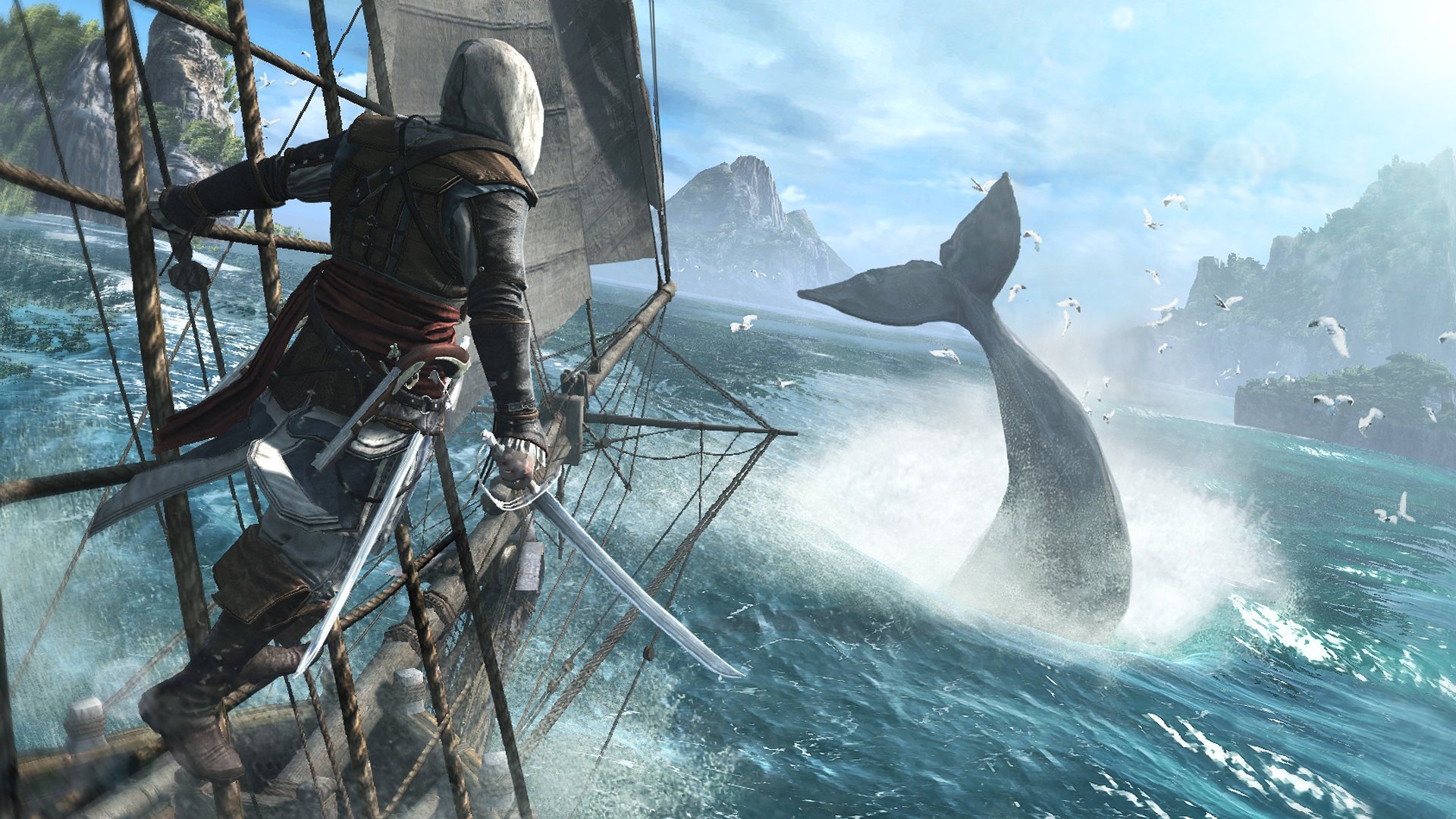
Weekly Sector Intelligence: Assassin's Creed IV: Black Flag Resynced
Ubisoft is quietly spinning the Animus back online for assassin's creed iv: black flag, and the last seven days of signals paint a clear picture: this isn’t just a nostalgia pass, it’s a systemic reactivation of one of the most influential open-world sandboxes of the PS4/Xbox One era. From the “Resynced” upgrade intel to renewed focus on Edward Kenway and the Jackdaw, the Caribbean theater is being re-framed for a 2026 audience that expects modern pipelines, higher fidelity, and cleaner UX.
This week’s Sector Intelligence Report breaks down what the activity feed reveals about the tech, the design intent, and the likely trajectory of this refreshed build for #gamedev watchers and #indiegame teams studying AAA worldbuilding.
Resync Protocol: Rebooting the Pirate Engine for 2026
The most telling broadcast in the feed is the “Resync Protocol” dive into the origins of Black Flag’s pirate engine. The language is deliberate: “weaponized open-world piracy”, “systemic Caribbean sandbox”, “stable live build”. That’s production speak for a toolchain that had to reconcile three competing demands:
- Naval combat as a first-class traversal system – The Jackdaw wasn’t a level select; it was a physics-heavy, AI-dense platform that doubled as world map and combat arena. Iterating this into a “stable live build” meant solving edge cases around boarding transitions, weather, and sea-state without loading breaks.
- Freeform exploration vs. authored missions – Black Flag’s design famously relaxed the series’ rigid mission scripting. The report’s framing around “redefining traversal and mission structure” hints that Resynced may lean into that legacy—possibly modernizing checkpoint logic, detection cones, and fail-state rules that feel punitive by 2026 standards.
- Systemic sandbox layering – Wildlife, trade routes, fort assaults, and emergent naval encounters all sat on top of shared systemic foundations. Any Resynced upgrade that touches streaming, AI, or rendering needs to preserve those interactions, not flatten them.
For #gamedev practitioners, this is a case study in how a successful systemic core gets re-evaluated a decade later: keep the verbs, modernize the friction.
Operational Debrief: What “Resynced” Likely Means Technically
The Operational Debrief log confirms what the branding implies: “enhanced visuals, system optimizations, and updated quality-of-life protocols.” In practical terms, expect a three-front upgrade strategy:
-
Visual Pass
Higher resolution targets, more stable framerates, and improved post-processing are almost guaranteed. The Caribbean’s volumetric lighting, water shaders, and skybox gradients were already a showcase; a Resynced build can push:- Sharper screen-space reflections on the ocean surface.
- Higher-resolution textures on ship hulls, rigging, and cloth.
- Cleaner anti-aliasing to reduce shimmer on distant masts and island foliage.
-
Systems & Performance Optimization
The feed’s emphasis on “system optimizations” suggests a re-tuning of streaming and CPU-heavy AI behaviors. Black Flag’s busiest scenes—multiple ships, cannon volleys, particle-heavy storms—were bound by last-gen CPU budgets. On modern hardware, Ubisoft can:- Increase concurrent naval traffic without choking the simulation.
- Stabilize frame pacing during boarding actions and fort sieges.
- Shorten traversal friction by trimming legacy loading hooks.
-
Quality-of-Life Protocols
“Updated quality-of-life” is where the Resynced project can most meaningfully modernize the experience:- Smarter checkpointing around stealth and tailing missions.
- Clearer UI surfacing of ship upgrade breakpoints.
- Accessibility options that weren’t standard at the time of original release.
For studios—AAA and #indiegame alike—this is a live example of how to re-ship a legacy title: respect its mechanical spine, but aggressively prune friction that modern players no longer tolerate.
The Jackdaw: Mobile Hub Design as Live Systems Blueprint
Another field log zeros in on The Jackdaw as a “mobile operations base”—a framing that lands squarely in contemporary hub design discourse. Before social spaces and live-service flagships became standard, Black Flag turned your ship into a roaming, upgradable HQ:
- Crew as a Living Resource – Morale, shanties, and visual density of crew activity turned the Jackdaw into a feedback surface for player progression. You didn’t just see numbers rise; you heard and felt your upgrades in motion.
- Upgrade Loops with Clear Readability – From hull armor to broadside cannons, upgrades were visually and mechanically legible. In a Resynced context, expect sharper material work and maybe refined UI to surface DPS, durability, and maneuverability in more modern terms.
- Traversal + Identity – Calling the Jackdaw “Edward’s second home, and ours too” underscores how the ship functioned as both transport and character extension. That’s a design pillar many current open worlds still struggle with: making your primary vehicle feel like a protagonist rather than a menu.
For #gamedev teams designing hubs, the Jackdaw remains a blueprint: a single asset that unifies progression, narrative, traversal, and moment-to-moment gameplay.
Watch: Transmitting Gameplay footage from the field: Jackdaw-focused short-form gameplay slice
Historical DNA Scan: Edward Kenway as Character Pipeline
The Historical DNA Scan log—cross-referencing Edward Kenway with real-world archival portraits—says more about Ubisoft’s production priorities than it does about cosplay accuracy. The focus on “visual alignment, facial structure, and era-accurate styling” reads like a character art checklist:
- Reference-Driven Sculpting – Grounding Edward in period-authentic silhouettes helps the fantasy land. The pirate fantasy is heightened, but the bone structure, hair, and costuming respect 18th-century visual logic.
- Era-Accurate, Brand-Recognizable – Assassin robes, hidden blades, and pirate coats intersect in a silhouette that’s both historically flavored and unmistakably Assassin’s Creed.
- Resynced Opportunity – A modern pass could refine skin shading, eye rendering, cloth simulation, and facial animation to align Edward with current-gen standards—without breaking the established face that fans recognize.
For character-focused #gamedev pipelines, this is a reminder: stylization anchored by real reference often ages better and remasters more cleanly than pure fantasy.
Strategic Outlook: What to Watch in the Coming Weeks
The Resynced initiative positions assassin's creed iv: black flag as more than a nostalgia artifact. It’s:
- A live case study in upgrading a systemic open world without disrupting its emergent core.
- A chance to re-evaluate mission structure and stealth expectations in light of a decade of design evolution.
- A testbed for Ubisoft’s broader approach to catalog modernization—how far they’ll go on QoL, accessibility, and performance targets.
As Abstergo “scrubs the archive” and more parameters drop—platforms, performance modes, and specific feature deltas—this Caribbean resync will be a key watchpoint for anyone interested in how large-scale sandboxes are maintained, re-polished, and reintroduced to a new generation of players and developers.
In a landscape where #indiegame teams frequently cite Black Flag’s freedom and systemic layering as inspiration, seeing the pirate engine reactivated for 2026 is more than a remaster story—it’s a live design document being updated in real time.
Sources and corrections
This archive entry does not have a verified article-source list. Images and video embeds alone are not evidence for every claim.
Found an error? Request a correction. Include the passage and a supporting source.
Your games, in one place
Keep up with Assassin's Creed IV: Black Flag
Follow this game to collect its posts in your personal feed. Come back to see what you missed.