Automated archive / Assassin's Creed Black Flag Resynced
Black Flag Resynced Players Go Full Completionist as Ubisoft Recalibrates the Grid
Black Flag Resynced’s first full week in the wild shows players treating the Caribbean like a solvable system, not a nostalgia cruise. As six-figure concurrency collides with studio layoffs, the remaster becomes a case study in how modern completionists consume classic open worlds.
AI-generated summary. This archive article does not have a current recorded source check. Check linked sources before relying on details. Editorial policy

Sector Intelligence Report // Week of July 13–17
assassin's creed black flag resynced has entered its first true live week with a clear behavioral pattern emerging: players are no longer just replaying a classic; they’re strip-mining the sim for total control. Completionist routing, cosmetic optimization, and high-end naval dominance are driving engagement, even as Ubisoft’s production network shows signs of strain.
This briefing compiles the latest signals from the Caribbean grid: what players are chasing, how guides are reshaping the meta, and where the development update picture gets complicated.
Player Behavior Snapshot: Six-Figure Concurrency, Optimization Mindset
The big macro data point hit early in the week: the remaster pushed through 104,756 concurrent players on Steam, holding a 71.72% approval rating. That’s not spotless sentiment, but it’s strong enough to sustain a long tail—especially for a systems-heavy open world.
What matters more is how that population is playing. The Activity Feed reads like a checklist of min-max priorities:
- Route-optimized 100% completion via the "Tactical Runstack" walkthrough hub.
- High-value ship upgrade paths (Ultimate Plans, Legendary Designs, and combat loadout theory).
- Full-spectrum collectible sweeps: Community Chests, Character Portraits, Dark Animus nodes, and one-off secrets like Davy Jones’s Locker and the Grand Cayman hidden chest.
The net effect: Black Flag Resynced isn’t just benefiting from nostalgia; it’s being treated like a fresh live-service sandbox where knowledge efficiency is a core part of the fantasy.
Naval Meta: Jackdaw as Endgame Hardware
Two major intel packets this week targeted the Jackdaw’s late-game ceiling:
- Steel Wake Protocol: complete coordinates for every Legendary Ship Design Plan.
- Hull Protocol Online: decrypted routes to all Ultimate Plan ship upgrades.
Together, they effectively formalize an endgame naval meta: players are no longer guessing where the upgrade wall is—they can chart a straight line to a fully weaponized Jackdaw, then tune builds around:
- Elite hull and armor for survivability.
- Broadside and ram efficiency for boss encounters.
- Visual identity via sails and figureheads as status markers.
This is reinforced by encounter-specific intel like the HMS Ipswich / Maynard briefing, which breaks down approach vectors, armor weak points, and boarding windows. Guides are treating these fights like raid bosses rather than one-off setpieces.
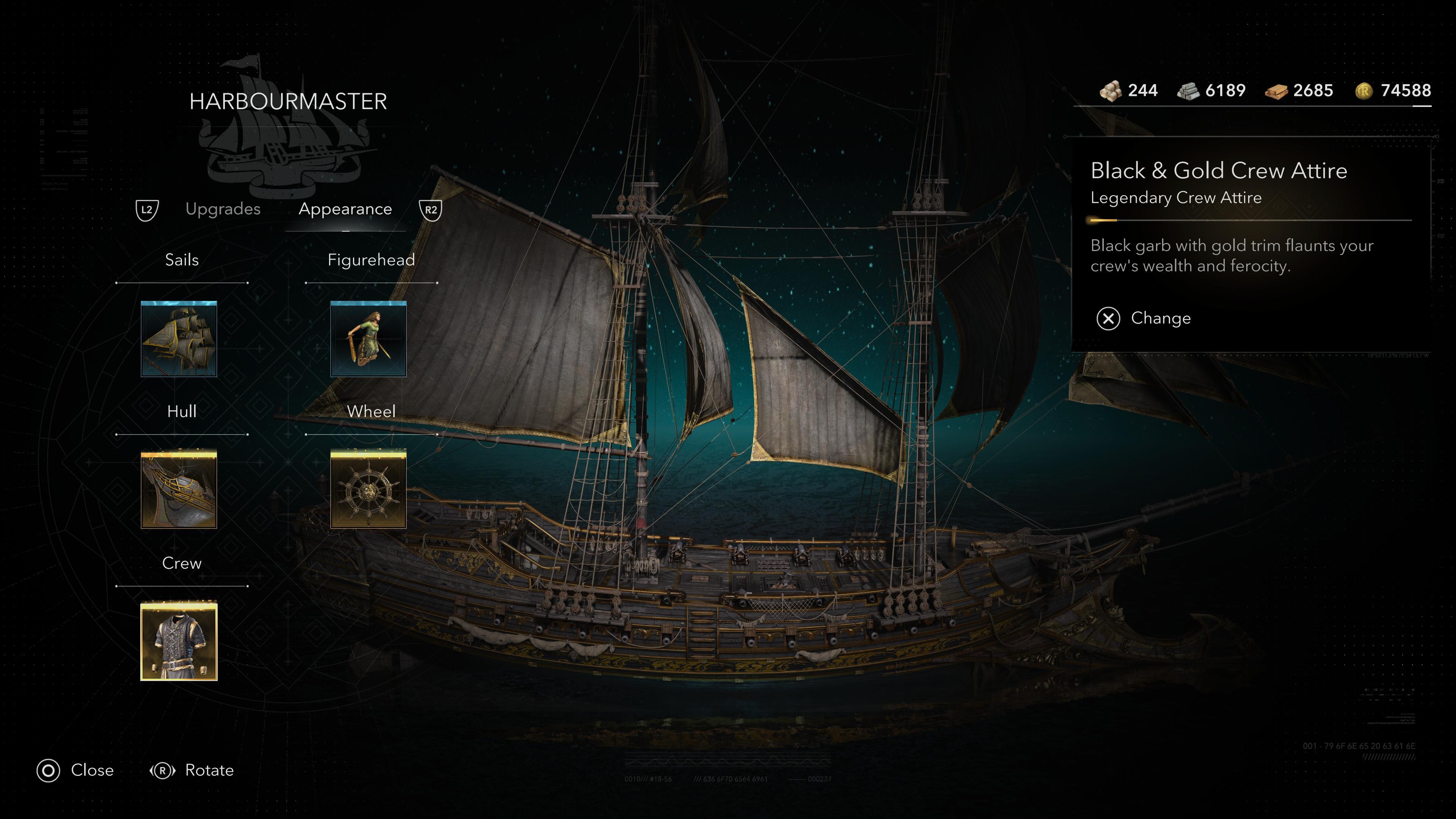
From a #gamedev perspective, this is a useful signal: Black Flag’s naval loop still has enough systemic depth to support modern meta discourse, even in a remaster. Any future balancing passes or post-launch tuning would do well to respect that emergent min-max culture rather than flatten it.
Completionist Grid: From Treasure Routes to Face Scans
The rest of the week’s intel leans hard into completionist ergonomics:
- Community Chest Grid: every Community Chest treasure hunt mapped and decoded for efficient farming and resource routing.
- Dark Animus Grid: all Dark Animus quest nodes tracked by sequence gate and region flag, enabling single-pass sweeps rather than fragmented backtracking.
- Character Portrait Grid: geo-tagged Character Portrait locations turning what was once a casual diversion into a structured recon loop.
- Grand Cayman Cache and Blackbeard’s Treasure: specific, high-friction secrets converted into deterministic routes.
- Davy Jones’s Locker: the lowest vertical coordinate in the sim, reframed as a trophy-focused micro-challenge.
The pattern is clear: players want total map literacy—not just to clear icons, but to compress that process into the cleanest possible route. For designers, this is a reminder that in large open worlds, friction is tolerated only when it feels intentional. Anything that reads as opaque or arbitrary will be immediately systematized by the community.
Style as System: Outfits, Sponsored Loot, and Visual Meta
On the cosmetic side, the week’s intel shows that fashion is being treated as a soft system layer rather than a mere vanity sink:
- Outfit Protocols: a full index of all Edward Kenway outfits and their unlock conditions (story beats, contracts, collectibles, special requirements).
- Red Bull crossover: mission-grid routes for unlocking limited Red Bull sails and trinkets, explicitly framed as time-sensitive sponsored fragments.
Even where outfits don’t meaningfully alter stats, players are aligning visual identity with playstyle—stealth builds, naval dominance, or pure prestige. For any #indiegame teams looking at cosmetics, this is a useful case study: cosmetics hit hardest when they’re narratively contextualized (Blackbeard, sponsorship, legendary status) and tied to clear, skill- or exploration-based unlock paths.
Production Turbulence: Ubisoft Barcelona Layoffs
The sharpest development update in the feed doesn’t come from the Caribbean at all, but from the studio network: Ubisoft Barcelona has cut 51 roles in the immediate wake of the Black Flag Resynced launch.
The language around the move—"bandwidth recalibration" and re-routed production priorities—suggests:
- Short-term stabilization around the remaster’s current state.
- Potential deprioritization of extended post-launch content, with support likely focusing on critical fixes and platform parity.
For players, that means expectations should be set around stability patches and quality-of-life rather than major feature expansions. For #gamedev observers, it’s a reminder that even a strong concurrency spike and solid rating don’t necessarily insulate support studios from broader portfolio and cost decisions.
Strategic Outlook: A Classic Recompiled for the Optimization Era
Taken together, this week’s signals paint assassin's creed black flag resynced as a fascinating hybrid: a 2013 design sensibility being aggressively reinterpreted through a 2026 optimization lens. Players are:
- Treating the Caribbean as a solvable problem space, not a leisurely playground.
- Expecting deterministic access to every system—naval, cosmetic, and collectible.
- Willing to invest deep time, provided the information asymmetry is removed.
For Ubisoft, the challenge now is to stabilize the build, respect the emergent naval and completionist meta, and communicate clearly about any ongoing support in the shadow of studio-level cuts.
For everyone else watching the grid—especially #indiegame teams building open worlds on tighter budgets—the lesson is blunt: if your world is big, your logic needs to be readable. The community will do the rest.
Sources and corrections
This archive entry does not have a verified article-source list. Images and video embeds alone are not evidence for every claim.
Found an error? Request a correction. Include the passage and a supporting source.
Your games, in one place
Keep up with Assassin's Creed Black Flag Resynced
Follow this game to collect its posts in your personal feed. Come back to see what you missed.