Automated archive / Artificial Detective
Artificial Detective Boots Up as the First-Person Logic Sim to Watch
Artificial Detective has come online as a first-person, open-world investigation sim where logic, not gunplay, drives every decision. With systemic NPC routines, branching caseboards, and a human-less neon megacity as a live database, this is quickly becoming a must-watch experiment in detective game design.
AI-generated summary. This archive article does not have a current recorded source check. Check linked sources before relying on details. Editorial policy

Sector Intelligence Report // Artificial Detective
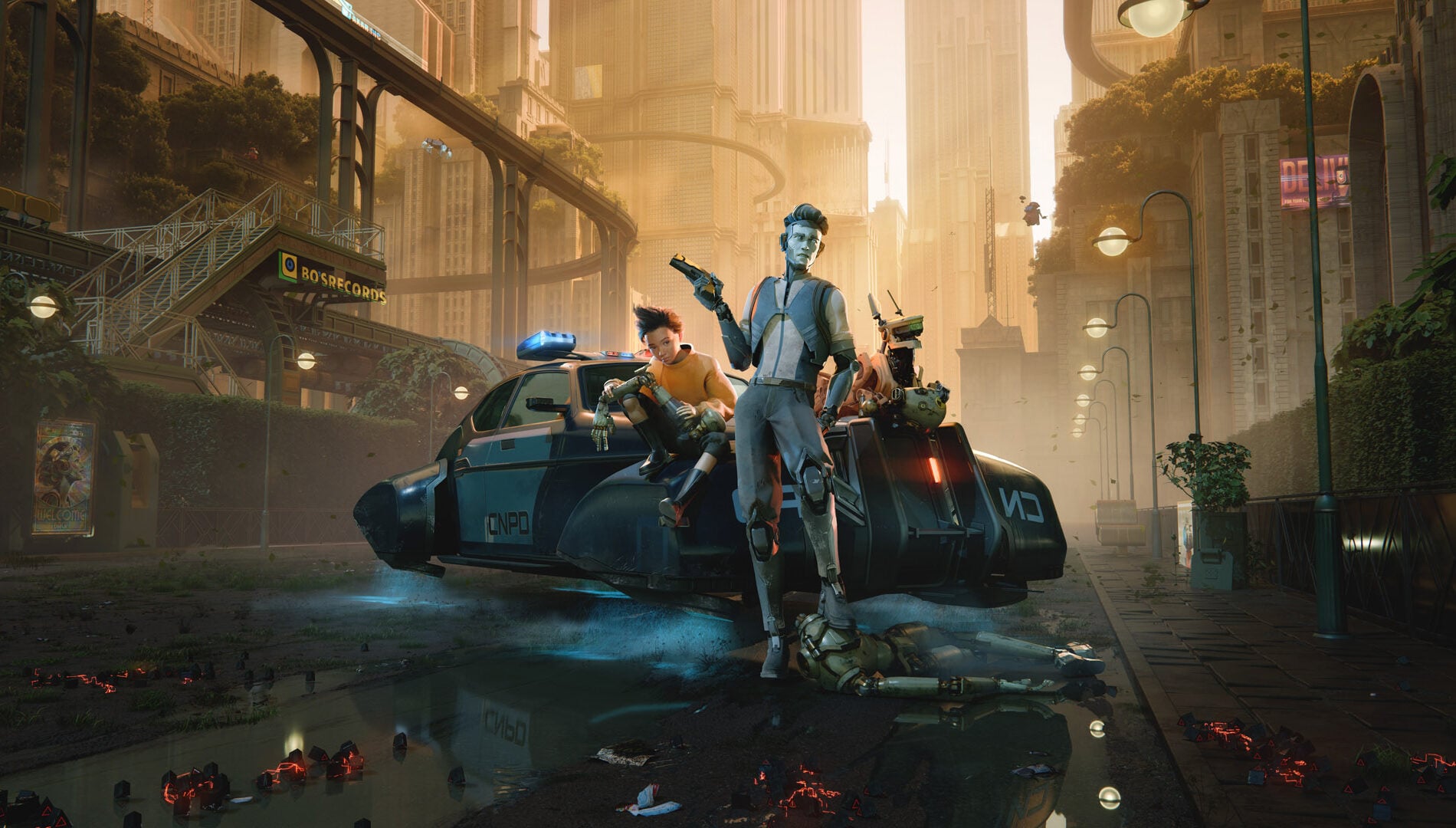
Artificial Detective has come online, and the signal is strong enough that the #gamedev radar should be pinging hard. Over the last seven days, the project has shifted from quiet anomaly to fully tagged watchlist item, thanks to an official reveal and a cluster of detailed breakdowns that frame it as a first-person, open-world investigation sim where logic, not lethality, is the primary verb.
The pitch is clean and sharp: you’re a robot detective in a human-less world, scraping through the digital remnants of a vanished civilization. Every citizen is data, every street is a log file, and every case is a systems problem waiting to be debugged.
World State: A Human-Less City as Forensic Playground
Recent transmissions emphasize a neon-soaked megacity that functions less like a backdrop and more like a live database. There are no human NPCs in the traditional sense; instead, you’re dealing with synthetic entities and digital ghosts, each treated as a data node with:
- Routine patterns
- Hidden flags
- Trackable movement vectors
The city itself becomes a massive, persistent caseboard. Instead of loading into isolated levels, you’re traversing an open-world network where urban decay is both environmental storytelling and a forensic surface. Clues are embedded in architecture, lighting, and abandoned infrastructure as much as in dialogue.
This is a critical distinction for #indiegame and systems-focused developers: the world isn’t just a container for missions, it’s effectively a relational database you navigate in first person.
Watch: Transmitting Gameplay footage from the field: Artificial Detective – Official Reveal Trailer
Systems Briefing: First-Person Logic, Not First-Person Shooter
One of the clearest data points from the activity feed is that Artificial Detective is positioned as a logic-driven investigation sim, not an action game with detective garnish. The core loop, as described:
- Forensic scanning of environments to surface hidden data and contradictions.
- Interrogations of digital entities where dialogue works like structured query language: you’re probing for inconsistencies, not choosing flavor text.
- Pattern tracking, where NPC routines and paths through the city can be correlated against timestamps, alibis, and physical evidence.
Every NPC is described as a node with routines and flags, implying a systemic simulation layer rather than hand-scripted one-off behaviors. For developers, this suggests a design closer to immersive sim DNA, but with combat swapped out for rigorous deduction.
Crucially, the reports stress that logical rigor, not reflexes, is your primary weapon. That’s a strong statement in a market still saturated with gun-centric first-person design. Mechanically, this opens doors for:
- Time-agnostic play (no twitch pressure, more thinking space).
- Save systems that encourage experimentation with dialogue trees and evidence chains.
- Failure states based on misinterpretation rather than missed headshots.
Caseboard Dynamics: Branching Investigations and a Mutable Network
The most compelling structural hook in the latest intel is how every solved case rewrites social and systemic relationships in the city’s network. This implies:
- A persistent global state where case outcomes rewire NPC relationships.
- Branching investigations that don’t just alter endings, but mid-game information flows.
- A caseboard that updates as a living graph, not a static quest log.
The feed mentions that every choice rewrites the caseboard. Read that as a design challenge: the narrative and systems teams are committing to track player logic over time, not just binary success/fail flags. For #gamedev teams, this is the kind of complexity that demands robust tooling—visual node editors, debugging overlays for AI routines, and strong data pipelines for quest state.
The influence of veterans from Control and Dead Space is visible in the framing: high-density environmental storytelling, strong mood, and likely a heavy emphasis on diegetic interfaces (your robot detective’s UI as part of the fiction, not just a HUD slapped on top).
Watchlist Assessment for Developers and Players
From a sector perspective, Artificial Detective is emerging as a key reference point in the first-person investigation space—a genre that’s historically underserved and often under-scoped. The combination of:
- Open-world structure
- Systems-driven NPC routines
- Logic-first case resolution
- A fully synthetic, human-less setting
creates a strong differentiator in a market crowded with detective-flavored walking sims and linear mystery adventures.
For developers, this is one to dissect closely:
- How do they surface complex logic chains to players without overwhelming them?
- Which tools do they use to maintain coherence across branching investigations?
- How do they balance authored mystery with systemic unpredictability?
For players, especially those tracking emerging #indiegame and AA-scale experiments, Artificial Detective already reads like a flagship case study in systemic narrative design.
Log this anomaly to your watchlist: artificial detective is no longer just a cool trailer—it’s a testbed for where first-person narrative systems might go next.
Sources and corrections
This archive entry does not have a verified article-source list. Images and video embeds alone are not evidence for every claim.
Found an error? Request a correction. Include the passage and a supporting source.
Your games, in one place
Keep up with Artificial Detective
Follow this game to collect its posts in your personal feed. Come back to see what you missed.