Automated archive / Arc Raiders
Arc Raiders’ 14M Breakout Rewrites the Live-Service Playbook
Arc Raiders has detonated onto the live-service landscape with 14 million copies sold and 1 million concurrent players, driving Nexon’s revenue to $3.1B. This week’s Sector Intelligence Report breaks down how its co-op sci-fi design, live-ops strategy, and market timing rewrote expectations for new IP.
AI-generated summary. This archive article does not have a current recorded source check. Check linked sources before relying on details. Editorial policy

Sector Intelligence Report – Arc Raiders (Weekly Brief)
Arc Raiders just executed the kind of launch most publishers model in pitch decks but rarely see in the wild. Nexon’s co-op sci‑fi extraction shooter has surged past 14 million copies sold and reached 1 million concurrent players, instantly positioning itself as one of the most important live‑service case studies of the decade. For teams tracking #gamedev trends and live‑ops best practices, this isn’t just a feel‑good launch story—it’s a hard data point that the right fantasy, friction profile, and social design can still crack a saturated market.
Strategic Overview: From Surprise Drop to Strategic Stronghold
Nexon framed Arc Raiders as a “surprise” launch, but the numbers suggest meticulous timing rather than blind luck. In a climate where players are fatigued by monolithic battle passes and bloated seasonal grinds, Arc Raiders offers a sharper loop: PvE survival, high‑impact shooter combat, and towering mechanical invaders that sell the fantasy in a single screenshot.
The result: 14 million units moved and 1 million concurrents at peak. That’s not just a strong debut; it’s evidence that:
- New IP can still cut through entrenched franchises if the core fantasy is instantly legible.
- Co‑op first design, not PvP escalation, remains a powerful growth vector.
- Launch windows that dodge the heaviest AAA traffic still matter.
For #indiegame and mid‑tier studios, Arc Raiders is a reminder that clarity of pitch (“drop in, survive, bring back the goods”) can trump feature bloat.
Watch: Transmitting Gameplay footage from the field: Arc Raiders official gameplay broadcast
Economic Impact: Arc Raiders as a Revenue Reactor
Nexon’s latest financials confirm that Arc Raiders isn’t a one‑week spike; it’s a structural pillar. The publisher reported a 6.5% revenue increase year‑over‑year, climbing to $3.1 billion in 2025, explicitly crediting the ongoing success and long‑tail engagement of Arc Raiders.
From a business and #gamedev perspective, several signals stand out:
1. Long-Tail Design Is Doing the Heavy Lifting
Nexon cites live ops and persistent engagement as key drivers. That implies:
- A content cadence that keeps high‑value players in the ecosystem beyond the initial novelty window.
- Systems that support repeatable extraction runs, escalating threat profiles, and social stickiness.
- Monetization tuned for longevity over shock value, likely leaning on cosmetics, progression accelerators, and event‑driven FOMO rather than aggressive pay‑to‑win.
This aligns with the wider shift away from pure box‑price success toward service‑driven design—but with the rare twist that Arc Raiders has already nailed both unit volume and engagement.
2. Risk Profile: New IP in a Brutal Market
Launching a new sci‑fi co‑op shooter into a market dominated by Destiny‑likes, extraction shooters, and survival sandboxes is a high‑risk move. Arc Raiders mitigated that risk through:
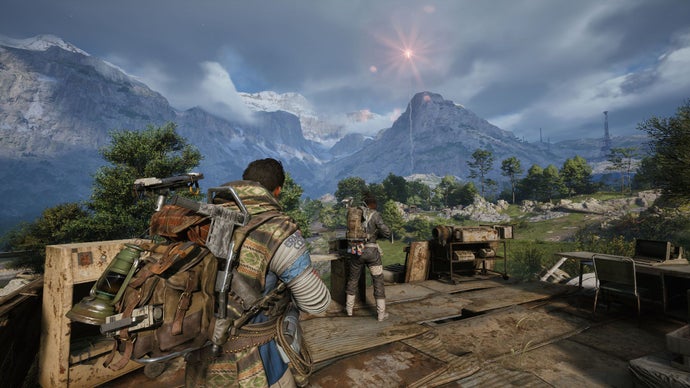
- Visual identity: retro‑futurist, analog‑signal aesthetic that stands apart from the usual military realism.
- Mechanical clarity: players immediately understand the goal—drop, fight, extract, survive.
- Social framing: built‑in co‑op fantasy sells better to streamers and squads, boosting organic reach.
For developers, the lesson is not “be Arc Raiders,” but build a world and loop that can be understood in 5 seconds and obsessed over for 500 hours.
Design & Live Ops Takeaways for Developers
1. Co-op as the Primary Power Curve
Arc Raiders’ success reinforces that co‑op isn’t a mode—it’s a product pillar. The game’s breakout concurrents suggest that players are hungry for:
- Fast onboarding into squads (minimal friction to “play with friends now”).
- Clearly defined roles and synergies during boss‑scale encounters.
- High‑drama extraction moments that are designed for clips and streams.
If you’re building a #gamedev roadmap, treat co‑op UX—lobby flow, matchmaking, drop‑in/out—as core systems, not post‑alpha polish.
2. Live-Service Without Content Shock
The “surprise launch” may have grabbed headlines, but the real story is sustained momentum. That suggests:
- A pre‑baked content pipeline ready to fire shortly after launch, not scramble in response to demand.
- Early data‑driven tuning of difficulty, rewards, and time‑to-fun, based on the opening player wave.
- Seasonal or event structures that extend the fantasy (new raid‑scale machines, weather events, sector‑wide threats) rather than just reskinning.
For #indiegame teams, you may not have Nexon’s scale, but you can adopt the principle: launch with a plan for the first 90 days of content and balance, not just a 1.0 build.
3. Market Signal: There’s Still Room at the Top
Arc Raiders’ performance sends a strong signal across the sector:
- The live‑service battlefield is crowded, not closed.
- Players will show up for new IP if the promise is sharp and execution tight.
- Financially, a well‑run service title can materially shift a publisher’s annual revenue, even in a diversified portfolio.
Closing Scan: What to Watch Next
For the coming weeks, key watchpoints for Arc Raiders include:
- Retention curves: how many of those 14 million buyers are still in orbit 30, 60, 90 days out?
- Monetization sentiment: community reaction to cosmetic and progression systems will determine long‑term goodwill.
- Content velocity: can Nexon maintain a cadence that keeps the 1 million concurrent ceiling from collapsing into a one‑off spike?
From a sector intelligence standpoint, Arc Raiders has already validated its thesis: co‑op sci‑fi extraction with strong identity can still break through. The next phase will determine whether it becomes a stable pillar of Nexon’s portfolio—or the benchmark that future teams try, and mostly fail, to replicate.
Sources and corrections
This archive entry does not have a verified article-source list. Images and video embeds alone are not evidence for every claim.
Found an error? Request a correction. Include the passage and a supporting source.