Automated archive / Apex Legends
Cyberware, Crackdowns, and Squad Calibration in Apex Legends
Apex Legends just wired the Outlands into a neon cyberwar, escalated its anti-cheat to hardware-level strikes, and quietly spun up social tools to defuse the solo queue grinder. This week’s Sector Intelligence Report breaks down how cyberware, crackdowns, and squad-building are reshaping the meta in real time.
AI-generated summary. This archive article does not have a current recorded source check. Check linked sources before relying on details. Editorial policy
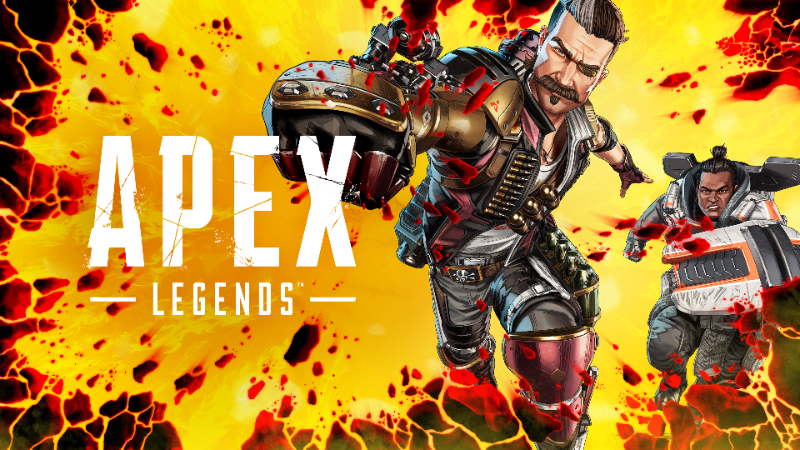
Cyberware Goes Hot: Night City by Way of the Outlands
Apex Legends has flipped the switch on a full-blown cyberpunk escalation, and the data coming out of the last seven days paints a clear picture: movement tech is no longer just a skill ceiling, it’s an experimental combat drug.
The new Cyberpunk Event drops squads into a neon-drenched e-district – a bootleg Night City fork stitched into the Apex games. Expect towering neon monoliths, holographic koi drifting overhead, and signage glitching like a corrupted save file. This isn’t just a reskin; line-of-sight, contrast, and visual noise are all shifting the way fights are taken and third-parties are spotted.
Wildcard is the test subject at the center of this escalation, now running two high-risk cyberware mods:
Sandevistan: Street-Level Aim Labs for Movement Freaks
- Short-range burst dashes in any direction, including mid-air.
- Can be chained to hard-engage, dodge, or slingshot out of crossfires.
- In practice, this turns Wildcard into a temporary movement legend even in otherwise grounded comps.
From a #gamedev perspective, Sandevistan is a live experiment in burst mobility windows: high-agency micro-moments that let players rewrite a bad peek or force a 3v2 before the enemy can react. The risk is obvious—stack too much burst movement and the skill gap becomes a chasm—but telemetry from events like this is exactly how Respawn calibrates long-term mobility baselines.
Blackwall Breach: Positioning as a Hack
- Phase into the net for a stealth reposition.
- Snap back with an AoE EMP that scrambles deployables and electronics on re-entry.
This effectively fuses reposition and disruption into a single timing puzzle: commit to vanish, pick an angle, then reappear with a localized reset of enemy toys. It’s a direct test of how far Respawn can push information denial and gadget disruption without hard-countering entire legends.
Cyberpsychosis: The Overheat Tax on Power
Every cyberware activation fills a cyberware capacity meter. Overfill it and you flip into cyberpsycho mode:
- Turbo movement.
- Melee-only.
- No guns, no abilities, no shields, no ordnance.
It’s pure glass cannon, tuned as a punishment and a spectacle. Immunoblocker syringes and caches scattered around the e-district act as on-site cures, turning map knowledge into a survival skill. From a systems design lens, this is a classic risk-reward overclock: the more you abuse your tools, the closer you drift to becoming a jump scare instead of a clutch hero.
Watch: Transmitting Gameplay footage from the field: Cyberpunk event trailer and systems showcase
Visual Integrity Pass: Cleaning Up the Glitches
Alongside the event, a telemetry patch quietly shipped to tidy up visual anomalies:
- Wildcard death boxes have been scrubbed of rogue banners, eliminating post-mortem billboards that cluttered loot readability.
- The mythic Alternator skin “Skippy” is still suffering from mirrored glyph corruption, confirmed as a bug rather than intentional distortion.
For players, this looks like a simple cosmetic fix. For the #gamedev crowd and any #indiegame teams watching, it’s a reminder of how UI/UX clarity and cosmetic integrity are live-service maintenance pillars. Death box readability directly impacts TTK perception, looting speed, and third-party vulnerability. Even a single mythic skin bug can skew both monetization optics and visual trust.
QA is reportedly “speedrunning bug reports,” which tracks with the current cadence: ship bold, high-variance content (like cyberware) and then rapidly sand down the unintended edges.
Hardware Lockdown: Anti-Cheat Goes for the Rig, Not Just the Account
The most consequential backend move of the week isn’t flashy—it’s punitive. Since late April, the anti-cheat division has executed roughly 6,000 hardware-level bans across PC and console, with:
- Primary blast radius on PC, where spoof stacks and evasion frameworks are more common.
- Console enforcement vectors actively scaling up.
Hardware bans are explicitly framed as final sanctions, reserved for:
- High-severity, repeat offenders.
- Serial spoofers and account evaders.
- Industrial-scale exploit farms.
This is a deliberate escalation from account bans to device-level excommunication. For the ecosystem, that’s a signal: Respawn is prioritizing long-term competitive integrity over short-term concurrency bumps from throwaway accounts.
Lower-tier infractions still route through account bans and reform-focused discipline, which matters for retention and perception. The studio doesn’t want to nuke first-time offenders who might reform; it wants to erase entrenched bad actors as a threat surface.
From a development update standpoint, this is also a live R&D loop: every evasion attempt feeds new signatures back into detection tooling. The more cheaters adapt, the richer the dataset for future enforcement.
Squad-Link Protocol: Social Systems as Balance Tech
On the social layer, Squad-Link Protocol has gone live as a sanctioned recruitment thread for Season 29, Split 2. The stated mission: reduce the solo queue meat grinder effect by helping players build squads that behave like precision fireteams, not three randoms speedrunning the death screen.
The questionnaire asks for:
- Region & platform.
- Preferred modes and current rank.
- Legend mains.
- Comms profile and playstyle.
This is low-tech on the surface—essentially a curated LFG hub—but strategically it’s a player-behavior lever. Better-aligned squads mean:
- Fewer internal conflicts over tempo (ratting vs. apeing).
- Stronger comms cohesion.
- More consistent match quality for mid- and high-skill players.
For a live-service BR, social architecture is balance tech. When the meta is volatile (see: cyberware), putting players into compatible stacks can offset frustration even before any numerical tuning passes hit the servers.
Strategic Outlook: Where the Telemetry is Pointing
Looking across this week’s signals, three themes emerge for Apex Legends:
-
Experimental Power with Built-In Failure States
Cyberware is aggressively strong but self-limiting via cyberpsychosis. Expect future design work to lean into temporary overclocks with explicit crash conditions. -
Aggressive Integrity Moves on Two Fronts
Visual clarity (death boxes, mythic skins) and competitive fairness (hardware bans) are being treated as equally critical infrastructure. That’s a strong read on how Respawn views trust as a core resource. -
Social Systems as a Retention Backbone
Squad-Link is a reminder that not every solution is mechanical. Sometimes, the best balance patch is just better teammates.
For now, adapt by learning cyberware routes, respecting the overheat bar, and—if you’re on PC—making sure your only stack being detected is your rank climb, not your spoof stack.
Sources and corrections
This archive entry does not have a verified article-source list. Images and video embeds alone are not evidence for every claim.
Found an error? Request a correction. Include the passage and a supporting source.
Your games, in one place
Keep up with Apex Legends
Follow this game to collect its posts in your personal feed. Come back to see what you missed.
More to read about Apex Legends
- Source-checked briefApex Legends Wildcard AMA set for October 14
A Wildcard-focused Apex Legends AMA is scheduled for October 14, 2026, from 10 a.m. to noon PT. Players can post questions ahead of time and return when responses begin. The Wildcard AMA is...
- Source-checked briefApex Legends tests longer Plat+ matchmaking queues
Apex Legends has begun a matchmaking test for Platinum-and-higher players that may lengthen queues while the system seeks closer-ranked lobbies. The test applies to Plat+ players across every...
- Source-checked briefApex Legends fixes weapon exploits
Apex Legends received fixes for multiple weapon exploits, including issues that could alter magazine firing, reload speed, and fire rate. The announcement says anti-cheat work and enforcement...