Automated archive / Apex Legends
Apex Legends Overclocked: Axle, Deathbox Respawns, and the End of Static Meta Comfort
Apex Legends: Overclocked doesn’t just add a new legend—it rewires how the entire match tempo works through Axle, deathbox respawns, and chain healing. Static metas are out, rolling skirmishes and high-risk mobility are in.
AI-generated summary. This archive article does not have a current recorded source check. Check linked sources before relying on details. Editorial policy
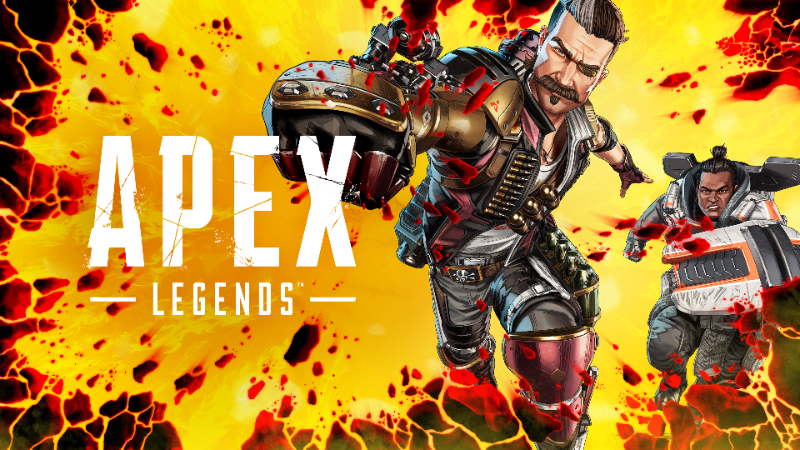
Sector Intelligence Report // Apex Legends: Overclocked Meta Goes Critical
Overclocked isn’t a routine seasonal refresh for apex legends—it’s a systems-level rewrite of how fights start, reset, and spiral out of control. Respawn is leaning hard into mobility, tempo, and comeback mechanics, using Axle, deathbox respawns, and chain healing to push the live meta away from bunker play and into rolling skirmish territory. For designers and competitive players alike, this reads less like a patch and more like a live-service lab experiment in match pacing.
Axle: Hyper-Mobile Disruption as a Design Pillar
Axle enters the arena explicitly framed as a “high-impact disruption unit” and “hyper-mobile legend”. Her design brief is clear: invalidate predictable angles and punish squads that over-invest in static setups.
From a #gamedev perspective, Axle looks like a direct response to two long-running pressures:
- Meta stagnation: When a few defensive or control legends dominate endgames, rotations calcify. Axle’s kit is tuned for hard flanks and fast exits, forcing teams to constantly re-evaluate their sightlines and cover.
- Third-party dynamics: Telemetry from the activity feed highlights “third-party acceleration” as a core outcome. Axle’s mobility isn’t just personal power; it’s a sandbox tool to compress time-to-third-party and keep lobbies in motion.
Respawn is essentially weaponizing angle volatility. In design terms, Axle is a live test for how far you can push mobility before readability and counterplay start to fracture.
Deathbox Respawns: Corpses as Forward Operating Assets
One of the most disruptive systems in Overclocked is the deathbox respawn mechanic. Instead of eliminated players being hard-locked behind banners and static respawn beacons, every deathbox becomes a potential re-entry point.
Key strategic consequences:
- No more safe wipes: Cleaning up a fight is no longer the end of the story. If you don’t secure or control the box, you’re effectively leaving a portable respawn node in the wild.
- Zone control around bodies: Final circles and mid-game chokes now revolve around corpse management, not just terrain. This is a major philosophical pivot in battle royale design, moving the focus from environment-only control to object-based control.
- Comeback mechanics as pacing tools: By keeping eliminated players cycling back into the AO, Respawn is using respawns as a pacing valve—preventing lobbies from thinning out too quickly and maintaining engagement density.
For competitive balance, this system will stress-test risk/reward calculations around thirsting, looting, and disengaging. It’s a bold live-ops move that many #indiegame teams will be watching closely as a case study in late-match volatility.
Chain Healing: Rewarding Cohesion, Punishing Solo Stat Chasers
Overclocked also introduces chain healing protocols, explicitly tuned to “reward tight squad formations and punish lone-wolf stat chasers.” This is a meta correction aimed at:
- Reducing solo ego plays in ranked and pubs, where one player over-extends for damage or KP.
- Elevating team-centric play, turning proximity and coordination into direct survivability buffs.
From a systems design angle, this is smart: instead of nerfing individual fragging potential directly, Respawn buffs collective durability. The message is clear—if you want to min-max your survival, you do it with your squad, not in isolation.
Legend Balance: Alter Dial-Back, Vantage and Conduit Reforged
Overclocked’s legend balance passes are less about raw numbers and more about role clarity in the new sandbox.
Alter: Walking Back the One-Legend Dictatorship
The activity feed calls out Alter’s “excessive influence” and labels the current tuning as bordering on a “one-legend dictatorship.” Dialing her back is a meta hygiene move—ensuring Axle’s arrival and the new systems don’t just get re-routed through a single dominant pick.
This is classic live-balance discipline: before you introduce new tempo mechanics, you prune outliers that would over-leverage them.
Vantage: Sightlines With Justified Value
Vantage receives “targeting and utility refinements to finally justify her sightlines.” Translation: long-range intel and poke need to matter more in a world of hyper-mobility.
With Axle and faster re-engagements in play, Recon legends risk being outpaced. Buffing Vantage’s ability to translate information into actionable advantage is a way to keep information warfare relevant even as fights speed up.
Conduit: From Coin Flip to Reliable Support
Conduit is being “retooled into a more attractive support pick instead of a lobby coin flip.” The goal appears to be stabilizing her contribution so she’s not a high-variance gamble.
In a meta that now leans on chain healing and faster tempo recoveries, reliable support value is critical. Conduit’s redesign will likely be a bellwether for how Respawn envisions the support class in an Overclocked ecosystem.
Ranked Refit: Structural Overhaul, Not Just Number Tuning
Season 32’s ranked system is flagged for a “top-to-bottom competitive overhaul: scoring, pacing, and risk windows under active review.” This goes beyond LP tuning and dives into:
- How quickly players should rank up relative to skill.
- What kinds of risks (early fights, late rotations, third-party hunting) the system should reward.
- Match pacing—aligning ranked with the new high-velocity sandbox.
Expect a new visual and structural profile for ranked queues, likely reinforcing this identity shift toward aggressive, informed, and mobile play. For designers, this is a live example of aligning progression systems with core gameplay philosophy.
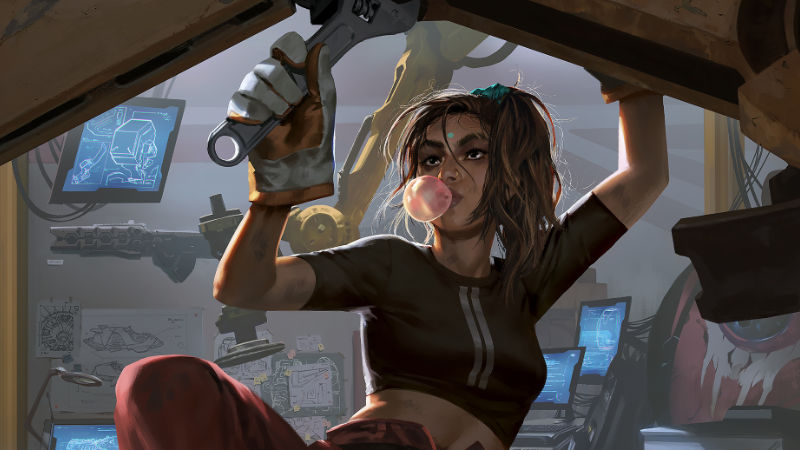
Weapons: Maintenance Mode After 28.1’s Elite Push
The activity feed notes that the weapons division is in maintenance mode after the “elite weapon push in 28.1,” with broader balance passes postponed. That’s an intentional restraint.
With Axle, deathbox respawns, chain healing, and ranked refits all hitting at once, Respawn is avoiding overloading the patch with too many damage profile changes. Instead, the studio is:
- Letting the new systems drive meta shifts first.
- Collecting telemetry on how these changes affect weapon pick rates and engagement ranges.
- Deferring gun balance until the new tempo baseline stabilizes.
This is a textbook live-service strategy: don’t change every variable at once if you want clean data.
Meta Forecast: Faster, Louder, Less Forgiving
Across all the activity logs, a consistent picture emerges:
- “Lobby chaos escalating.”
- “Long fights are dead, only rolling skirmishes remain.”
- “Treat every wipe as provisional.”
Overclocked is Respawn’s attempt to codify what Apex has always flirted with: a high-speed, high-risk battle royale where mobility, tempo control, and information matter more than static fortification.
For players, that means revisiting drop routes, rethinking endgame assumptions, and re-learning how to secure bodies as resources, not just loot piñatas. For #gamedev teams and #indiegame designers watching from the sidelines, Overclocked is a live experiment in how far you can overclock a mature live-service without frying its core identity.
In other words: adapt fast, or enjoy the view from the spectator screen.
Sources and corrections
This archive entry does not have a verified article-source list. Images and video embeds alone are not evidence for every claim.
Found an error? Request a correction. Include the passage and a supporting source.