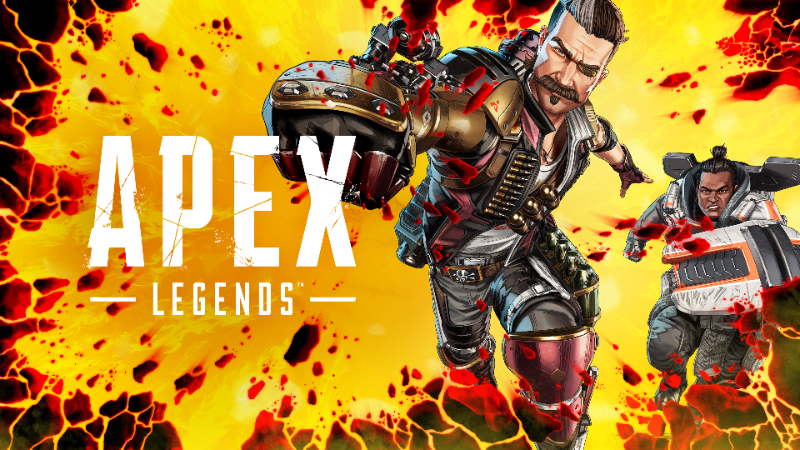
Apex Legends systems uplink – official operations briefing
Systems Check: Battle Pass Rollback, Re‑Deploy, and Recovery
Over the last week, Apex Legends’ live ops pipeline has been in triage mode, pushing rapid-fire fixes to stabilize Season 28’s progression economy. What looked like a routine balance window turned into a rollback scenario, with Respawn effectively sending a faulty patch "to the shadow realm" and redeploying a corrected build.
At the core of the incident was a regression in battle pass tracking. Players grinding through the pass found progression effectively hard-stopped at level 60, with XP from daily and weekly challenges not flowing as specced into post‑60 tiers. For a live service shooter whose retention loop leans heavily on cosmetics and long-tail rewards, that’s more than a minor inconvenience—it’s a direct hit to player motivation.
The latest micro‑patch (4/16/2026) and subsequent systems uplink (4/17–4/18) confirm that the battle pass progression pipeline has been fully re‑extended beyond level 60. Daily and weekly challenges are now feeding XP into the pass as originally designed, restoring the intended grind cadence. From a #gamedev perspective, this is a textbook example of how telemetry and backend validation can fail silently until mass player behavior hits the edge cases.
Asset Integrity: The Zero Strike Skydive Emote Fix
Apex Legends cosmetic systems – Zero Strike and visual payloads
Alongside progression bugs, cosmetic integrity took a small but visible hit. The Zero Strike skydive emote was shipping with a "cursed" placeholder texture, undercutting the perceived value of the cosmetic and cluttering UI presentation.
The 4/16 micro‑patch explicitly calls out asset restoration: the correct visual payload for the Zero Strike emote is now live, and UI hooks are pointing to the proper texture. For players, this is a quality-of-experience fix; for developers, it underlines how even minor content pipeline misroutes can escape into production when builds are under schedule pressure.
From a production standpoint, this kind of issue usually traces back to:
- Incorrect asset references in UI or animation data tables.
- Last-minute content swaps that don’t fully propagate through the build.
- Version control conflicts between branches (e.g., a placeholder asset winning a merge).
While this is routine cleanup in large live-service projects, Apex Legends’ rapid response shows a mature live ops culture: acknowledge, patch fast, and communicate clearly.
Network Anomaly: The Slomo Server Incident
The more concerning signal in this week’s telemetry is the "slomo" server anomaly flagged starting April 10. Players are encountering intermittent slow-motion behavior in matches—movement and combat tempo desyncing from expected real-time pacing.
From the outside, this presents as a pure netcode or server tick-rate issue. Internally, it could be any combination of:
- Load balancing failures causing certain data centers to degrade under peak concurrency.
- Timing or interpolation bugs introduced in a recent server-side change.
- Platform-specific edge cases (e.g., certain regions, ISPs, or data centers sharing a misconfigured build).
Respawn has framed the situation as an active investigation with diagnostic deployments across affected data centers and no firm ETA on a remedial patch window. That transparency matters. In a competitive shooter like Apex Legends, even intermittent slomo incidents can erode trust in the ranked environment and push high-skill squads to other titles.
For #gamedev and #indiegame teams watching from the sidelines, this is a high-visibility case study in live network triage: acknowledge the problem early, instrument heavily, and avoid overpromising on timelines until root cause is locked.
Live Ops Strategy: Rollbacks, Telemetry, and Player Trust
Apex Legends live service snapshot – seasonal operations in motion
The decision to rollback a previous patch and redeploy a corrected fix is notable. Rollbacks are never taken lightly—they risk:
- Reintroducing previously solved bugs.
- Creating confusion in patch notes and community messaging.
- Complicating branch management and build stability for the dev team.
But in this case, the cost of leaving a broken battle pass live—especially with a hard stop at level 60—was higher than the risk of rollback. Apex Legends’ team opted to protect the core progression loop first, then iterate with a micro‑patch to clean up remaining issues.
The key pattern across this week’s updates:
- Rapid response: Micro‑patch deployed within days to fix progression and cosmetic issues.
- Targeted scope: Minimal changes, focused on the highest-friction pain points.
- Clear comms: Field report–style updates that translate internal fixes into player-facing language.
As live service ecosystems mature, this is the operational bar: fast, focused, and transparent. Apex Legends isn’t just firefighting; it’s offering a running postmortem in real time, and that’s valuable signal for every studio building long-tail multiplayer experiences.
Outlook: What Players and Developers Should Watch Next
For players, the immediate action items are simple:
- Re-check battle pass progress beyond level 60 and confirm challenge XP is tracking correctly.
- Verify that the Zero Strike skydive emote displays properly in lobbies and in-match.
- Report any lingering slomo server behavior through official channels, including platform, region, and timestamp.
For developers and #gamedev observers, Apex Legends’ latest week of turbulence offers a few clear lessons:
- Progression systems are sacred. Any regression in XP flow or reward pipelines should trigger an all-hands response.
- Visual polish is part of the product promise. Even a single broken cosmetic can damage perceived value in a monetized ecosystem.
- Network anomalies demand over-communication. Slomo incidents may be technically complex, but silence is worse than admitting you’re still tracing the fault.
Apex Legends continues to operate as a live-service bellwether. This week’s battle pass rollback, micro‑patch, and ongoing slomo investigation reinforce a familiar truth: in 2026, the most important feature for any competitive shooter isn’t just a new legend or map—it’s the resilience and responsiveness of the live ops team behind the scenes.