Official Apex Legends Operations Briefing
Sector Overview: Outlands Enter Mecha Theatre
Apex Legends is pivoting into a high-intensity week of systemic tightening and spectacle. On one vector, Respawn is recalibrating core combat through targeted balance on Fuse and a hard stance on input-cheat hardware. On another, the game is about to detonate a full Gundam-class crossover, temporarily reshaping Broken Moon and the visual language of the entire live service. For players, this is a rare convergence: a competitive integrity push landing just as a maximalist collaboration event spins up.
From a #gamedev and live-ops perspective, the pattern is clear: stabilize the sandbox before you flood it with high-visibility chaos.
Tactical Systems Update: Fuse Gets His Fire Back
Targeted Ordnance Calibration
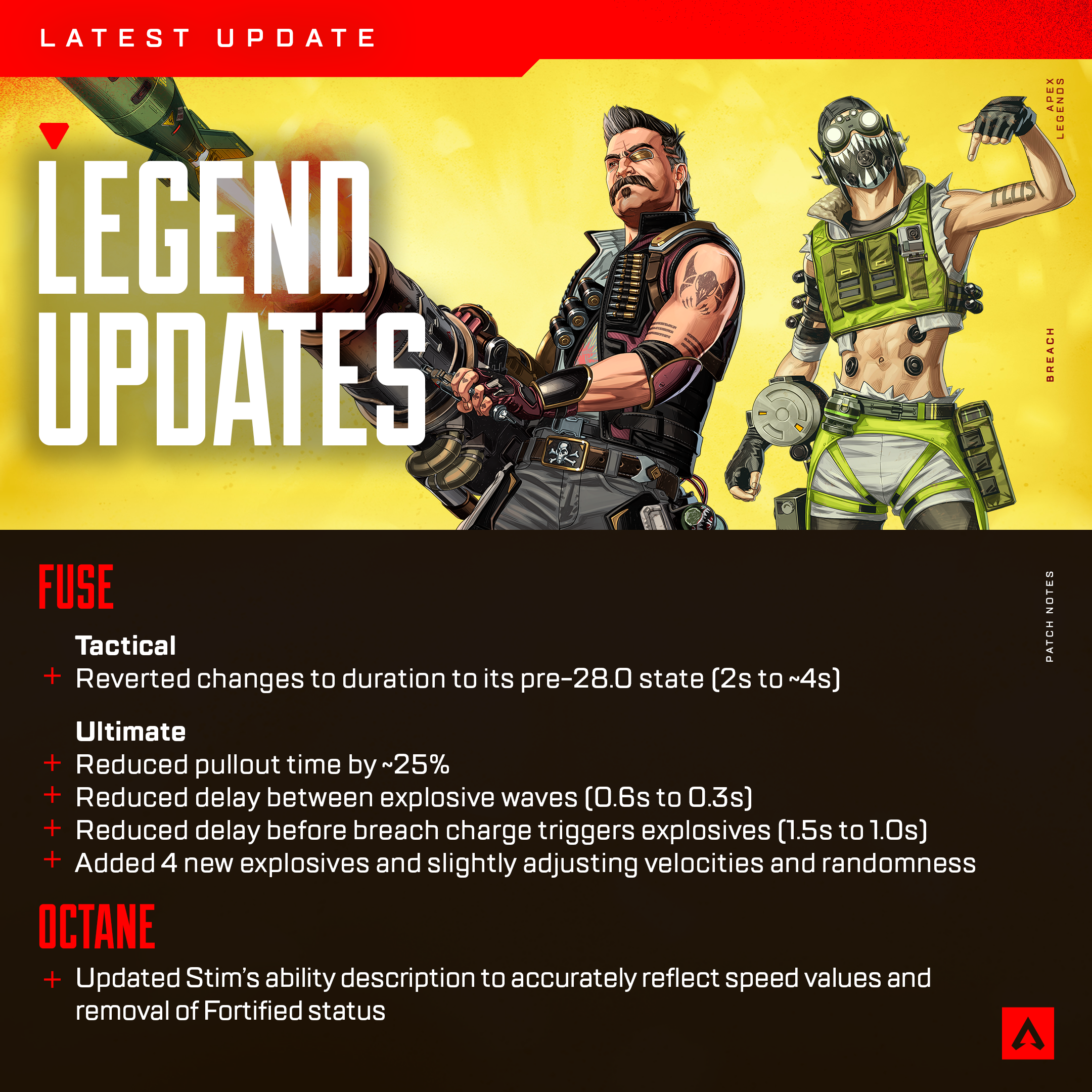
The “Targeted Ordnance Calibration: Fuse AO Reliability Patch” is a surgical balance pass aimed at solving a very specific failure case: enemies surviving inside Fuse’s ultimate without taking consistent burn damage. Dev telemetry called it out, and the fix is framed as a reliability upgrade, not a raw damage buff.
Key implications for the meta:
- Consistent burn inside the ring: The blast zone’s damage registration has been tightened, reducing those zero-damage edge cases that made Fuse feel unreliable in ranked and comp stacks.
- Lane hold and zone lock: With the tactical duration nerf rolled back, Fuse’s kit returns to longer denial windows in corridors and chokes. That shifts him back toward a legitimate area-control pick rather than a meme grenade specialist.
For design-watchers and #gamedev analysts, this is a textbook example of data-driven iteration: instead of chasing pick-rate alone, Respawn is tuning around trust in a legend’s advertised function. If your ultimate says “no dancing in the fire,” the system has to enforce it.
Anti-Cheat Frontline: Hardware Breach Protocol
Input Compliance Lockdown
The “Hardware Breach Protocol” marks one of the clearest public lines Apex Legends has drawn around competitive integrity. Strikepacks, Cronus, XIM, and similar input mutators are now explicitly classified as cheating. Notably, the language cuts through the usual gray area of “macros for accessibility” or “just quality-of-life scripts.”
Operationally, this means:
- Signal-level scrutiny: Controller and console lobbies are being scanned for non-human input signatures—patterns that look like recoil scripting or automated aim, not human error.
- Escalating enforcement: Players leaning on hardware crutches should expect account actions, especially when performance spikes line up with suspicious input traces.
From a systems design standpoint, this is about protecting the skill curve. If your aim progression can be bought via USB hub, the long-term health of the competitive scene erodes. For #indiegame and smaller studios watching, Apex is effectively publishing a template: call out the hardware, define it as cheating, then back it with telemetry.
Operations Beacon: Quiet Steam Ping
The Steam “operational status report 03.04.2026” is notable precisely because it doesn’t contain patch notes. Instead, it functions like a synchronization beacon: a visual-only post that keeps the news feed warm while aligning external comms (social, in-game alerts, and likely the Gundam rollout).
This kind of soft touchpoint is becoming standard in live service pipelines: maintain presence in platform feeds even when the real payload is still in transit.
Field Rewards: Gold Copilot Protocol
EA Play subscribers get a straightforward win: log into Apex Legends before March 30 and the Gold Copilot weapon charm is injected directly into your account—no grind, no challenge track.
Design-wise, it’s a clean retention hook:
- Zero-friction unlock encourages lapsed EA Play users to boot the client.
- Cross-title value signaling nudges players to see EA Play as a persistent cosmetic drip, not just a back-catalog subscription.
For monetization and #gamedev observers, this is a reminder that not every reward needs a battle pass wrapper—sometimes the strongest play is instant gratification that reactivates dormant users.
Mechstrike Protocol: Apex Legends x Gundam Event
Broken Moon, Reforged in Steel
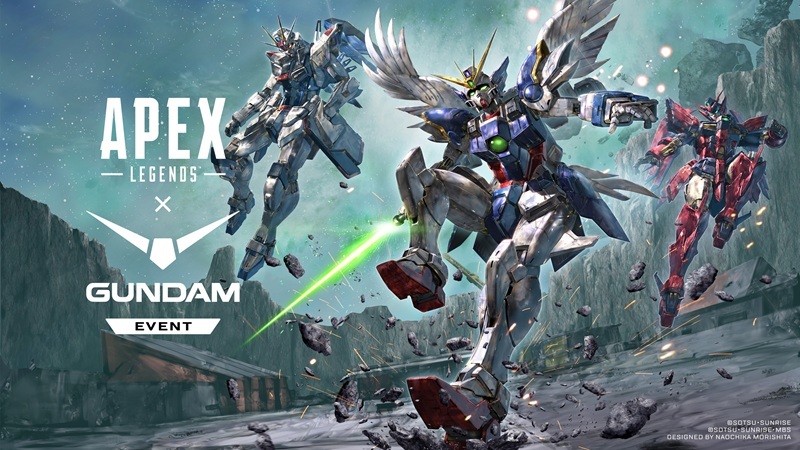
Starting March 10, Apex Legends flips the switch on its Gundam crossover, pushing the Outlands into full mecha theatre. Broken Moon becomes a hybrid battleground: part scrapyard of fallen mobile suits, part vertical playground built around climbable Wing Gundam statues, with ships dueling overhead.
For players, that means:
- New sightlines and traversal routes via massive Gundam silhouettes.
- Heightened target saturation as firefights extend vertically along statue geometry.
From a level design lens, this is a classic limited-time re-skin with real tactical consequences: new cover, new power positions, and new risk zones.
Wildcard Mode: Mobile Suit Arsenal
The Wildcard mode escalates the crossover from cosmetic to mechanical. Care packages now drop buster rifles that enable:
- Aerial recon and lane scanning.
- Wall-penetrating scans for information warfare.
- High-yield beam fire that detonates behind cover, punishing bunker play.
Then there are bit staves, which operate as:
- Forward assault shields for pushes.
- Remote drones for patrol, scanning, and suppression.
Layered on top are lethal Gundam Wildcard abilities like Epyon’s lash tactical melee pull, shifting engagements into close-quarters abduction plays. It’s a temporary power fantasy, but one that still respects Apex Legends’ core mobility and information game.
For #gamedev readers, Wildcard is a case study in how far you can bend a live-service sandbox for an event without breaking identity. The Gundam kit is loud, but it still orbits around recon, denial, and tempo—pillars Apex already understands.
Cosmetic Convergence and Fandom Containment
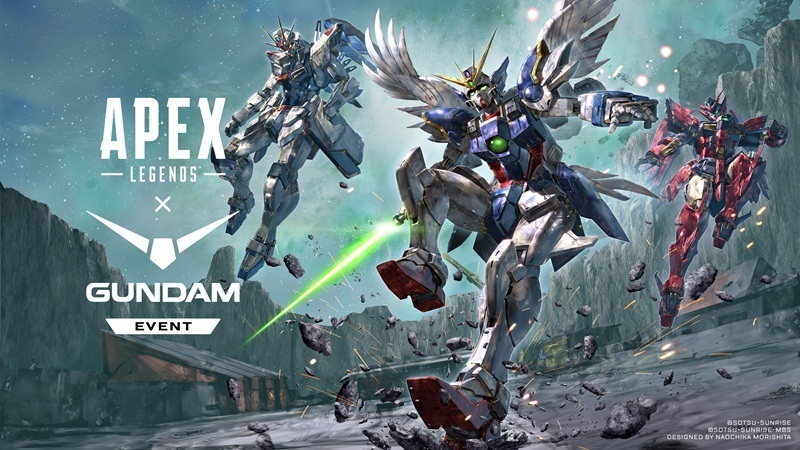
Gundam-Class Visual Telemetry on Broken Moon
The crossover rounds out with mobile suit–inspired legend skins, weapon skins tuned for high spectacle, lobby visual overhauls, and a limited-run Gunpla drop. The event reward tracks are calibrated to engagement frequency, not just raw spend—play more, unlock more.
For Apex Legends, this is about:
- Cross-franchise fanfire: pulling in Gundam fans who might not usually touch a battle royale.
- Live-ops experimentation: testing how aggressively the game can pivot its aesthetic without losing its core audience.
Strategic Read: Stability Before Spectacle
Taken together, this week’s moves form a coherent operations narrative:
- Stabilize the sandbox via Fuse reliability fixes and a hard anti-cheat stance.
- Signal quietly with a Steam status ping while the marketing stack aligns.
- Explode into spectacle with the Gundam event, Wildcard mode, and Broken Moon’s temporary reforge.
For players, the message is simple: expect a cleaner competitive field, a deadlier Fuse, and a limited-time tour through a Gundam-scarred Outlands. For developers and #indiegame teams watching from the sidelines, Apex Legends is offering a live case study in how to balance integrity, monetization, and pure crossover chaos in a single operational window.