Automated archive / 007 First Light
007 First Light Breaches 3M, Locks in Year One and Eyes Amazon’s Bond Future
007 First Light has slipped past the multi-million mark, locked in a full Year One of stealth ops, and now sits at the crossroads of a major Bond licensing pivot toward Amazon. This week’s Sector Intelligence Report breaks down the sales reality, live-service design, and rights reshuffle shaping Bond’s future in games.
AI-generated summary. This archive article does not have a current recorded source check. Check linked sources before relying on details. Editorial policy
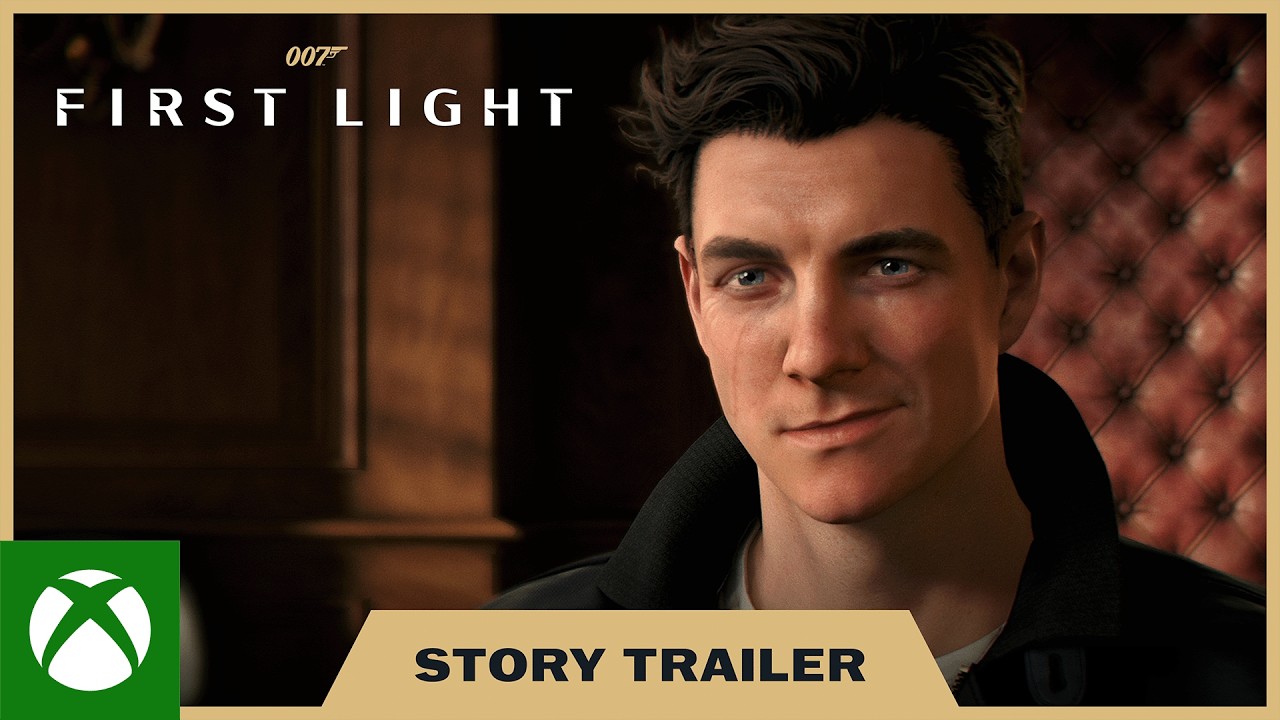
Weekly Sector Intelligence Report – 007 First Light
007 First Light just cleared its first major commercial checkpoint, confirmed its live-service ambitions, and stepped into a shifting licensing battlefield that now runs straight through Amazon’s publishing stack. For a project once rumored to be a $200M burn, the latest telemetry suggests a far more controlled recovery curve—backed by strong PlayStation store performance and a fully armed Year One roadmap.
This week’s data paints a clear picture: Bond’s latest digital op isn’t a one-and-done narrative sprint; it’s positioning as an ongoing stealth sandbox with long-tail ambitions and a complicated rights landscape.
Commercial Telemetry: From Launch Window to Early Franchise Pillar
The standout signal in this week’s feed is hard numbers: 007 First Light has officially crossed 2.7 million units sold and is described as “probably” ghosting the 3 million mark. For a cinematic stealth title with prestige licensing overhead, that’s not breakout-viral, but it’s firmly in the sustainable franchise tier.
Crucially, sources now stress that the true budget sits well below the previously rumored ~$200M figure. That matters for #gamedev analysts: it reframes First Light from a high-risk moonshot to a more traditional AAA bet with a viable path to recoupment, especially when layered with:
- Strong PlayStation Store performance in May 2026 across US, EU, and Southeast Asia PS5/PS4 sectors.
- A clear content runway via Year One support, designed to extend engagement well beyond the initial campaign.
For developers watching from the outside, the lesson is straightforward: recognizable IP plus disciplined scope and a live-service tail can still make sense in 2026—provided your burn rate doesn’t outpace your realistic audience ceiling.
Platform Intel: PlayStation Dominance and IP Gravity
Multiple regional PlayStation reports flag 007 First Light as a top download performer on PS5 (and strongly placed on PS4) for May 2026. In Southeast Asia specifically, it led the paid PS5 charts, while free-to-play titles like NTE: Neverness to Everness dominated the F2P lane.
The broader pattern is telling:
- High-recognition IP (Bond, in this case) still exerts strong front-page gravitational pull.
- Persistent or live-service models continue to be rewarded in store visibility and word-of-mouth.
For #indiegame teams, this is the competitive reality: you’re launching into an ecosystem where evergreen brands and service-driven design increasingly shape store curation, discovery, and player expectations. Niche games need either razor-sharp positioning or clever piggybacking on trending genres and systems.
Year One Protocols: Live-Service DNA in a Stealth Sandbox
IO Interactive has flipped the switch on Year One operations for 007 First Light, and the messaging is unambiguous: this is an evolving live-service dossier, not a static boxed product.
The Year One content trailer outlines a pipeline of:
- New missions and scenarios that remix infiltration spaces and objective types.
- Escalating OPFOR tech and behaviors, suggesting systemic tuning rather than just cosmetic refreshes.
- Gadget expansions that should deepen the sandbox rather than simply reskin existing tools.
For designers, the interesting angle is how IO is leaning into replayable stealth loops:
- Mission structures that support revisits with different loadouts and approaches.
- AI and patrol logic that must withstand repeated probing from high-skill players.
- Content pacing that has to balance cinematic beats with ongoing systemic mastery.
This is stealth built for long-term iteration, not just a one-pass campaign.
Systems Resilience: Kill-Planes, Edge Cases, and Sandbox Integrity
One of the quieter but more revealing intel packets this week focused on boundary stress testing: players attempting to vault out-of-bounds geometry only to hit invisible kill-planes that hard-reset the scenario.
From a #gamedev perspective, this is a classic trade-off:
-
Pros:
- Maintains mission framing, pacing, and narrative cohesion.
- Prevents speedrun exploits that could trivialize stealth challenges.
- Reduces QA chaos from players occupying spaces never meant for combat or AI.
-
Cons:
- Can feel immersion-breaking when the rest of the sandbox sells grounded, physical spaces.
- Limits emergent storytelling opportunities that come from “breaking” the level.
The takeaway for teams building systemic stealth is clear: if you’re going to market a sandbox fantasy, your containment strategy (kill-planes, invisible walls, soft barriers) needs to be as carefully authored as your hero moments. IO’s choice here leans conservative, prioritizing mission integrity over maximal player freedom.
Casting, Cinematic Fidelity, and the Bond Continuity Play

Another thread this week zeroed in on recognizable faces and covert cameos embedded in 007 First Light’s cast. While the specific identities are less important than the strategy, the intent is obvious:
- Align the game’s cinematic fidelity with the Bond film legacy.
- Use familiar talent as a nostalgia anchor for long-time fans.
- Position the game as a legitimate entry in the broader Bond continuity, not a side-story spin-off.
For production teams, this underscores the increasing convergence of film and game casting pipelines. High-fidelity character models and performance capture aren’t just visual upgrades; they’re marketing levers, especially when working with global IP.
Rights Realignment: Amazon Steps Into the 007 Publishing Crosshairs
The most strategically important development for industry watchers is the license reroute: future James Bond games are now theoretically on a path to be published by Amazon Game Studios, not IO Interactive.
Key nuances:
- IO has secured its own “extraction corridor” for 007 First Light, meaning ongoing support and Year One content remain under IO’s existing arrangements.
- Future Bond titles, however, are expected to deploy via Amazon’s publishing infrastructure, signaling a deeper push by Amazon into prestige console/PC IP.
For the business side of #gamedev, this raises pointed questions:
- How will Amazon balance creative autonomy for partner studios against franchise management for a globally recognized IP like Bond?
- Does Amazon’s ecosystem (Prime, Luna, Twitch) become a distribution and marketing force multiplier for future 007 projects?
- What happens to long-term franchise vision when publishing control migrates mid-cycle?
In the near term, 007 First Light benefits from a kind of liminal stability—IO can execute its Year One roadmap without immediate disruption, while the broader Bond games strategy is recalibrated at the corporate layer.
Strategic Outlook: What 007 First Light Signals for the Field
From this week’s intel, a few clear signals emerge for developers, publishers, and #indiegame outfits watching from the perimeter:
-
IP + Live-Service Is Still a Viable Combo
007 First Light’s sales trajectory and Year One plan show that recognizable brands, paired with a strong systemic core, can sustain a multi-year runway—even without hitting the absolute top of the charts. -
Storefront Visibility Is Increasingly IP-Weighted
PlayStation’s May 2026 charts reiterate that high-recognition IP and service-forward designs dominate attention. Smaller teams must either specialize hard or find clever ways to inhabit adjacent niches. -
Licensing Terrain Can Shift Under Your Feet
The Amazon handoff is a reminder that rights, routes, and revenue streams are fluid. Studios building around licensed IP need contingency planning for mid-cycle changes in ownership or publishing strategy. -
Systems Discipline Matters in Stealth Sandboxes
From kill-planes to AI escalation, 007 First Light is a case study in how much invisible engineering goes into making stealth feel both cinematic and repeatable.
As Year One content rolls out and Amazon’s Bond-era begins to crystallize, 007 First Light stands as both a commercially solid operation and a live testbed for how blockbuster stealth can function in a service-driven, rights-fragmented industry.
Sources and corrections
This archive entry does not have a verified article-source list. Images and video embeds alone are not evidence for every claim.
Found an error? Request a correction. Include the passage and a supporting source.
Your games, in one place
Keep up with 007 First Light
Follow this game to collect its posts in your personal feed. Come back to see what you missed.