Automated archive / 007 First Light
007 First Light Goes Operational With Next-Gen Spycraft and PSSR Muscle
007 First Light has officially gone operational, positioning itself as a simulation-driven Bond experience built on systemic missions and next-gen rendering tech. This week’s intel breaks down its MI6 training grid design, time-critical ops, and how PSSR on PS5 Pro is reshaping the game’s visual and systemic ambitions.
AI-generated summary. This archive article does not have a current recorded source check. Check linked sources before relying on details. Editorial policy
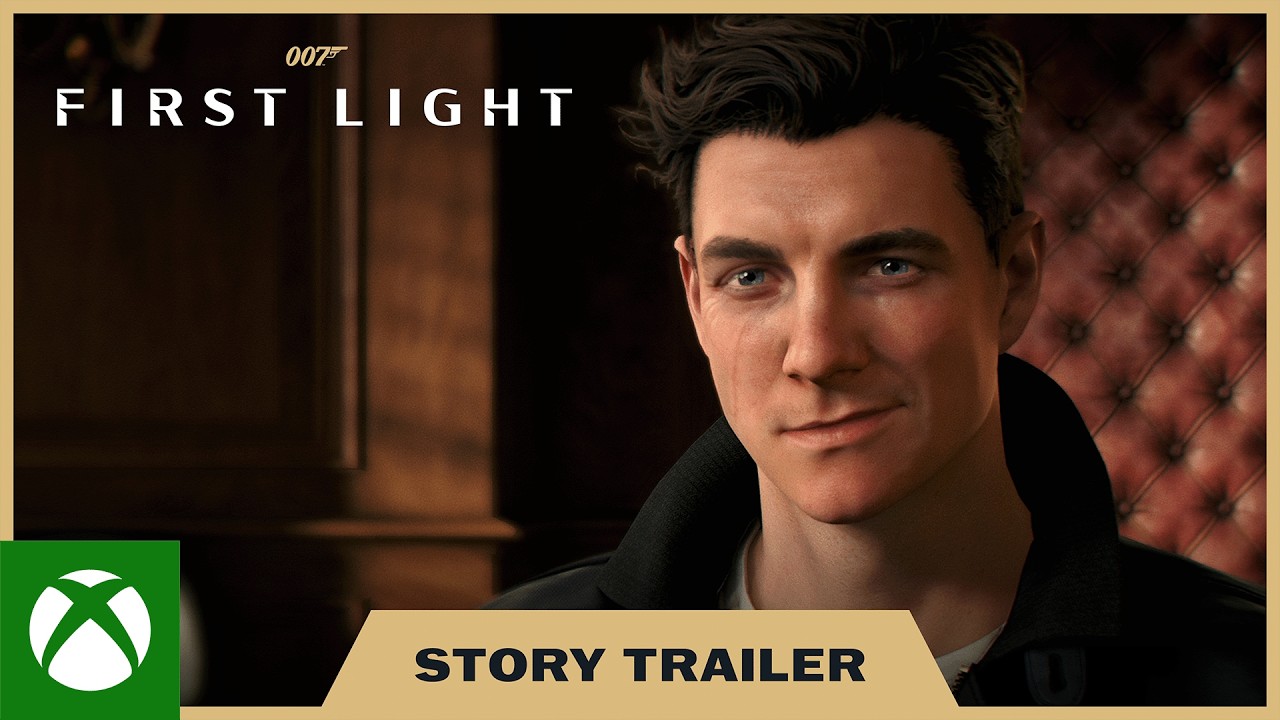
Sector Overview: Bond’s Legacy Enters Live Simulation
007 First Light has moved from classified briefings to full operational status, and the last seven days of intel paint a clear picture: IO Interactive isn’t treating this as a simple licensed shooter. The language coming out of the latest transmissions frames the game as a live-fire evolution of spycraft, built around simulation-heavy design rather than set-piece tourism through Bond’s greatest hits.
The launch communications emphasize an MI6 training grid that feels closer to a systemic playground than a linear corridor. Phrases like “new ops layer,” “high-risk scenarios,” and “precision-crafted missions” suggest a design philosophy that prioritizes replayable, parameter-driven encounters over one-and-done blockbuster missions. For #gamedev watchers, 007 First Light is shaping up as a case study in how to fuse sandbox stealth, authored spectacle, and the expectations that come with a 007 license.
Mission Architecture: Time-Critical Ops and Multi-Angle Assaults
The most recent field report describes 007 First Light’s missions as orbiting time-critical objectives and “multi-angle assaults” across dense urban and industrial zones. That implies:
- Layered encounter design – Objectives that can be approached from multiple vectors (rooftop ingress, street-level infiltration, vehicular breach), with systems robust enough to support divergent player choices.
- Integrated vehicular ops – “High-velocity vehicular ops” is more than flavor text. Expect driving sequences that aren’t just chase cinematics, but mechanically tied to mission timers, extraction windows, or diversion tactics.
- Synchronized team maneuvers – The wording hints at AI squad behavior or co-op style coordination, even if the experience remains primarily single-player. From a #gamedev standpoint, this suggests significant investment in AI role orchestration and scripting tools that can handle dynamic entry points and shifting objectives.
Crucially, the report stresses that this is not just target practice. The MI6 training grid metaphor positions the game as a persistent environment where systems are constantly recontextualized: same map, new rule set, different intel package. That’s the kind of structure that can support seasonal updates, score-chasing, and speedrunning without requiring constant new asset creation – a very modern production strategy even for a non-#indiegame studio.
Watch: Transmitting Gameplay footage from the field: Official 007 First Light launch trailer
Visual Stack: PSSR and the PS5 Pro Advantage
The Spectral Uplift briefing confirms that 007 First Light ships with PlayStation Spectral Super Resolution (PSSR) auto-enabled on PS5 Pro. This is Sony’s machine learning–driven upscaling tech, designed to reconstruct a higher-resolution image from a lower internal render.
From a technical perspective, this is a big lever for IO Interactive:
- Headroom for simulation – By leaning on PSSR, the team can allocate more GPU/CPU budget to AI, physics, and systemic behavior without sacrificing clarity. That’s particularly important for a spy sim where crowd density, line-of-sight checks, and reactive AI are central.
- Sharper motion under pressure – The briefing calls out “cleaner edges, reduced shimmer, more stable motion under pressure.” That’s shorthand for improved temporal stability during chaotic firefights, high-speed driving, and fast camera pans – all core to Bond fantasy.
- Cross-gen consistency – While the intel is PS5 Pro-specific, building around an upscaler-first mindset usually encourages a scalable pipeline. Expect resolution and performance presets that can flex across platforms while keeping the core simulation intact.
For engine and rendering teams following 007 first light as a reference point, the key takeaway is that ML upscaling is now part of baseline design assumptions, not an afterthought. Mission density, world complexity, and visual fidelity are being tuned with PSSR in the loop from day one.
Systems-Level Spycraft: More Than a Shooting Gallery
The repeated emphasis on “sharpen your instincts” and “sync with Bond’s legacy” suggests a focus on player expression through systems, not just weapon unlocks. Taken together, the activity feed points toward:
- Reactive stealth-sandbox loops – Training grid framing implies modular arenas where guard patterns, surveillance tech, and environmental hazards can be remixed. Think: alarms cascading across sectors, dynamic reinforcements, and adaptable patrol routes.
- Scored performance and evaluation – A “covert systems online” posture usually pairs with grading: time-to-complete, collateral damage, stealth purity, gadget utilization. Expect meta-progression that rewards mastery of the simulation, not just mission completion.
- Bond as a design north star, not a script – “Bond’s legacy” is positioned as a vector for tone and toolkit rather than strict narrative reenactment. That gives IO the freedom to experiment with training-era scenarios that lean harder into systems and experimentation than canonical story beats.
This is where 007 First Light could have outsized influence beyond its own launch window. If it lands, it becomes a template for how licensed properties can embrace immersive sim DNA without alienating broader audiences.
Watch: Transmitting Gameplay footage from the field: PS5 Pro Spectral Super Resolution tech briefing
Market Position: Between Live Sim and Prestige License
From a sector intelligence standpoint, 007 First Light is threading a narrow needle:
- It carries the production expectations of a prestige license, with all the cinematic weight that entails.
- It borrows heavily from systemic stealth and simulation-forward design, a space more commonly occupied by niche or #indiegame darlings.
That hybridization matters. If IO can maintain the clarity and accessibility of a blockbuster shooter while delivering the depth implied by its “training grid” rhetoric, it could shift audience expectations around what a Bond game – and licensed games in general – are allowed to be.
For developers, the signal is clear: simulation and systemic depth are no longer niche luxuries. With PSSR and similar technologies providing performance slack, more studios will be expected to invest that headroom into smarter AI, richer environments, and replayable mission structures.
As of this week’s report, 007 first light has successfully transitioned from theoretical pitch to active deployment. The next phase of intelligence will hinge on how the wider player base engages with those covert systems once they’re fully in the wild.
Sources and corrections
This archive entry does not have a verified article-source list. Images and video embeds alone are not evidence for every claim.
Found an error? Request a correction. Include the passage and a supporting source.
Your games, in one place
Keep up with 007 First Light
Follow this game to collect its posts in your personal feed. Come back to see what you missed.