Automated archive / 007 First Light
007 First Light Is Weaponizing the Hitman Sandbox for Bond
007 First Light is quietly shaping up to be a live espionage sim that fuses IO’s Hitman-grade sandbox with reactive storytelling and social stealth. This week’s intel suggests a late-stage, high-agency Bond experience that could redefine what licensed action games aim for.
AI-generated summary. This archive article does not have a current recorded source check. Check linked sources before relying on details. Editorial policy
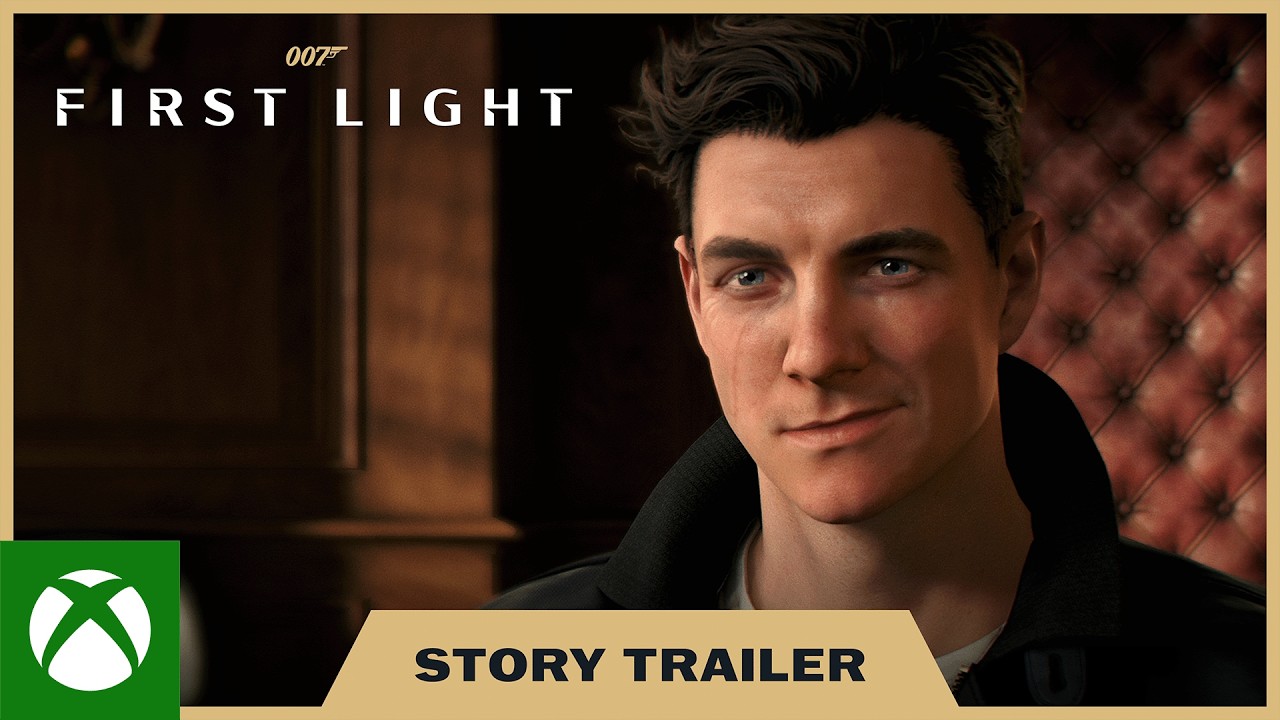
Sector Intelligence Report: 007 First Light
007 First Light is emerging as one of the most strategically interesting projects on the 2026 radar – not just as a licensed blockbuster, but as a systems-driven espionage sim that could meaningfully shift expectations around narrative, stealth, and player agency. This week’s activity feed paints a picture of a game in late-stage polish, with IO Interactive effectively refitting its Hitman-grade sandbox for a different fantasy: being James Bond, not a contract killer.
From a #gamedev perspective, the signal is clear: this is less a reskinned assassin sim and more a structural remix of IO’s design language around social stealth, reactive storytelling, and high-agency mission design.
1. From Assassination Sim to Live Espionage Network
Hands-on debriefs describe 007 First Light as a fusion of stealth, social engineering, and traversal, with charm elevated to a first-class mechanic. That’s a critical distinction: the fantasy here is not just outsmarting patrol routes, but actively working the room.
Reports emphasize:
- Multi-path infiltration: Levels appear to support several viable routes – physical stealth, social infiltration, gadget-led disruption – with the player free to pivot mid-mission.
- Social stealth as core loop: Disguises, conversation choices, and relationship management aren’t just flavor; they’re described as primary levers in how missions unfold.
- Charm as a systemic tool: Bond’s charisma is treated as a mechanic that can unlock intel, shortcuts, and alternate resolutions, rather than just cutscene banter.
This aligns with IO’s sandbox heritage, but the pivot from assassination to espionage reframes the risk–reward calculus. Instead of “how do I eliminate a target cleanly,” the design question becomes “how do I manipulate this social and spatial network to achieve objectives without burning my cover?”
2. Reactive Storytelling and Narrative Circuitry
Field intel repeatedly references “reactive storytelling” and “narrative circuits” – language that suggests a branching, stateful narrative model rather than a linear mission chain.
Key takeaways from the activity feed:
- Every choice flips new narrative circuits: Dialogue selections, alliances, and even which disguises you use reportedly feed into how later missions acknowledge and adapt to your playstyle.
- Live espionage sim, not theme-park shooter: The experience is framed as a continuous, adaptive operation instead of a series of isolated set pieces.
- Dense systems + sharp writing: Writing quality is being called out alongside systems depth, which is crucial for a property like Bond, where tone, wit, and character are as important as mechanics.
For #gamedev teams, this reads like an attempt to bridge systemic design (Hitman-style sandboxes) with authored narrative pacing – a notoriously difficult balance. If IO lands this, 007 First Light could become a reference point for how to do reactive narrative in a big-budget espionage game.
Watch: Transmitting Gameplay footage from the field: Official gameplay reveal for 007 First Light
3. Systems Check: Late-Stage Polish and AI Calibration
The “Final Systems Check” intel suggests 007 First Light is in a stabilization and polish phase:
- Stealth routing and gadget deployment are described as calibrated for “high-agency immersion,” implying that core mechanics and level layouts are effectively locked.
- Enemy AI and environmental scripting are flagged as appearing final, with narrative triggers behaving consistently in test runs.
- Cinematic takedowns are integrated into the systemic fabric rather than existing as isolated QTEs, preserving player control while delivering the Bond fantasy.
From a production standpoint, this indicates the team is likely focused on:
- Edge-case AI behaviors (social stealth edge failures, disguise detection logic).
- Narrative continuity checks across branching paths.
- Performance and streaming on target hardware, especially given the dense systemic layers.
4. Strategic Positioning: GOTY Contender or High-Risk Pivot?
Recent chatter explicitly labels 007 First Light a stealth Game of the Year contender, and potentially “the best Bond yet.” That’s a strong claim, but there are structural reasons behind the optimism:
- Licensed IP with a systemic core: Instead of leaning on spectacle alone, IO is betting on depth – a differentiator in a market saturated with cinematic shooters.
- Hitman tech stack repurposed: Reuse of mature tech and design patterns reduces risk, allowing more iteration on narrative reactivity and social systems.
- Market timing: With ongoing debates around platform DRM and hardware refresh cycles, a high-agency, replayable espionage sim is well-positioned to dominate discourse if it delivers.
The risk profile, however, is non-trivial. Systemic narrative games can suffer from:
- Narrative seams where branches re-converge too visibly.
- Overwhelming new players if onboarding doesn’t clearly surface affordances.
- Expectations clash between fans wanting a pure power fantasy and those craving deep stealth.
If IO threads that needle, 007 First Light could set a new bar for licensed action narratives.

5. Signals for Devs, Indies, and Platform Stakeholders
For #indiegame and AAA teams alike, 007 First Light’s trajectory surfaces several strategic lessons:
- Systemic depth + strong IP is a force multiplier: Borrowing IO’s sandbox philosophy for Bond could prove that you don’t have to choose between brand recognition and mechanical complexity.
- Charm as a mechanic is underexplored: Treating social interaction as a systemic pillar (not just dialogue trees) is a design space ripe for smaller teams to explore at different scales.
- Replayability through reactivity: If every disguise, contact, and choice truly shifts the narrative circuitry, 007 First Light will underline how reactive design can extend tail and community discourse beyond launch.
As the operation nears deployment, the signal is consistent across all intercepted transmissions: 007 first light is positioned less as a one-and-done blockbuster and more as a living espionage sim that weaponizes IO’s sandbox craft for a broader audience. If execution matches ambition, this won’t just be a strong Bond game – it will be a new benchmark for systemic narrative design in big-budget stealth-action.
Sources and corrections
This archive entry does not have a verified article-source list. Images and video embeds alone are not evidence for every claim.
Found an error? Request a correction. Include the passage and a supporting source.